The New York City real estate market continues to present a complex landscape for prospective buyers, characterized by high interest rates, limited inventory, and a persistent gap between median incomes and housing costs. However, within this challenging environment, specific opportunities emerge for those navigating the sub-$1 million segment. This threshold, often considered the "entry-level" for multi-bedroom units in Manhattan and prime Brooklyn, currently features a diverse array of configurations, ranging from spacious prewar cooperatives in Upper Manhattan to strategically located studios in high-demand Brooklyn corridors.
A recent analysis of the current market highlights four distinct properties that exemplify the trade-offs and advantages available to buyers today. These listings—located in Washington Heights, Prospect Heights, Hell’s Kitchen, and Park Slope—underscore the critical role that building designations, such as Housing Development Fund Corporation (HDFC) status, and monthly maintenance fees play in determining the accessibility of New York City real estate.
The Washington Heights HDFC Opportunity
In Washington Heights, a top-floor three-bedroom, two-bathroom apartment at 47 Fort Washington Avenue (Apt. 61) is currently listed for $799,000. The property represents a rare find in the Manhattan market: a fully renovated, multi-bedroom unit priced significantly below the borough’s median for similar square footage. The apartment features loft-like ceilings, southern and eastern exposures that maximize natural light, and a modern kitchen equipped with Bosch stainless-steel appliances and a breakfast bar.
The pricing of this unit is primarily dictated by its status as an HDFC cooperative. HDFC buildings were established under Article XI of the New York State Private Housing Finance Law to provide affordable homeownership opportunities to low- and moderate-income households. While the purchase price is lower than market-rate equivalents, buyers must meet strict income caps, which are typically tied to the Area Median Income (AMI).
Despite the financial hurdles associated with HDFC purchases—including rigorous board approvals and potential restrictions on future resale profits—the unit offers substantial value. Recent renovations included updated plumbing, new electrical systems, and the installation of an in-unit Electrolux washer and dryer. With monthly maintenance fees set at a relatively low $1,164, the property includes amenities such as a live-in superintendent, a bike room, and storage lockers. Its location provides proximity to the A, C, and 1 subway lines, facilitating a commute to Midtown Manhattan in approximately 30 minutes.
Historic Charm and High Maintenance in Prospect Heights
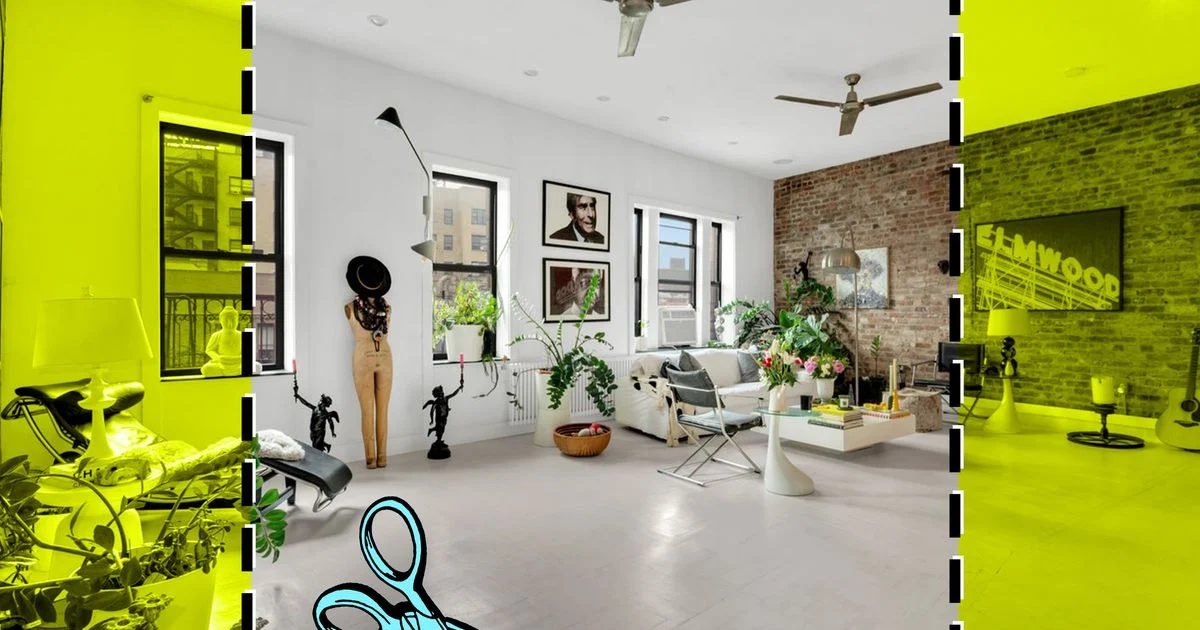
Across the river in Brooklyn, the market at Grand Army Plaza remains one of the most sought-after residential pockets. At 60 Plaza Street East (Apt. 5M), a one-bedroom prewar cooperative is listed, offering a different value proposition. Unlike the Washington Heights three-bedroom, this unit emphasizes architectural detail and location over sheer bedroom count.
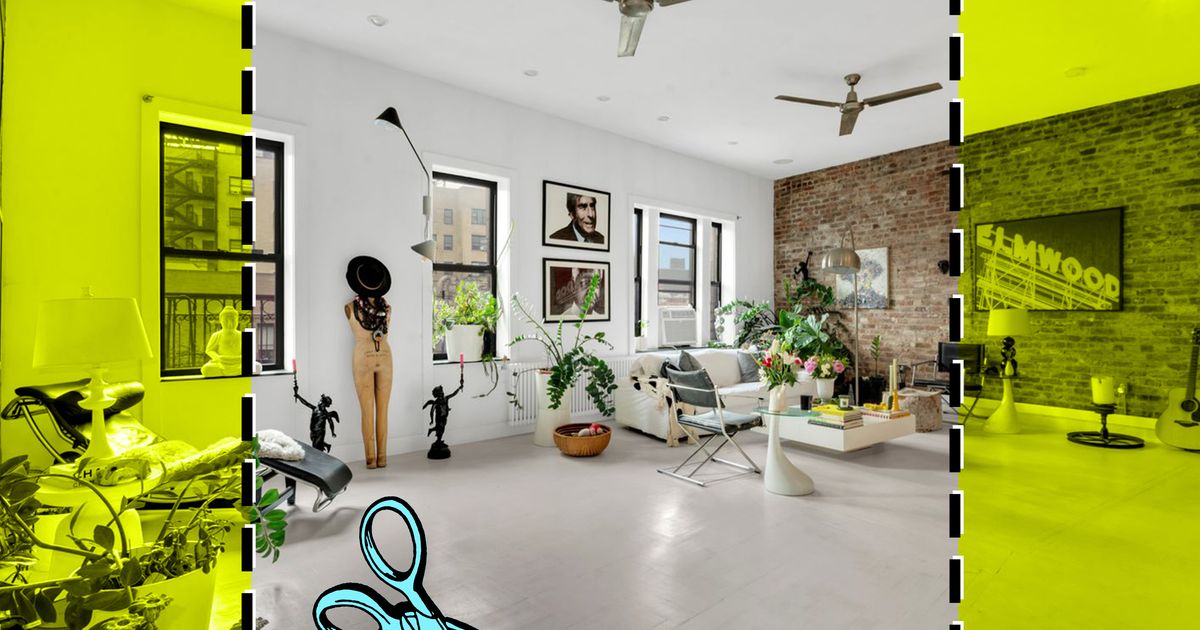
The apartment features a grand foyer suitable for a home office, traditional archways, and original parquet flooring. The living room is bookended by built-in shelving, and the bedroom benefits from dual eastern and southern exposures. A notable feature of the layout is the bathroom, which includes both a soaking tub and a separate shower stall—a configuration rarely found in one-bedroom units of this vintage.
However, the "primo" location and full-service nature of the building come with a significant financial caveat. The monthly maintenance is $1,840, supplemented by a $69 monthly capital assessment. These fees support a robust staff, including a 24-hour doorman, a live-in super, and a porter, as well as a landscaped shared garden. This listing highlights a common trend in New York real estate: properties located near major cultural hubs—in this case, the Brooklyn Public Library, the Brooklyn Museum, and the Grand Army Plaza Greenmarket—often command higher carry costs that can rival a monthly mortgage payment.
The Midtown Pied-à-Terre Market: Hell’s Kitchen
In Manhattan’s Hell’s Kitchen, the Parc Vendome at 333 West 56th Street (Apt. 6J) offers a studio apartment that targets a specific demographic: the pied-à-terre buyer or the professional seeking proximity to the Theater District and Central Park. The Parc Vendome, a landmarked complex built in 1931, is renowned for its English tea garden and classic prewar aesthetics.
The studio is unusually spacious, featuring a large living area that can accommodate a formal dining set and a sofa, alongside a dedicated sleeping alcove. While the kitchen requires modernization, the bathroom retains its original glamorous details, including checkerboard tiling.
The financial structure of this unit reflects its condominium-style amenities within a prewar framework. Monthly common charges and taxes total approximately $2,035, plus a $104 capital assessment. While high, these fees are inclusive of electricity, gas, heat, and water. This "all-in" monthly cost is a critical factor for buyers to consider, as it simplifies budgeting but requires a higher liquid income. The building’s proximity to Carnegie Hall and the Nordstrom flagship store positions it as a lifestyle-driven investment rather than a traditional family home.
Entry-Level Efficiency in Park Slope
Finally, in Park Slope, a studio at 527 8th Street (Apt. 3A) represents the entry-level market for one of Brooklyn’s most expensive neighborhoods. Listed with a monthly maintenance fee of only $638, the unit is positioned as a highly efficient option for a first-time buyer.
The apartment features classic Park Slope details, such as ceiling moldings and aquamarine bathroom tiling. While it lacks modern conveniences like a dishwasher and is smaller in square footage than the other highlighted units, its value is derived from its location. Situated just half a block from Prospect Park and the Seventh Avenue F/G station, the property offers immediate access to the neighborhood’s primary amenities.

Market Context and Chronology
The emergence of these listings comes at a time when the New York City residential market is undergoing a period of stabilization following the volatility of the 2021-2023 period.
2021-2022: The Post-Pandemic Surge
Following the initial COVID-19 lockdowns, New York saw a record-breaking surge in activity as buyers took advantage of historically low interest rates. This period saw a depletion of inventory under $1 million, particularly in Brooklyn.
2023: The Interest Rate Pivot
As the Federal Reserve raised interest rates to combat inflation, the "lock-in effect" took hold. Homeowners with 3% mortgages became reluctant to sell, further constraining inventory and keeping prices high despite lower transaction volumes.
2024-Present: The Search for Value
The current market is defined by a search for "hidden" value. Buyers are increasingly looking toward HDFCs in Upper Manhattan or studios in premium Brooklyn neighborhoods as a way to remain in the city without exceeding the $1 million mark. According to recent data from Douglas Elliman, the median sales price in Manhattan remains hovering around $1.1 million, making these sub-$800,000 options statistically significant.
Analysis of Implications for Buyers
The disparity between the four properties—a $799,000 three-bedroom in Washington Heights versus a studio in Park Slope—illustrates the "spatial vs. social" trade-off inherent in New York City real estate.
- The Maintenance Burden: Buyers are increasingly scrutinized not just on their ability to provide a 20% down payment, but on their debt-to-income ratio regarding monthly maintenance. As insurance premiums and energy costs for older buildings rise, these fees are becoming a larger percentage of the total cost of ownership.
- The Role of HDFCs: As market-rate housing remains out of reach for many middle-class New Yorkers, HDFCs are serving as a vital, albeit bureaucratic, alternative. They provide the only path to multi-bedroom ownership in Manhattan for many families, provided they meet the income restrictions.
- The Resilience of Prewar Assets: Despite the influx of glass-and-steel new developments, the demand for prewar cooperatives remains high. The architectural integrity—exemplified by the parquets in Prospect Heights and the moldings in Park Slope—continues to drive value in a way that modern construction often fails to replicate.
Conclusion
The current listings under $1 million in New York City reveal a market that is far from monolithic. While the headline figures suggest a city that is increasingly unaffordable, granular analysis shows that for buyers willing to navigate complex financial structures like HDFCs or accept the high carry costs of full-service buildings, ownership remains possible. The three-bedroom in Washington Heights and the studios in Brooklyn and Midtown represent the diverse strategies New Yorkers are employing to secure a foothold in one of the world’s most competitive real estate environments. As interest rates fluctuate in the coming year, these "value" segments of the market will likely remain the most active as the city’s middle class seeks to balance space, location, and long-term financial viability.