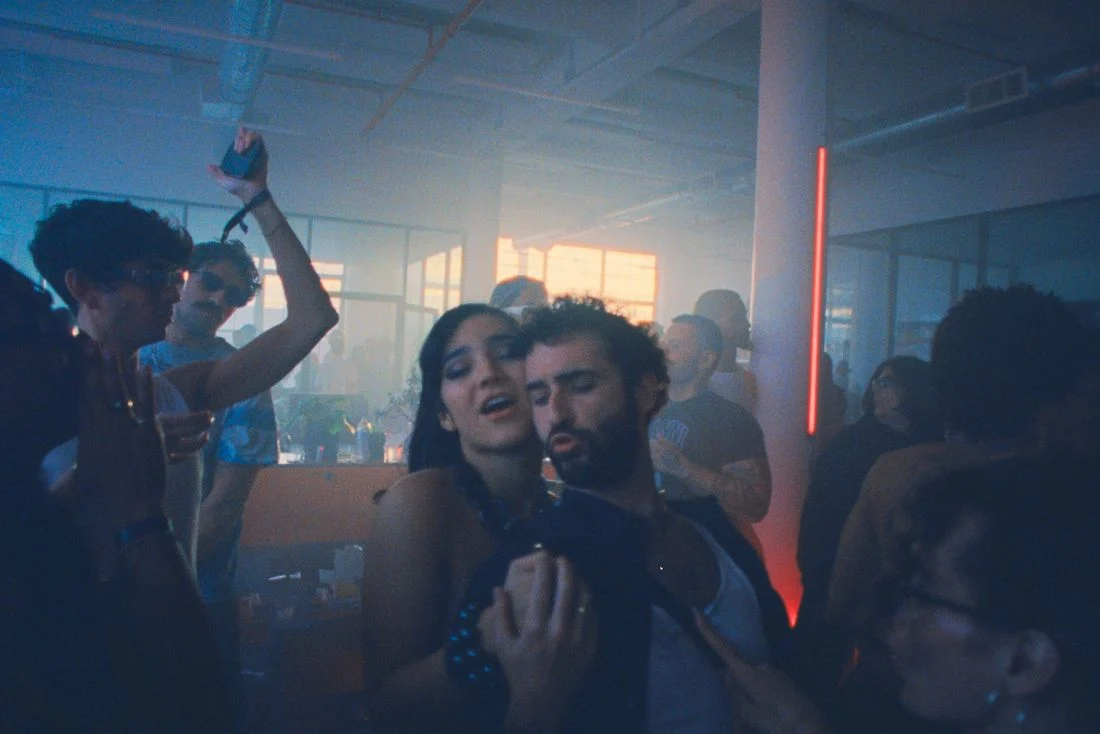
The production of Jordan Firstman’s upcoming feature film Club Kid presented an unusual logistical challenge: how to faithfully capture the authentic, insular, and fiercely guarded subculture of New York City’s underground nightlife without sanitizing it or alienating the actual participants. Set against the gritty backdrop of Bushwick and East Williamsburg, the film chronicles the complex trajectory of a gay party promoter—played by Firstman himself—who grapples with burnout, sudden fatherhood, and personal reinvention as his once-vibrant community undergoes structural and generational transformations.
Rather than relying on traditional Hollywood methods of constructing soundstages or hiring standard casting-agency extras to simulate a crowded room, the creative team opted for an anthropological approach. Spearheaded by production designer Stephen Phelps and co-producer Ben Hannon Hubley, the production integrated itself directly into real, ongoing New York nightlife events. By utilizing actual venues, collaborating with prominent local promoters, and pop
ulating dance floors with genuine scenesters rather than professional background actors, the filmmakers succeeded in building what the crew has described as a living time capsule of contemporary gay nightlife.
The Logistics of Filming Underground Spaces
Replicating the atmosphere of underground nightlife is notoriously difficult for mainstream film productions. Modern underground venues across Brooklyn and Manhattan are increasingly protective of their patrons’ privacy, routinely enforcing strict anti-photography policies that involve placing opaque security stickers over phone camera lenses or requiring patrons to lock their mobile devices away entirely. Consequently, established spaces like the venue Basement were entirely unreceptive to hosting a film crew.
Faced with the prospect of paying hundreds of traditional background actors—an option Firstman publicly dismissed as counterproductive to capturing an authentic milieu—the production team pivoted to community outreach. Hubley curated a meticulous casting database of real-life nightlife regulars, artists, and promoters to ensure that the chosen-family dynamics depicted on screen felt earned. They enlisted associate producer Zak Stone, an established figure within the local music and events landscape, to secure buy-in from key nightlife figures and align the film’s production schedule with active underground happenings.
Chronology of the Production Design and Venues
The visual narrative of Club Kid is heavily dictated by the evolution of its primary fictional venue, Club Labor, which undergoes significant aesthetic and cultural shifts across a ten-year timeline.
For the film’s opening sequence—a celebratory birthday party set in the mid-2010s—the production booked the Market Hotel in Bushwick. Selected for its iconic triangular architecture and proximity to the elevated J/M/Z subway tracks, the space allowed Phelps to design intimate nooks reminiscent of Eric Goode’s legendary 1980s Tribeca club, Area. Drawing visual inspiration from archival photographs of historical NYC queer nightlife institutions such as China Chalet and the events hosted by Ladyfag, as well as a memorable Mylar confetti sequence from the 1995 action film Bad Boys, the crew draped columns in silver Mylar and installed custom lighting fixtures. To heighten the sense of immersion, real nightlife figures were integrated into the scene; the DJ booth was manned by MCMLXXXV, and performance artist Amanda Lepore appeared on screen, creating an environment where unscripted reactions often blurred the line between fiction and reality.
A Decade of Transformation in Nightlife Spaces
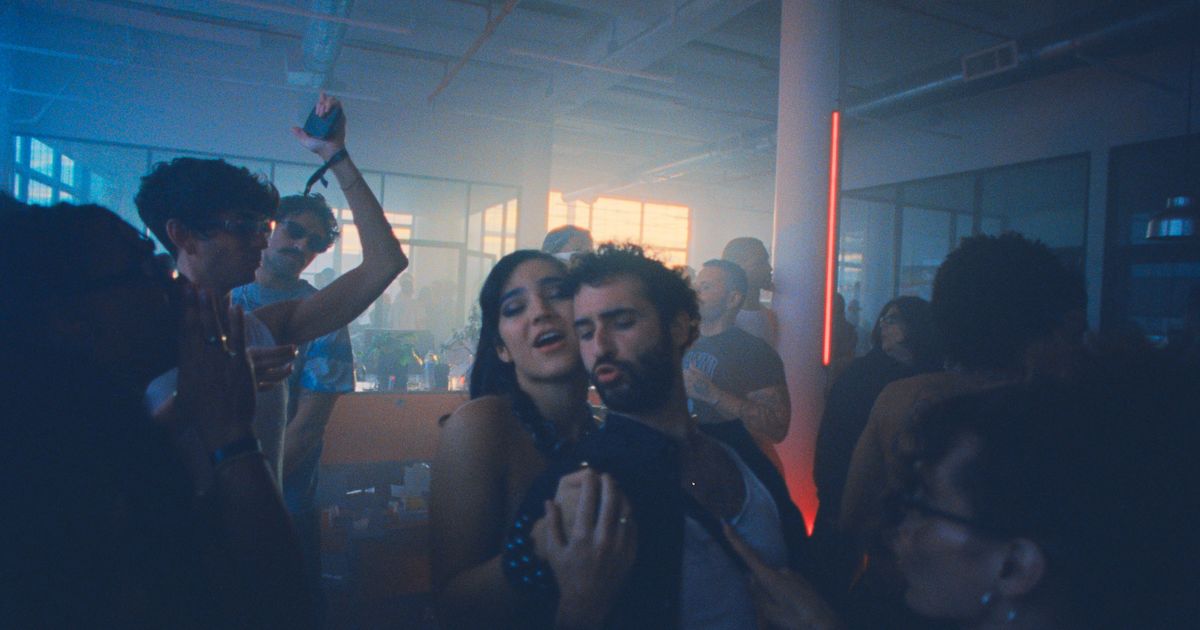
As the film’s narrative leaps forward by ten years, Peter’s return to a corporate, modernized iteration of Club Labor reflects broader anxieties within contemporary queer nightlife. The bright, energetic, and community-driven silvery spaces of the past give way to an industrial, red-lit atmosphere dominated by smoke and a predominance of homogenous crowds. This shift was designed to mirror the real-world commercialization of once-inclusive underground spaces, where rising operational costs have forced promoters to cater increasingly to affluent demographics.
To capture this contemporary iteration, the production utilized Pit//Stop, a genuine East Williamsburg queer rave organized by promoter Noah Shakoor. By shooting on actual film stock with large-format cameras during an active rave, the production team allowed attendees the autonomy to participate or avoid the camera’s sweep. The lighting design for these sequences was executed by GUMGUM Studio, a lighting collective that routinely works within New York’s unconventional underground venues. According to Zanzie Addington-White, GUMGUM’s creative director, illuminating these fragile, structurally varied spaces requires specialized techniques to fabricate the illusion of expansive, otherworldly environments that typically go undocumented due to strict venue privacy rules.
Real-World Collaboration and Improvised Reality
The production’s reliance on real-world locations extended to corporate and alternative spaces within the neighborhood. In one sequence, characters migrate to an after-party hosted within the Brooklyn offices of Porto Rocha, a prominent design agency whose workspace features modernist furniture and industrial architecture. Founders Leo Porto and Felipe Rocha, who regularly host private Friday evening gatherings for clients and friends, agreed to let the film crew use their office space. What was initially expected to be a controlled, muted environment turned into an unscripted late-night gathering featuring the agency’s actual social circles and guest DJs. Much of the dialogue written for this sequence was ultimately discarded in favor of capturing the organic interactions unfolding naturally within the room.
Similarly, scenes depicting Peter attempting to sell substances to make ends meet were captured organically during active events. Firstman frequently improvised interactions with actual partygoers who were unaware a feature film was being actively recorded, leading to spontaneous moments that reinforced the documentary-style realism of the project.
Broader Impact and Cultural Implications
The methodology employed behind Club Kid highlights a growing tension and symbiotic relationship between independent cinema and subcultural preservation in New York City. By embedding themselves within active underground ecosystems—culminating in a final scene set at H0L0, another prominent Bushwick venue featuring custom lighting by GUMGUM and an opening DJ set by young actor Reggie Absolom—the filmmakers managed to bypass the artificiality often associated with Hollywood depictions of nightlife.
Industry analysts note that as real estate pressures and corporate development continue to threaten physical nightlife infrastructure in major metropolitan areas, narrative films that accurately document these transient spaces serve an unintended archival function. For Firstman and his crew, the project ultimately transcended traditional filmmaking, operating instead as a contemporaneous record of a cultural moment as it unfolded in real-time across the warehouses and lofts of North Brooklyn.