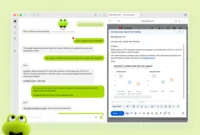
In a significant expansion of its enterprise-focused artificial intelligence strategy, Meta announced on Tuesday the release of a dedicated Model Context Protocol (MCP) server for WhatsApp Business. This development allows businesses to offload the traditionally cumbersome process of configuring, managing, and maintaining their WhatsApp Business accounts to AI agents of their choosing. By integrating directly with popular AI coding assistants like Claude, Cursor, and ChatGPT, Meta is effectively lowering the barrier to entry for small and medium-sized enterprises (SMEs) looking to deploy conversational commerce tools.
This announcement coincides with Meta’s broader rollout of new AI-focused subscription tiers, signaling an aggressive push to monetize its artificial intelligence infrastructure. For developers and business owners, the integration represents a shift away from fragmented manual workflows toward a unified, conversational interface for platform administration.
The Evolution of WhatsApp Business Integration
Historically, setting up a professional presence on WhatsApp required navigating a labyrinth of administrative hurdles. Developers were forced to jump between the Meta Developer Console, the Business Manager dashboard, external API references, and code editors. Each step—from verifying a business’s legal identity to registering phone numbers for the Cloud API—required precise manual input. Errors at any stage, such as a failure to comply with updated Terms of Service or a misconfigured webhook, could result in delays or account suspension.
The new WhatsApp Business Tools MCP serves as a bridge, allowing an AI agent to act as a surrogate administrator. By interacting with this server, an agent can autonomously perform tasks such as account creation, phone number verification, and the registration of endpoints for the Cloud API. Furthermore, the agent can monitor the health of the connection, providing real-time alerts if a payment method fails or if business verification status expires.
Chronology of the Meta AI Ecosystem Expansion
Meta’s recent move is part of a multi-year effort to integrate AI more deeply into its social technologies. The timeline of these strategic shifts highlights a clear trajectory toward automation:
- Late 2024: Meta begins pilot testing AI-agent-ready configurations for internal developer tools, focusing on streamlining ad campaign management.
- Early 2025: As the Model Context Protocol gains industry momentum, Meta begins transitioning its documentation and API endpoints to be "agent-ready," allowing third-party tools to parse and act upon technical instructions with greater accuracy.
- Mid-2025: Google and Microsoft announce extensive support for MCP servers, forcing a market shift where platform utility is measured by how easily it integrates with external AI assistants.
- September 2026: Meta launches the WhatsApp Business Tools MCP, marking the first time the company has allowed AI agents to handle the end-to-end lifecycle of a business account on its flagship messaging platform.
Supporting Data and the Rise of Conversational Commerce
The move to automate WhatsApp Business integration is supported by a surge in demand for conversational commerce. According to recent market intelligence reports, over 200 million businesses interact with customers via WhatsApp globally. As of late 2026, the volume of automated business-to-customer messages on the platform has increased by an estimated 40% year-over-year.
For businesses, the manual setup process was often the primary friction point. Data indicates that approximately 30% of small businesses that initiated the WhatsApp Business registration process abandoned it before completion due to the complexity of the Meta Business Manager interface. By automating these tasks, Meta is targeting an untapped segment of the market—businesses that lack dedicated engineering teams but possess the desire to scale their customer engagement through AI.
The Role of Model Context Protocol (MCP)
The Model Context Protocol (MCP) is the technical backbone of this announcement. It is an open-source standard designed to allow AI models to interact with local and remote data sources seamlessly. By utilizing an MCP server, a developer can grant an AI tool access to a secure, standardized "translator" that communicates with the WhatsApp Business Platform.
This is not an isolated effort. The tech industry has largely coalesced around the MCP standard to prevent the fragmentation of AI toolsets. Companies including Stripe, GitHub, Salesforce, and Slack have already released their own MCP servers. Meta’s contribution is notable because it provides a bridge between high-level generative AI agents and the highly regulated environment of a messaging platform that serves billions of users.
Official Stance and Technical Implementation
In its developer documentation, Meta emphasizes that the new MCP server is designed to handle "busywork" while ensuring security and compliance. When a business operator asks an AI to "set up a WhatsApp Business account," the agent utilizes the MCP server to trigger specific, verified API calls. The agent handles:
- Identity Verification: Automated submission of business credentials.
- Infrastructure Provisioning: Linking the business account to the Cloud API.
- Content Management: Generating, testing, and editing message templates for marketing or support.
- Error Troubleshooting: Using the complementary Meta Social Technologies MCP to query documentation and resolve API errors in real-time.
Meta has explicitly noted that this architecture is "agent-ready by design," meaning that the documentation itself is structured to be readable by large language models, reducing the likelihood of "hallucinations" or incorrect configuration during the setup process.
Implications for the Competitive Landscape
The impact of this integration is expected to be felt most acutely by third-party software vendors that previously specialized in providing "middleware" for WhatsApp Business setup. These vendors often charged fees for "onboarding as a service." With Meta providing a direct path for AI agents to handle this process, the value proposition for such middlemen may shift toward more advanced analytics and customer relationship management (CRM) features rather than mere configuration.
From a broader economic perspective, the democratization of enterprise-grade communication tools suggests that Meta is moving toward a service-based revenue model. If a business can set up its communication infrastructure in minutes through a simple chat with an AI agent, the likelihood of that business utilizing Meta’s paid AI-focused subscription plans increases significantly.
Fact-Based Analysis: Risks and Opportunities
While the automation of platform configuration offers clear benefits, it introduces new challenges. Reliance on AI agents to manage business accounts requires a high degree of trust in the security of the underlying models. Should an agent be compromised, or should it misinterpret a prompt regarding business settings, the potential for service interruption is significant.
Furthermore, the "black box" nature of AI configuration means that business owners may become less familiar with the underlying architecture of their own messaging platforms. If a technical issue occurs that is beyond the scope of the AI’s training data, businesses may find themselves at a disadvantage, lacking the manual expertise to diagnose the problem.
However, the opportunity for growth is immense. For the millions of small businesses that operate in emerging markets, this technology removes the need for expensive consultants or specialized software knowledge. By lowering the barrier to entry, Meta is effectively turning WhatsApp into an operating system for global commerce, where the primary interface is no longer a dashboard, but a conversational agent.
Future Outlook
As Meta continues to expand its suite of MCP servers, industry analysts expect to see similar integrations for Instagram and Facebook Pages. The goal is to create a unified AI-managed ecosystem where a single prompt can propagate a brand presence across Meta’s entire suite of apps.
For now, the WhatsApp Business Tools MCP serves as a testing ground for this vision. By prioritizing usability and developer experience, Meta is positioning its platforms to be the default choice for the next generation of AI-native companies. Whether this transition will lead to a more efficient digital economy or a higher dependency on centralized AI gatekeepers remains a topic of ongoing debate, but the trajectory of the industry is clear: the future of platform management is not in clicks and forms, but in conversation.