The Scope of the Crisis
The report, authored by Senior Research Analyst Kristen Budd, provides a sobering look at how the rapid expansion of the criminal legal system over the last several decades has disproportionately impacted the female population. Historically, discussions surrounding felony disenfranchisement have primarily focused on men, given their higher rates of incarceration. However, the sheer growth of women in the justice system—a trend that has accelerated significantly since the 1980s—has brought this issue to the forefront of civil rights discourse.
By analyzing national data, the report illustrates that the reach of felony disenfranchisement laws is not uniform. Instead, these laws act as a compounding force that marginalizes women of color and those living in poverty. When a woman loses her right to vote, she loses the ability to advocate for policies that directly affect her life, such as criminal justice reform, reproductive health, public education funding, and economic support for families.
Historical Context and Legislative Evolution
To understand the current state of voting rights for justice-impacted women, one must examine the origins of disenfranchisement laws in the United States. Many of these "civil death" statutes trace their roots to the post-Civil War era, often designed to limit the political influence of specific demographics. While the landscape has shifted through various court rulings and legislative efforts, the patchwork nature of current state laws creates a confusing environment for eligible voters.
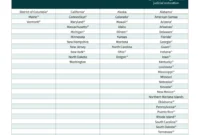
In some states, rights are restored automatically upon the completion of a sentence, including probation and parole. In others, individuals may be required to pay off outstanding legal financial obligations (fines and fees) before their voting rights can be reinstated. In the most restrictive jurisdictions, certain convictions result in a lifetime ban, requiring an executive pardon or a governor’s intervention to regain the franchise. This legal labyrinth effectively discourages participation, as many women are unsure of their eligibility status and fear that attempting to register or vote could lead to further legal repercussions.
Data Analysis: The Impact on Democracy
The statistical implications of this report are profound. With over three-quarters of a million women excluded from the ballot box, the political landscape of the United States is being shaped without the input of a significant constituency. The report highlights that the intersection of race and gender is a primary driver of these disparities. Black and Latina women are statistically more likely to be swept into the criminal legal system than their white counterparts, meaning they are also more likely to lose their voting rights.
This creates a feedback loop of inequality. Communities that are already underrepresented in government are further silenced, making it more difficult for them to elect representatives who prioritize the issues those communities face. The report emphasizes that when hundreds of thousands of voices are removed from the electorate, the democratic process itself loses legitimacy. The data underscores that this is not merely an individual issue but a systemic one that weakens the democratic fabric of the nation.
Lived Experiences and Barriers to Access
Beyond the hard data, the report chronicles the stories of six justice-impacted women, providing a human face to the legal statistics. These narratives reveal that the barriers to voting are not always formal legal bans. Even in states where laws have been reformed to allow people with criminal convictions to vote, many women face significant administrative hurdles.
For instance, the lack of voter education within correctional facilities is a recurring theme. Many women are never informed of their rights upon release, leaving them under the impression that they are permanently disenfranchised. Furthermore, those who are aware of their rights often encounter hostility or confusion at polling places, where poll workers may not be adequately trained on the nuances of state disenfranchisement laws. The combination of misinformation, systemic neglect, and the psychological barrier of "feeling like a second-class citizen" creates a formidable obstacle that keeps eligible women from the polls.
Perspectives from Policy Experts
Kristen Budd, the author of the report, argues that the current system is an affront to the democratic values the United States claims to uphold. "For generations, women have been fighting to secure a voice in our democracy," Budd noted during the report’s release. "Felony voting bans limit women’s political power, especially women of color who are already over-criminalized by our legal system. Even in states where justice-impacted women retain their full voting rights, many encounter barriers that make voting extremely difficult—from confusion about eligibility to a lack of voting access in correctional facilities."
Legal scholars and civil rights advocates echo these sentiments, suggesting that the normalization of voting bans in the U.S. is an anomaly compared to other developed nations. By restricting the franchise, the legal system is effectively determining the composition of the electorate, which many experts argue is a direct violation of the spirit of the 19th and 26th Amendments.
Policy Implications and Future Directions
The Sentencing Project’s policy brief offers a clear roadmap for reform. The organization is calling on both federal and state lawmakers to take immediate, decisive action to dismantle the barriers that keep justice-impacted women from the polls. The primary recommendation is the total abolition of felony voting bans, ensuring that the right to vote is inherent to citizenship rather than a privilege contingent upon a clean criminal record.
Specific policy proposals include:
- Automatic Rights Restoration: Implementing laws that automatically restore voting rights to individuals the moment they are released from incarceration, regardless of parole or probation status.
- Standardized Education: Mandating that correctional facilities provide accurate information and voter registration materials to all individuals upon their release.
- Removal of Financial Barriers: Eliminating the practice of conditioning voting rights on the payment of fines and fees, which is widely characterized as a modern-day poll tax.
- Federal Oversight: Establishing federal standards to prevent the disparate application of voting laws, ensuring that a citizen’s ability to vote does not depend on their zip code.
The Broader Impact on Political Representation
The implications of this disenfranchisement extend well beyond election day. When a segment of the population is systematically excluded from the voting process, the political platforms of candidates and parties shift to accommodate only those who are active voters. This leads to a cycle where the needs of the justice-impacted community—such as housing assistance, mental health services, and job training—are ignored in legislative agendas.
Furthermore, the exclusion of these women distorts the accuracy of census data and legislative districting in many states, as people are often counted in the census for the purpose of legislative representation where they are incarcerated, even though they have no voice in that jurisdiction. This "prison gerrymandering" further dilutes the political influence of urban, marginalized communities.
Conclusion: A Call for Reform
The report, Women Silenced at the Polls: How Criminal Convictions Deny the Right to Vote, serves as both a historical indictment and a call to action. It argues that a robust democracy requires the participation of all its citizens, and that the continued exclusion of justice-impacted women is a strategic weakness in the American political system. By removing these barriers, the nation would not only be taking a step toward gender and racial equity but would also be strengthening the integrity of its elections.
As the debate over voting rights continues to intensify across the country, the findings from The Sentencing Project provide a critical lens through which to view the intersection of the criminal legal system and the democratic process. Whether lawmakers will heed this call to restore the franchise to these three-quarters of a million women remains an open question, but the report makes it clear that the status quo is increasingly untenable in a nation that purports to believe in the principle of universal suffrage. The full report, which includes detailed state-by-state breakdowns and further testimonials, is now available to the public, providing the necessary data for activists, legislators, and citizens to begin the difficult but necessary work of reforming these outdated and harmful policies.