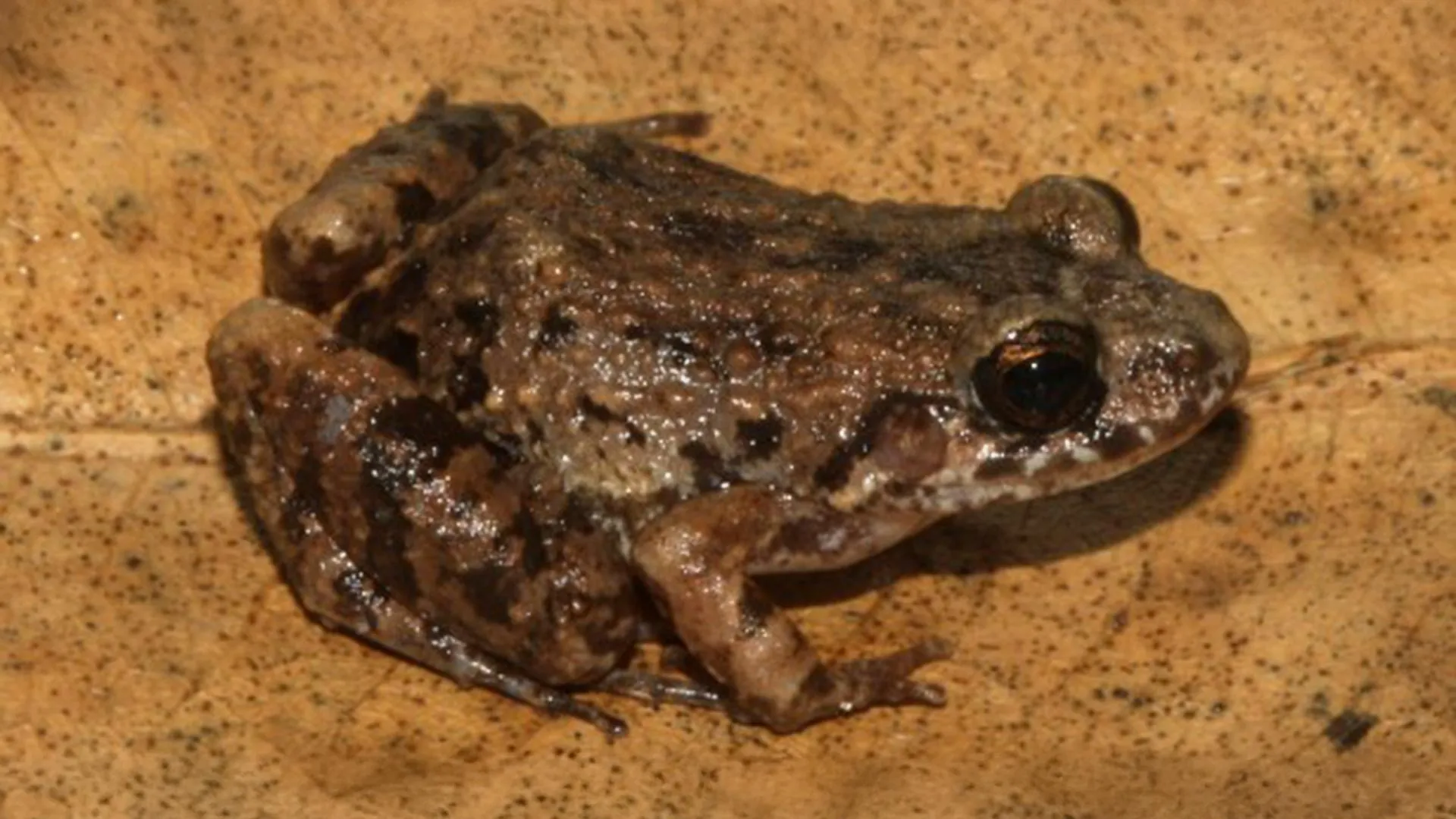
The discovery of Adenomera varcena, a previously unknown species of frog nestled within the complex, seasonally flooded forests of the Upper Juruá River in the western Amazon, serves as a poignant reminder of the vast, undocumented biological wealth hidden within one of the planet’s most critical ecosystems. Identified by an international team of researchers and detailed in the journal Ichthyology & Herpetology, the frog represents more than just a new entry in a taxonomic catalog; it stands as a testament to the phenomenon of cryptic diversity—a biological reality where distinct species remain hidden in plain sight, masquerading as their close relatives.
A Discovery Rooted in Rigorous Fieldwork
The identification of Adenomera varcena is the culmination of extensive scientific expeditions conducted in the western Acre region of Brazil, specifically focusing on the dense, often inaccessible forest fragments near the Moa and Crôa rivers, in close proximity to the municipality of Cruzeiro do Sul. This region, characterized by its unique "varzea" or floodplain dynamics, has long been a focal point for researchers seeking to understand the evolutionary history of Neotropical amphibians.
The research team, which includes prominent herpetologists such as Célio F. B. Haddad of São Paulo State University (UNESP) and Thiago R. Carvalho of the Federal University of Minas Gerais (UFMG), utilized a multi-faceted approach to distinguish A. varcena from its congeners. Because the genus Adenomera is historically associated with dryland forest environments, the discovery of a member of this genus in a seasonally submerged habitat was an immediate indicator that this specimen required closer scrutiny.
The researchers employed a robust methodology that integrated several lines of evidence. By synthesizing DNA barcoding, detailed bioacoustic recordings of mating calls, morphometric measurements, and a comparative analysis of museum specimens, the team confirmed that A. varcena possesses a unique evolutionary lineage. Physically, the frog is distinguished by the absence of a specific dark pigment spot on the ventral side of its forearm—a subtle trait that, when combined with its slow-rhythm, short-duration mating call, sets it apart from closely related species in the Adenomera genus.
The Significance of Cryptic Diversity
In the field of evolutionary biology, cryptic species are those that are morphologically similar or identical to other species but are reproductively isolated. This poses a significant challenge for conservationists and taxonomists alike. The discovery of A. varcena underscores the reality that biodiversity assessments based solely on visual inspection are prone to underestimating the true number of species inhabiting a given region.
The naming of the species—varcena—is a direct nod to the Amazonian floodplain forests, or várzea, where the species thrives. This habitat association is scientifically significant, as it indicates a niche specialization previously unrecorded for the genus. By adapting to an environment that experiences drastic shifts between dry and aquatic states, A. varcena has evolved specific reproductive and behavioral strategies that are only beginning to be understood by the scientific community.
Chronology of Scientific Inquiry
The path to identifying A. varcena was not an overnight success but rather a long-term endeavor facilitated by the Center for Research on Biodiversity Dynamics and Climate Change (CBioClima). This Research, Innovation, and Dissemination Center (RIDC), funded by the São Paulo Research Foundation (FAPESP), has been instrumental in organizing sustained surveys in the western Amazon over the past decade.
- Initial Surveys (2010–2015): Researchers began conducting regular surveys in the Juruá River basin, identifying high levels of amphibian activity and collecting genetic material from various Adenomera populations.
- Bioacoustic Analysis (2016–2019): Following initial field observations, the team focused on recording the specific acoustic signatures of frogs in the area, noting a distinct "slower rhythm" in the calls of the population that would eventually be classified as A. varcena.
- Genetic Sequencing (2020–2022): The team performed phylogenetic analyses at the University of São Paulo (USP) and other partner institutions, confirming that the genetic distance between this population and its nearest relatives was sufficient to warrant a new species designation.
- Formal Description (2023–2024): After peer review and anatomical verification using specimens held in collections at the Federal University of Uberlândia (UFU) and other institutions, the findings were finalized and published in Ichthyology & Herpetology.
Implications of Climate Change on Flooded Ecosystems
The precarious nature of the frog’s habitat brings to light the potential threats posed by anthropogenic climate change. As global temperatures rise, the hydrological cycles of the Amazon—specifically the timing and intensity of annual flood pulses—are becoming increasingly erratic.
"Since we don’t yet know in detail the species’ ecological requirements and its natural history, it’s difficult to predict the impacts of climate change," notes Thiago R. Carvalho. "The species has a preference for this specific ecosystem, and it is possible that changes in flood dynamics may influence its reproductive behavior."
Frogs in the Adenomera genus often rely on specific environmental cues to trigger mating. If climate change disrupts the seasonal pulse of the rivers, the breeding success of A. varcena could be compromised. Furthermore, because the species occupies a highly specific niche, it lacks the flexibility to migrate to alternative habitats, making it particularly vulnerable to the accelerating loss of natural areas in the Amazon.
A Race Against Extinction
The discovery of A. varcena serves as a sobering commentary on the current state of global conservation. Scientists are currently engaged in a high-stakes race against the rapid destruction of tropical habitats. The rate at which the Amazon is being fragmented by agricultural expansion, logging, and infrastructure development often outpaces the speed of taxonomic research.
Célio F. B. Haddad emphasizes that the lack of formal descriptions for species has tangible, negative consequences for legal protection. "Currently, the pace of ecosystem destruction outpaces the capacity of taxonomic studies to keep up," Haddad explains. "Consequently, species that haven’t yet been described are omitted from lists of threatened fauna and remain legally and environmentally vulnerable."
When a species is not formally recognized, it does not appear on the "Red Lists" maintained by organizations like the IUCN, nor is it factored into environmental impact assessments for industrial or agricultural projects. Consequently, a species could theoretically vanish from the Earth before it is even known to science. By formalizing the status of A. varcena, the researchers have provided a vital tool for conservationists to advocate for the protection of the Juruá River floodplains.
Broadening the Scope of Neotropical Herpetology
The research project behind this discovery was a collaborative effort involving a diverse network of institutions, including the Federal University of Minas Gerais (UFMG), the University of São Paulo (USP), the Federal University of Uberlândia (UFU), and international partners such as the Pontifical Catholic University of Ecuador (PUCE-Quito). This multidisciplinary cooperation is essential for mapping the biological complexity of the Amazon, an area that remains one of the least understood regions on the planet.
As the scientific community continues to uncover the hidden layers of Amazonian biodiversity, the case of Adenomera varcena will likely be cited as a prime example of the necessity of modern, integrated taxonomy. The transition from purely physical observation to the incorporation of molecular data and acoustic modeling has revolutionized the field, allowing scientists to discern the fine details of evolutionary divergence.
Moving forward, the research team intends to initiate further studies into the reproductive biology and population dynamics of A. varcena. Understanding how this frog navigates the challenges of a flooded forest will provide broader insights into the resilience of Amazonian amphibians. Meanwhile, the discovery reinforces a fundamental pillar of conservation science: one cannot protect what one does not know exists. The race to catalog the remaining biodiversity of Brazil is not merely an academic exercise; it is an urgent imperative for the preservation of the Earth’s ecological integrity.