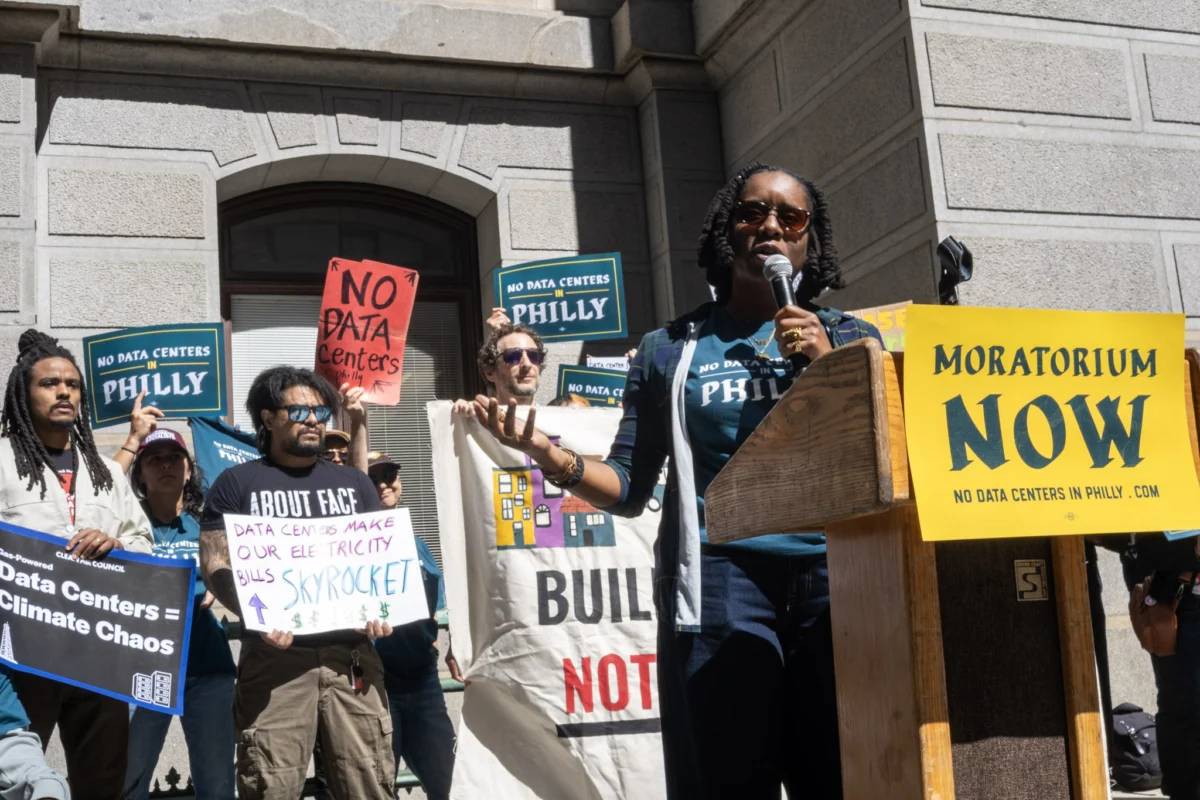
The rapid expansion of artificial intelligence is fundamentally transforming the American landscape, not just through software and silicon, but through the massive physical infrastructure required to power the next generation of computing. Across the United States, a growing divide has emerged between tech corporations promising economic revitalization and local residents who fear that the arrival of massive AI data centers will lead to environmental degradation, strained utility grids, and the industrialization of their neighborhoods. Recent polling from Gallup indicates that a majority of Americans now oppose the construction of large-scale data facilities in their immediate vicinity, citing deep-seated concerns over energy consumption and long-term ecological impact.
A Legacy of Industrial Trauma in Philadelphia
For activists in Philadelphia, this opposition is rooted in a history of environmental injustice. Shawmar Pitts, a lifelong resident of the Grays Ferry neighborhood, has become a central figure in the movement to block data center development in the city. Pitts’ perspective is shaped by his upbringing in the shadow of the Philadelphia Energy Solutions refinery, which served as the largest oil refinery on the East Coast until a catastrophic explosion in 2019 led to its permanent closure.
For years, the refinery dominated the local landscape, and for many residents like Pitts, the health consequences were not immediately understood. It was only after engaging with the environmental justice group Philly Thrive in 2018—which was campaigning against a proposed expansion of the facility—that Pitts began to connect the dots between the neighborhood’s industrial neighbors and the prevalence of chronic illnesses among his friends, family, and neighbors.
"I read the information they had on the table about how living near the refinery affects you, and I’m looking at all the sicknesses on this paper," Pitts recounted. "My mother has this, my sister has that, my next-door neighbor suffers from this—every house, someone has something on that list. From that point, I was all the way in." Today, as the managing co-director of Philly Thrive, Pitts is leading the "No Data Centers in Philly" campaign, arguing that his community cannot afford to host yet another industrial project that prioritizes corporate interests over public health.

The Geography of the Data Center Debate
The tension in Philadelphia is currently centered on two potential sites identified by city planners: one in the industrial corridors of Northeast Philadelphia and another in Grays Ferry. While formal construction permits have yet to be filed, the mere prospect of these facilities has sparked a swift, organized response from the community.
This reaction is not an isolated phenomenon. Throughout the United States, municipalities are grappling with the "NIMBY" (Not In My Backyard) challenge as technology giants scramble to secure land and power for GPU-heavy AI clusters. From the suburbs of Northern Virginia to the tech hubs of the American West, the pattern is consistent: as demand for compute power grows, the friction between data center developers and local residents intensifies.
The rationale for opposition often transcends simple aesthetics. Residents and environmental advocates frequently point to three primary concerns: massive water consumption for cooling systems, noise pollution from industrial-grade ventilation fans, and the carbon footprint associated with the electricity required to keep servers running 24/7.
The Energy Crisis and the Climate Paradox
The sheer scale of the energy required for the AI revolution is unprecedented. According to projections from BloombergNEF, U.S. data centers are on track to consume more natural gas by 2035 than the combined annual consumption of Germany and Japan. This estimate, which has nearly doubled in the last nine months, underscores the "AI paradox": the technology is being developed under the banner of progress, yet its energy demands are actively challenging the nation’s climate goals.
The environmental implications are severe. Burning natural gas for electricity releases significant amounts of carbon dioxide. Furthermore, data centers are often equipped with large-scale backup power systems, primarily diesel generators. During periods of peak electrical demand—often triggered by the very heat waves that climate change exacerbates—these generators may be pressed into service, contributing to localized air pollution.

Annie Fox, an attorney with the Clean Air Council, highlighted this danger during a recent rally in Philadelphia. "A typical data center planned in Pennsylvania has hundreds of diesel engines that spew air pollution," Fox stated. "Even if they are supposedly reserved for emergencies, the government has already signaled that these centers should rely on those generators rather than drawing from an overstressed electrical grid during heat waves. We can expect that to get more frequent."
A Growing Trend of Regulatory Moratoriums
The pushback from local activists is beginning to yield tangible political results. Officials in various jurisdictions are increasingly opting for caution over rapid development. In July 2026, New York Governor Kathy Hochul signed an executive order imposing a temporary halt on all new permits for large-scale data centers, stating that such projects should only proceed in communities that explicitly welcome them.
This sentiment is being mirrored across the country. Cities such as Denver, Indianapolis, Asheville, Charlotte, and Reno have all implemented varying degrees of moratoriums on data center construction. These pauses are designed to give local governments the breathing room necessary to conduct independent impact studies, update zoning regulations, and ensure that existing infrastructure can handle the increased load without disadvantaging residents.
For city planners, the challenge is balancing the desire to attract high-tech jobs and tax revenue against the potential for long-term community disruption. Many officials are now reconsidering whether the traditional economic development model—which often involves significant tax breaks for data center operators—is worth the cost when those facilities offer relatively few permanent jobs once construction is completed.
The Human Cost: Perspectives from the Ground
At the heart of the "No Data Centers" movement is a profound distrust of corporate promises. Sonya Sanders, president of the Philly Thrive board, speaks from the perspective of someone who has lost loved ones to the consequences of industrial pollution. Her husband, who lived his entire life in Grays Ferry, passed away in 2020 after a battle with a rare bone cancer.

"In my eyes, they killed him," Sanders said during a recent rally at City Hall. "The pollution killed him. I believe he would be here today if he wasn’t silently murdered, because it was the pursuit of profit that killed him." For Sanders and others in the movement, the argument is not just about environmental data or energy grids—it is about the sanctity of the neighborhood and the right to live without the fear of industrial fallout.
The rally, which drew over 100 participants, serves as a bellwether for the broader national mood. As AI continues to scale, the industry will inevitably face increased scrutiny regarding its physical footprint. The era of silent, unobtrusive expansion for data centers appears to be coming to an end.
Implications for the Future of AI Infrastructure
The struggle between AI developers and local communities presents a significant hurdle for the tech industry. If developers cannot secure buy-in from the municipalities where they operate, the industry may face a fragmented, inefficient, and increasingly expensive path to scaling its infrastructure.
Analysts suggest that the future of data centers may depend on a "social license to operate." This involves greater transparency regarding power usage, a shift toward renewable energy sources that do not strain local grids, and a more robust commitment to community benefits that go beyond the promise of temporary construction jobs.
However, as the demand for AI computation continues to grow exponentially, the conflict is likely to persist. For residents like Shawmar Pitts and organizations like Philly Thrive, the fight is not against technology itself, but against the assumption that any community is "expendable" for the sake of digital advancement. As the debate continues, the "No Data Centers" campaign stands as a reminder that every byte of data, every AI-generated image, and every machine learning model has a physical location, a power source, and a human impact.

As the regulatory landscape shifts and more cities consider restrictive measures, the tech industry will be forced to adapt. Whether that adaptation involves technological breakthroughs in energy efficiency or a complete shift in siting strategies remains to be seen. For now, the people in Grays Ferry and across the country are ensuring that their voices are heard in the halls of power, demanding a seat at the table where the future of their communities is being decided.