The selection committee for the Venice Film Festival’s Critics’ Week has officially pulled back the curtain on its lineup for the upcoming 83rd edition, highlighting a collection of seven debut features that promise to challenge cinematic conventions and explore the complexities of the modern world. Organized by the National Union of Italian Film Critics (SNCCI), the section remains a vital platform for emerging voices, this year placing a significant emphasis on narratives that bridge cultural divides, utilize cutting-edge technology like artificial intelligence, and confront difficult historical legacies. Running from September 2 to September 12, the Critics’ Week will showcase world premieres from a diverse array of territories, including India, Colombia, Tunisia, China, Brazil, and Italy, reinforcing the festival’s reputation as a global hub for discovery.
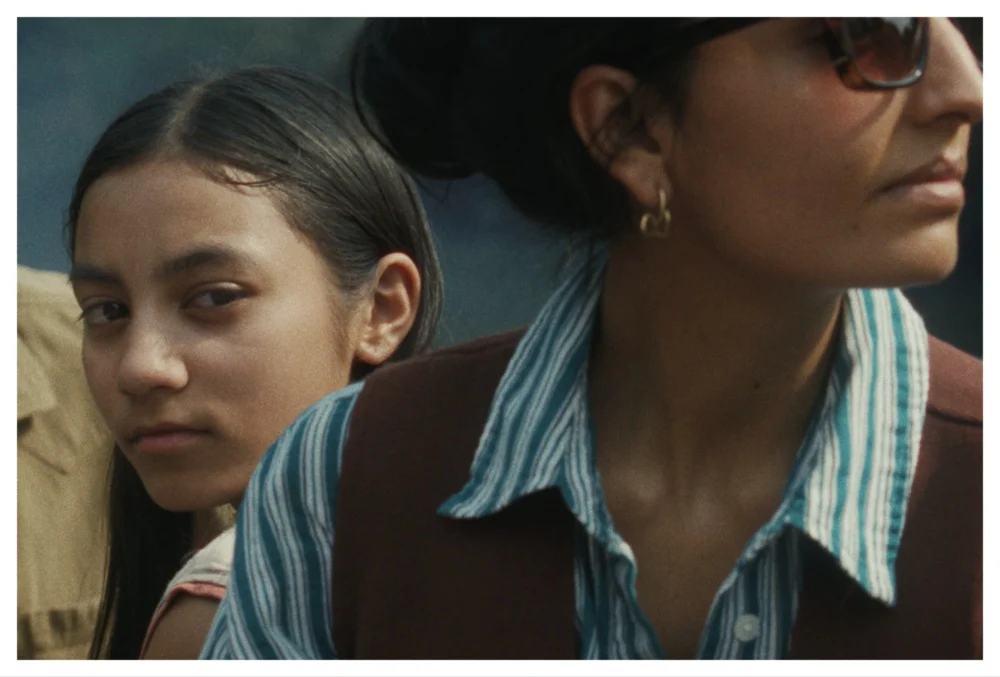
Among the most anticipated entries in the competition is Our Share of Sand, the debut feature from London-based Chilean-Indian filmmaker Shalini Adnani. The film, a co-production between India, the United Kingdom, and Greece, follows the journey of a 12-year-old girl named Maya. The narrative centers on her return to rural India, a journey prompted by a desire to reconnect with her estranged father. Adnani’s work is expected to offer a poignant exploration of identity, displacement, and the fragile bonds of family, set against the evocative backdrop of the Indian countryside. As a director with a multicultural background, Adnani represents the type of "transnational" storyteller that the Venice Critics’ Week has increasingly championed in recent years.
Latin American Innovation and Historical Reckoning
Latin American cinema maintains a powerful presence in this year’s selection, with Colombia contributing two distinct and provocative works to the competition. The first, The End of Times (El fin de los tiempos), directed by Bibiana Rojas Gómez and Juan David Cárdenas, is a hybrid work that blurs the lines between fiction and documentary. Notably, the film incorporates artificial intelligence as a narrative and aesthetic tool to examine the enduring impacts of colonialism and capitalism within the context of Colombian history. By using AI to reconstruct or reinterpret historical data, Gómez and Cárdenas aim to provide a fresh perspective on how the past continues to shape the economic and social structures of the present.
The second Colombian entry, Meteorite (Meteorito), directed by Sebastián Múnera, takes a more dramatic approach to the country’s complex internal history. The film explores the surreal and often dark intersections of luxury and crime by focusing on the planned construction of an amusement park on the grounds of the former estate of the infamous drug lord Pablo Escobar. Through this lens, Múnera examines the commercialization of trauma and the bizarre ways in which a nation’s violent history is repurposed for entertainment and profit. The inclusion of these two films underscores a vibrant period for Colombian cinema, which has seen a surge in international recognition for its willingness to engage with political and social themes through experimental formats.
Italian Cinema: From Social Realism to Rap Musicals
Italy, as the host nation, is well-represented with a selection of films that span a wide range of genres and social issues. In the competition slot, Paris-based director Tommaso Usberti presents Before the War (Prima della guerra). The film offers a stark look at contemporary European tensions through the story of Guido, a young man raised within a racist, nationalist milieu in Northern Italy. His worldview is fundamentally challenged when he falls in love with Sonia, a Kosovar immigrant. The film is expected to be a timely exploration of xenophobia, radicalization, and the transformative power of human connection in an increasingly polarized society.
Beyond the competition, Italian cinema also bookends the section with two high-profile out-of-competition screenings. Opening the Critics’ Week is Il Grande Giaffa (Giaffa the Great), directed by Marco Santi. Described as an "existential noir," the film is expected to set a moody and introspective tone for the festival. The closing film, Rider, represents a bold departure from traditional Italian drama. Co-directed by Roan Johnson and Davide Pavanello (better known in the music industry as Dade), Rider is a rap musical that follows the life of a young food delivery driver in Milan. The plot kicks into gear when the protagonist delivers a massive sushi order to a luxurious villa on the city’s outskirts and is unexpectedly invited to stay for the festivities. By blending the gritty reality of the gig economy with the stylized energy of a musical, Johnson and Pavanello aim to capture the pulse of contemporary urban life and the stark class divides that define it.
Global Dystopias and Digital Quests
The competition is rounded out by three films that venture into the realms of science fiction, digital mystery, and social drama. From Tunisia comes The H@llow Man, a dystopian feature directed by Kamel Laaridhi. Set in the year 2059, the film imagines a future where human experience is strictly controlled by a biochip designed to regulate memory and suppress disruptive emotions. Laaridhi’s work joins a growing movement of North African filmmakers using the genre of speculative fiction to comment on authoritarianism and the loss of individual autonomy.
Chinese director Dong Jie contributes Zoom In, Zoom Out, a drama that taps into the pervasive influence of gaming culture. The story follows a young video game designer who embarks on a physical journey to find his missing roommate, Gao. The only clues to Gao’s whereabouts are hidden within the code and environments of an online game, leading to a narrative that explores the thinning boundary between virtual spaces and reality. Meanwhile, the Brazilian drama London, directed by Victor Di Marco and Márcio Picoli, focuses on the internal and external struggles of a disabled young adult. The film is expected to offer a sensitive portrayal of agency and the search for independence within a society that often overlooks the needs of the marginalized.
The Lion of the Future and the Value of Discovery
Every film selected for the Venice Critics’ Week competition is eligible for the prestigious "Lion of the Future" (Luigi De Laurentiis Award for a Debut Film). This prize, which carries a significant cash award of $100,000, is shared between the director and the producer. It is awarded by a separate jury to the best debut film across all sections of the Venice Film Festival, including the Official Selection and Orizzonti. Winning or even being nominated for this award can provide a massive boost to a filmmaker’s career, often leading to international distribution deals and funding for future projects.
The 2024 selection comes at a time of significant transition for the global film industry. Beatrice Fiorentino, the general delegate for Venice Critics’ Week, addressed these challenges in a statement accompanying the lineup announcement. “Whilst the industry at large is grappling with its crises, these works are proof that cinema never stopped asserting its own cruciality,” Fiorentino remarked. She characterized the selected films as “fierce and independent, daring and vibrant,” emphasizing that they serve as a reminder that the "collective imagination can, and indeed must, continue to be rewritten."
Chronology and Strategic Importance
The announcement of the Critics’ Week lineup serves as a traditional curtain-raiser for the broader Venice Film Festival news cycle. Following the unveiling of these independent titles, the festival’s main official selection—which includes the high-profile competition for the Golden Lion—is scheduled to be announced this coming Thursday. This staggered release of information allows smaller, independent works to garner media attention before the spotlight shifts to major studio productions and A-list stars.
Historically, the Critics’ Week has been a springboard for directors who have gone on to become major figures in world cinema. By focusing exclusively on first-time directors, the section fulfills a specific mandate within the Venice ecosystem: to act as a talent scout for the industry. The 83rd edition’s focus on diverse geographical origins—ranging from the rural landscapes of India to the futuristic cities of Tunisia—reflects a concerted effort by the SNCCI to move beyond Eurocentric narratives and embrace a more globalized view of cinematic art.
Analysis of Industry Implications
The inclusion of a film using artificial intelligence (The End of Times) and a rap musical (Rider) suggests that the Critics’ Week is leaning into formal experimentation. As traditional theatrical models face pressure from streaming and changing audience habits, the festival appears to be betting on "hybridity"—the blending of documentary, fiction, and digital media—as the future of the medium. Furthermore, the strong presence of films dealing with social justice, migration, and historical trauma indicates that debut filmmakers are increasingly using their first platforms to engage with urgent political realities.
The $100,000 Lion of the Future prize remains one of the most substantial financial incentives in the festival circuit for new directors. In an era where independent financing is becoming harder to secure, the support provided by Venice can be the difference between a one-off project and a sustained career. As the festival approaches its September opening, the eyes of the industry will be on these seven directors to see which of them will emerge as the next major force in international cinema.
Venice Critics’ Week 2024 Full Lineup
COMPETITION
- The End of Times, Bibiana Rojas Gómez, Juan David Cárdenas (Colombia)
- The H@llow Man, Kamel Laaridhi (Tunisia)
- London, Victor Di Marco, Márcio Picoli (Brazil)
- Meteorite, Sebastián Múnera (Colombia)
- Our Share of Sand, Shalini Adnani (India, United Kingdom, Greece)
- Prima Della Guerra, Tommaso Usberti (France, Italy)
- Zoom In, Zoom Out, Dong Jie (China)
OUT OF COMPETITION
- Il Grande Giaffa, Marco Santi (Italy) — Opening Film
- Rider, Roan Johnson, Davide Pavanello (Italy) — Closing Film