Navigating the real estate market in New York City has historically been an exercise in patience, financial fortitude, and sheer luck. However, as the rental market settles into the late-autumn leasing cycle, prospective tenants across the five boroughs are finding themselves confronted with unprecedented pressure. In a climate where substandard studio apartments routinely command thousands of dollars per month and draw lines of desperate applicants stretching down the block, the hunt for an equitable living space requires a fine-tooth comb. This week’s real estate roundup casts a wide net across Brooklyn neighborhoods including Clinton Hill, Crown Heights, Ditmas Park, and Bay Ridge. While the borough remains a stronghold for historic prewar architecture and ornate Victorian-era craftsmanship, the modern rental landscape is also witnessing a tentative, highly scrutinized shift toward amenity-rich new construction.
The Broader Housing Landscape: Affordability and the Urban Market
The current challenges facing New York City renters are not happening in a vacuum. Industry analysts point to a chronic supply shortage, stubbornly low vacancy rates, and a competitive environment fueled by high mortgage rates that keep would-be buyers locked in the rental pool. According to recent quarterly housing data compiled by real estate boards across the city, the overall vacancy rate for rental apartments remains critically low, hovering well below the two percent threshold traditionally associated with a balanced market.
This scarcity has elevated the median asking rent to historic highs, pushing the average monthly cost of a Manhattan apartment past $4,200, while prime Brooklyn neighborhoods quickly close that gap. The systemic crunch has transformed housing affordability into a central political talking point. With upcoming elections drawing near, local housing policy, tenant protections, and the expansion of residential development are top of mind for voters casting ballots across the city. Amid these macro-level urban pressures, apartment hunters continue to scour digital listings for properties that offer genuine value, architectural integrity, or at least a functional layout for the price.
Clinton Hill and Crown Heights: Prewar Grandeur and Townhome Living
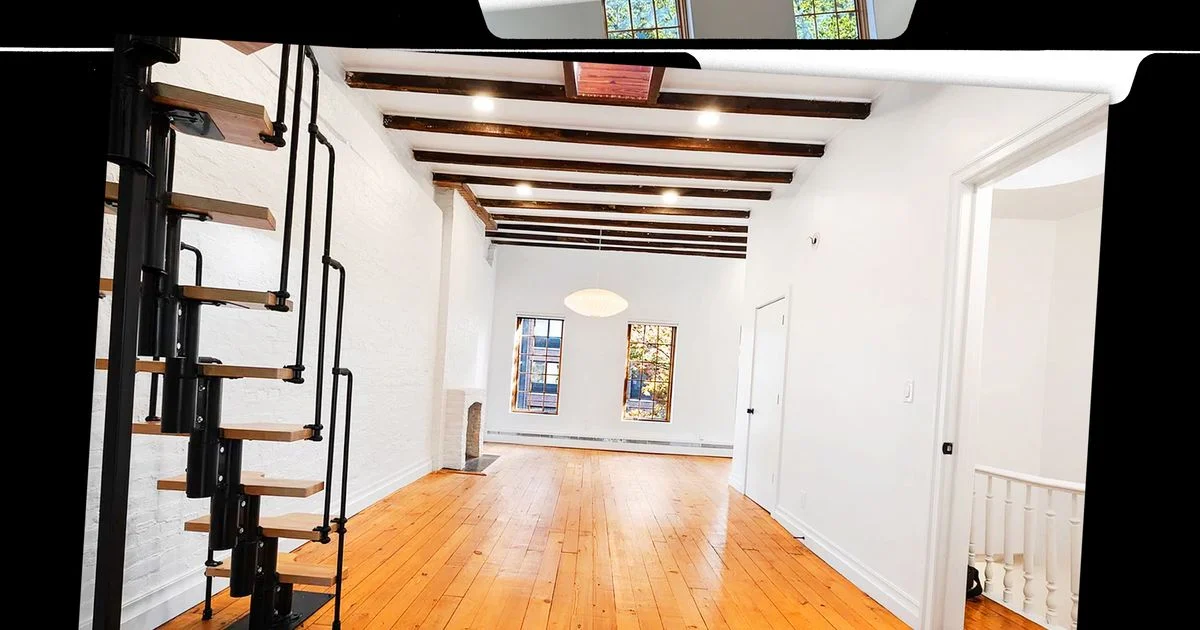
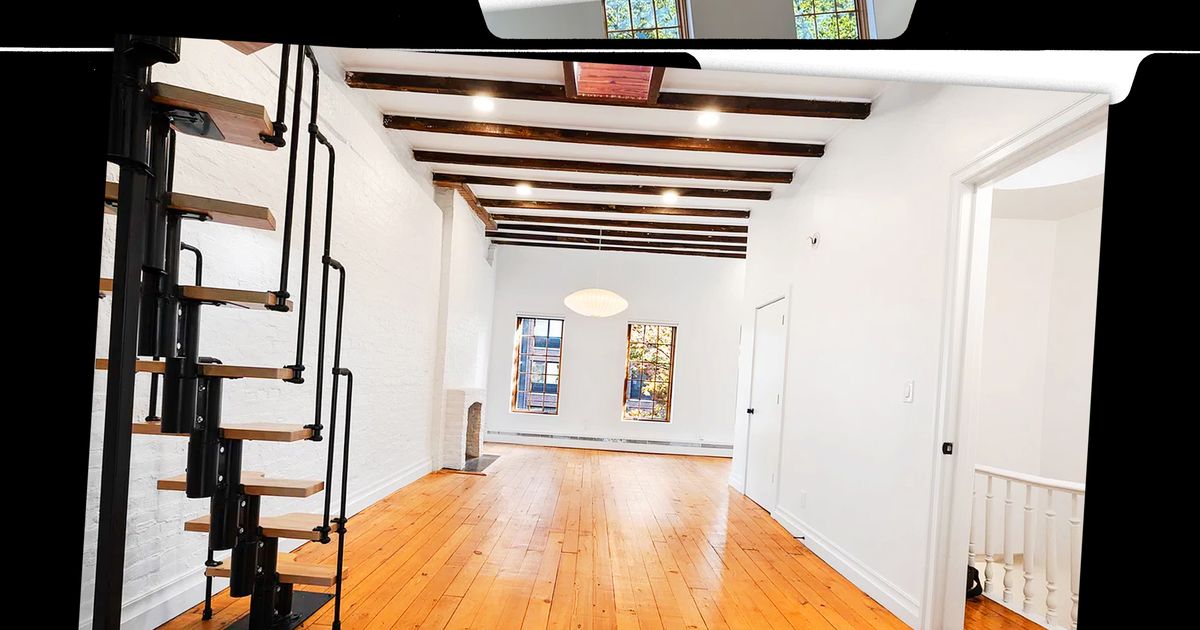
The search begins in Clinton Hill and Crown Heights, where historic brownstones and converted carriage houses offer a masterclass in nineteenth-century detailing. At the apex of the luxury market sits 160 Hall Street, a sprawling three-bedroom triplex demanding a staggering $15,000 per month. For this premium, tenants are treated to a dramatic, double-height living room defined by exposed timber beams and a sculptural winding staircase—a configuration that merges historical volume with contemporary high-end staging.
Moving down the price spectrum in the immediate area, options become more varied, though compromises in layout and location are common. A two-bedroom unit at 112 Washington Avenue commands $4,850 monthly. While situated in a section of the neighborhood often considered a transit desert, the building mitigates this inconvenience with Juliet balconies, abundant natural light, and a professionally landscaped rooftop dining area designed for communal use. Nearby at 89 Waverly Avenue, a one-bedroom floor-through apartment is listed at $3,899. The unit features standard prewar proportions, though it carries a controversial deep-red floor stain that polarizes minimalists and traditionalists alike.
Crown Heights presents its own architectural marvels, particularly along its quieter residential blocks. A standout listing at 666 Park Place offers a three-bedroom prewar layout for $5,495, drawing immense praise from preservationists for its intricate wall paneling and delicate wooden latticework in the formal dining rooms. Further south, properties like 1160 Dean Street offer classic parlor-floor living with original ceiling medallions and moldings, though they occasionally suffer from disjointed modern updates, such as incongruous hallway tile and mismatched light fixtures. Meanwhile, a property at 1536 President Street attempts to squeeze three and a half bedrooms into a single brownstone floor for $4,000, leaving spatial theorists to ponder the precise geometry of a "half-bedroom" in a historic urban footprint. For those prioritizing outdoor connection, 925 Sterling Place presents a garden-level one-bedroom for $3,250, complete with an exposed-brick decorative fireplace and subtly finished hardwood floors.
Ditmas Park: A Haven for Victorian Preservation
Heading deeper into central Brooklyn, Ditmas Park offers an entirely different architectural vernacular, dominated by sprawling detached and semi-detached Victorian homes dating back to the turn of the twentieth century. These properties often feature wraparound porches, steeply pitched roofs, and yards that feel entirely detached from the typical dense urban fabric of New York City.
The crown jewel of this week’s Ditmas Park inventory is an entire six-bedroom Victorian estate at 326 East 17th Street, listed at $13,000 per month. The home serves as a pristine time capsule of Victorian craftsmanship, boasting intact mahogany-clad studies, pocket doors, massive leaded-glass windows, and intricate inlaid parquet flooring. Local architectural preservationists have issued a collective plea to prospective renters: any future occupant must pledge to leave the historic kitchen and millwork untouched.
For renters operating on a more modest budget, Ditmas Park still delivers exceptional period charm. At 2333 Foster Avenue, a massive four-bedroom apartment under a turn-of-the-century roof rents for $4,999, featuring expansive windows and authentic stained-glass accents. On the more affordable end, 383 East 17th Street offers a spacious one-bedroom prewar unit for $2,750, characterized by an unusual elevated platform near the kitchen entryway and peaceful views of mature tree canopies. Even smaller footprints find a home here; 457 Stratford Road features a cozy attic-level one-bedroom tucked inside a baby-blue Victorian structure for $2,400. Featuring sloped ceilings and distinct character, the apartment proves that historic charm can still be found below the $2,500 threshold.
The New-Build Exception: Concrete and Amenities
While the market heavily favors prewar architecture for its aesthetic warmth, the realities of modern living often necessitate a look at contemporary developments. Stepping outside the comfort zone of historic brownstones, the rental at 2021 Farragut Road represents a pivot toward amenity-driven, new-construction living. Priced at $3,600 for a two-bedroom unit, the building offers a suite of contemporary conveniences that older stock simply cannot match, including dedicated bike storage, a modern fitness center, and shared co-working spaces.
Architecturally, the building leans into an industrial aesthetic, featuring exposed concrete ceilings and structural walls paired with functional hardwood flooring. For renters weary of drafty windows, squeaky floorboards, and the endless maintenance quirks associated with hundred-year-old structures, these new builds provide a compelling, low-stress alternative without sacrificing structural style.
Bay Ridge: Maritime Breezes and Railroad Charm
Farther southwest, the waterfront neighborhood of Bay Ridge offers a quieter, distinctively neighborhood-centric pace of life, albeit with longer commutes to Manhattan business districts. Despite the transit trade-off, Bay Ridge continues to attract renters seeking square footage, neighborhood stability, and classic prewar details.
At 263 86th Street, a traditional railroad-style one-bedroom apartment is listed at $2,850. The unit features well-maintained parquet floors and soothing pastel interior paint choices that offer a calm retreat from the bustling city outside. Nearby, 458 Senator Street offers a classic brownstone railroad layout for $3,600, complete with stamped tin ceilings and original wainscoting. While these layouts require creative furniture placement and modern radiator covers to manage the exposed heating units, the historical integrity remains largely intact.
For those seeking postwar configurations, 91 Gelston Avenue provides a detached brick-building experience with a generous 1,200 square feet of living space for $3,000, featuring a private terrace that overlooks a heavily wooded street. Meanwhile, 16 94th Street offers a two-bedroom prewar apartment for $3,500, defined by a sunken living room, secure security gates, and curved archways that evoke classic mid-century design.
Market Implications and Outlook
As the autumn leasing season transitions into the winter slowdown, the New York City rental market remains defined by stark contrasts. Renters are continually forced to weigh the aesthetic and emotional appeal of historic Victorian woodwork, parquet floors, and decorative fireplaces against practical considerations such as commute times, building amenities, and square-footage value.
While political campaigns debate long-term legislative solutions to the city’s housing shortage, day-to-day conditions on the ground dictate that prospective tenants must act swiftly and decisively. Whether securing a sprawling multi-level brownstone in Clinton Hill, an architectural time capsule in Ditmas Park, or a concrete-clad new build in the outer tiers of the borough, securing an apartment in Brooklyn remains a high-stakes endeavor where character and cost exist in a perpetual, delicate balance.