
The Goddard Space Flight Center: A Titan of Space Exploration and Innovation
The Goddard Space Flight Center (GSFC), a cornerstone of NASA’s planetary science and astrophysics endeavors, has a storied history of pioneering missions and technological advancements that have profoundly reshaped our understanding of the cosmos. Established in 1959, GSFC was born from the burgeoning space race, envisioned as a hub for scientific research and spacecraft development. Its early successes laid the groundwork for many of the observational capabilities we rely on today, solidifying its reputation as a leading institution in space science. The center’s multidisciplinary approach, integrating expertise from engineering, physics, astronomy, and computer science, allows it to tackle some of the most complex scientific questions facing humanity, from the origins of the universe to the potential for life beyond Earth. GSFC’s commitment to innovation is evident in its continuous development of cutting-edge instrumentation and its role in designing, building, and operating a vast array of spacecraft, each contributing unique pieces to the grand puzzle of space exploration. This dedication to pushing the boundaries of scientific discovery and technological capability has made Goddard an indispensable asset in NASA’s mission to explore, understand, and protect our planet and the universe.
Hubble Space Telescope: A Revolution in Observational Astronomy
Perhaps the most iconic spacecraft mission with significant Goddard Space Flight Center involvement is the Hubble Space Telescope (HST). Launched in 1990, Hubble has revolutionized observational astronomy, providing breathtaking images and unprecedented scientific data that have fundamentally altered our understanding of the universe. GSFC played a pivotal role in the design, construction, and operation of this legendary observatory. Scientists and engineers at Goddard were instrumental in developing Hubble’s sophisticated optical systems, including its primary and secondary mirrors, and its suite of scientific instruments, such as the Wide Field Planetary Camera 2 (WFPC2) and the Advanced Camera for Surveys (ACS). These instruments have enabled astronomers to observe distant galaxies, study the birth and death of stars, measure the expansion rate of the universe, and even detect planets orbiting other stars. The remarkable clarity and detail of Hubble’s images, made possible by its position above Earth’s distorting atmosphere, have captured the public imagination and inspired generations of scientists. Hubble’s legacy extends beyond its groundbreaking scientific discoveries. It also serves as a testament to the power of international collaboration, with contributions from the European Space Agency (ESA), and to the resilience of engineering, having undergone multiple servicing missions conducted by the Space Shuttle, allowing for upgrades and repairs that extended its operational life far beyond initial expectations. The data streams from Hubble continue to be analyzed by researchers worldwide, ensuring its scientific impact will be felt for decades to come.
James Webb Space Telescope: Unveiling the Early Universe
Building upon the legacy of Hubble, the James Webb Space Telescope (JWST) represents the next leap forward in infrared astronomy, and Goddard Space Flight Center has been a central player in its development and operation. JWST, launched in 2021, is the most powerful space telescope ever built, designed to observe the universe in infrared light, allowing it to peer further back in time than ever before. Its primary mirror, a marvel of engineering, is composed of 18 hexagonal segments coated in gold, which can capture faint infrared light from the earliest galaxies formed after the Big Bang. Goddard scientists and engineers were deeply involved in the design and testing of JWST’s sophisticated instruments, including the Near-Infrared Camera (NIRCam), the Near-Infrared Spectrograph (NIRSpec), and the Mid-Infrared Instrument (MIRI). These instruments are crucial for analyzing the composition and evolution of celestial objects. JWST’s mission is to answer fundamental questions about the universe, such as how the first stars and galaxies formed, how galaxies evolve over time, and the atmospheric composition of exoplanets, which could reveal the presence of biosignatures. The observatory’s unique orbit at the Sun-Earth L2 Lagrange point provides a stable thermal environment necessary for its infrared observations. The data from JWST is already yielding astonishing results, providing unprecedented views of star formation regions, distant galaxies, and the atmospheres of exoplanets, promising to rewrite textbooks and inspire new avenues of scientific inquiry.
Exploration of the Inner Solar System: MESSENGER and Parker Solar Probe
Goddard’s influence extends to the exploration of our own solar system. The MESSENGER (MErcury Surface, Space ENvironment, GEochemistry, and Ranging) mission, which orbited Mercury from 2011 to 2015, was a testament to Goddard’s capabilities in designing spacecraft for challenging environments. MESSENGER provided the first comprehensive study of Mercury, mapping its surface, analyzing its composition, and investigating its tenuous atmosphere. The mission revealed a surprisingly complex geological history and challenged existing theories about the formation of terrestrial planets. Goddard’s engineers and scientists were responsible for the spacecraft’s innovative design, including its heat shield, which protected it from the Sun’s intense radiation, and its suite of scientific instruments, such as the Mercury Dual Imaging System (MDIS) and the Mercury Gamma and Neutron Spectrometer (GNS).
More recently, the Parker Solar Probe, a mission designed to touch the Sun, exemplifies Goddard’s commitment to pushing the boundaries of solar physics. Launched in 2018, Parker Solar Probe is the first spacecraft to fly directly into the Sun’s upper atmosphere, the corona. It is designed to collect unprecedented data on solar wind, coronal magnetic fields, and solar energetic particles. Goddard’s contributions include the development of critical scientific instruments, such as the Fields Experiment (FIELDS) and the Wide-Field Imager for Parker Solar Probe (WISPR), which are essential for measuring the electromagnetic fields and capturing images of the solar wind. The mission’s audacious trajectory brings it closer to the Sun than any previous spacecraft, facing extreme temperatures and radiation. The data gathered by Parker Solar Probe is crucial for improving our understanding of solar weather, which can impact satellites, power grids, and communication systems on Earth, and for unraveling the mysteries of how the Sun accelerates particles and heats its atmosphere.
Planetary Science Missions: Cassini-Huygens and Mars Exploration Rovers
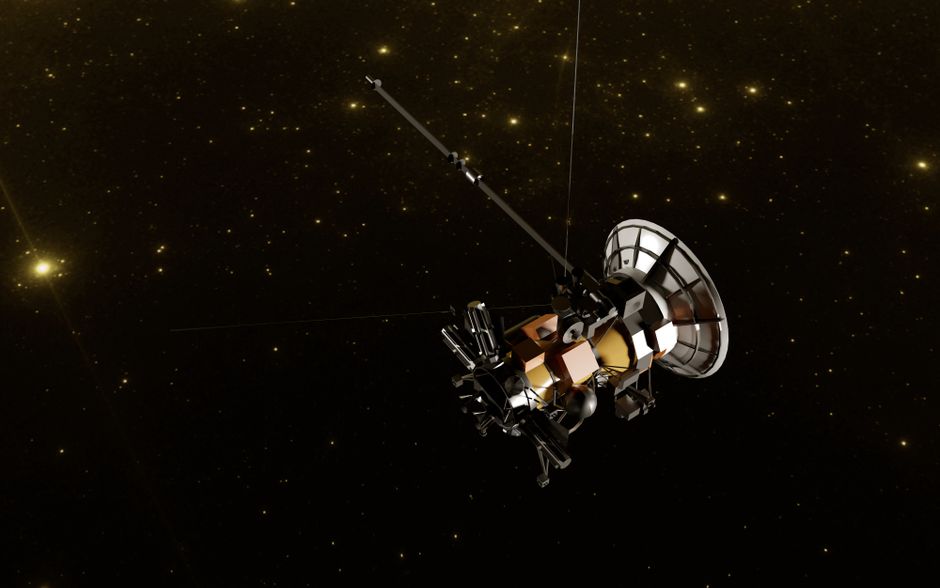
Goddard Space Flight Center has also been a significant contributor to major planetary science missions. While the Cassini-Huygens mission to Saturn was a joint endeavor with ESA and the Jet Propulsion Laboratory (JPL), Goddard played a crucial role in developing and operating key scientific instruments aboard the Cassini orbiter. These instruments, including the Magnetospheric Imaging Instrument (MIMI) and the Ultraviolet Imaging Spectrograph (UVIS), provided invaluable data about Saturn’s magnetosphere, rings, and moons. The Huygens probe, which successfully landed on Titan, provided the first direct measurements of its atmosphere and surface.
In the realm of Mars exploration, Goddard scientists and engineers have contributed significantly to the Mars Exploration Rovers (MER) – Spirit and Opportunity. These rovers, which landed on Mars in 2004, far exceeded their planned operational lifetimes, exploring the Martian surface and discovering evidence of past water. Goddard’s involvement included the development of key instrument components and the analysis of scientific data, contributing to our understanding of Mars’ geological history and its potential habitability. The success of these missions underscores Goddard’s commitment to unraveling the secrets of our solar system, from the rocky inner planets to the gas giants and their intriguing moons.
Earth Science and Climate Monitoring: A Vital Role
Beyond deep space exploration, Goddard Space Flight Center plays an indispensable role in observing and understanding our own planet. Its Earth Science Division is a world leader in developing and operating satellites that monitor critical aspects of Earth’s climate system. Missions like the Terra and Aqua satellites, part of the Earth Observing System (EOS), provide a continuous stream of data on atmospheric composition, ocean temperatures, ice cover, and land surface changes. Goddard scientists utilize this data to study climate change, monitor natural disasters, and improve weather forecasting models. The development of advanced sensors and instruments, such as the Moderate Resolution Imaging Spectroradiometer (MODIS) and the Atmospheric Infrared Sounder (AIRS), are hallmarks of Goddard’s Earth science expertise. These instruments enable precise measurements of atmospheric aerosols, greenhouse gases, and cloud properties, crucial for understanding the complex dynamics of Earth’s climate. The center’s research into Earth’s systems is vital for informing policy decisions and developing strategies to mitigate the impacts of climate change, demonstrating its commitment to using space technology for the benefit of all humanity.
Technological Innovation and Future Endeavors
Goddard Space Flight Center’s impact is not limited to individual missions; it is also a powerhouse of technological innovation that fuels future space exploration. The center consistently pushes the boundaries of spacecraft design, instrument development, and data analysis techniques. This includes advancements in areas such as miniaturization of components, development of advanced propulsion systems, and sophisticated data processing algorithms. Goddard’s commitment to innovation is evident in its ongoing research and development of next-generation telescopes, advanced Earth-observing instruments, and technologies for future human and robotic missions to the Moon, Mars, and beyond. The center is actively involved in conceptualizing and developing technologies for missions like the Lunar Reconnaissance Orbiter (LRO), which continues to provide invaluable data about the Moon’s surface, and is poised to play a crucial role in NASA’s Artemis program, aiming to return humans to the Moon. The expertise housed within GSFC ensures that NASA remains at the forefront of scientific discovery and technological advancement in space exploration for decades to come.
