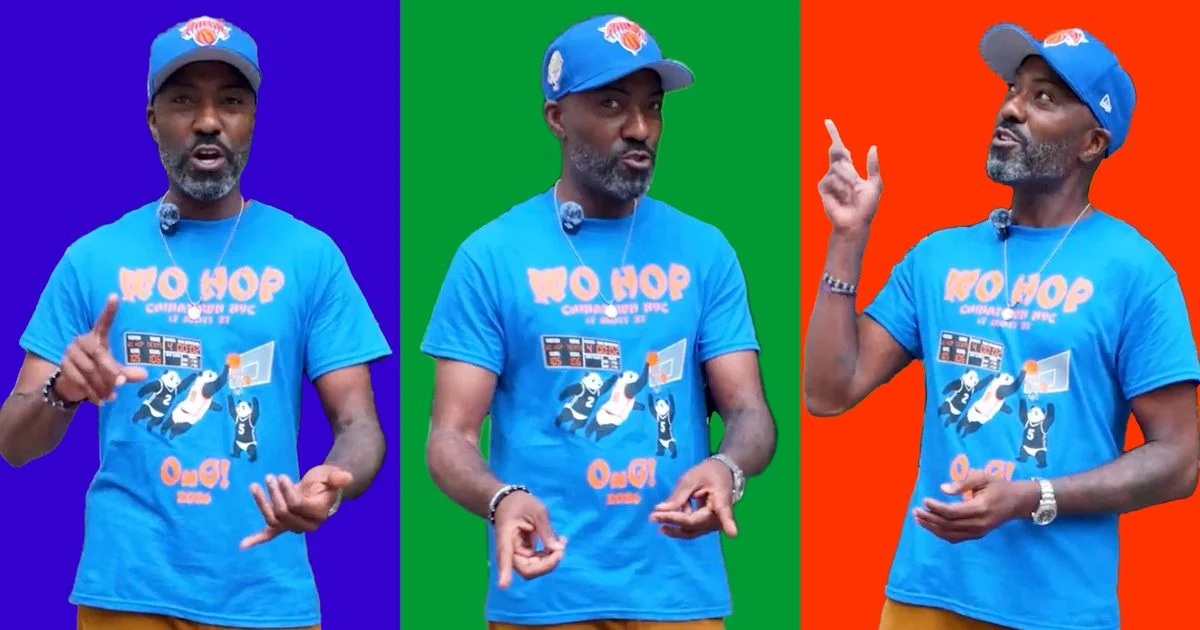
In the latest installment of the NYQ series, a digital feature by New York Magazine’s Curbed that evaluates the authenticity of high-profile New Yorkers, comedian and television personality Desus Nice provided an expansive look into his life as a lifelong resident of the Bronx. Born Daniel Baker, the former co-host of Desus & Mero has long served as an unofficial cultural ambassador for the city, particularly for the often-misrepresented borough of the Bronx. His responses in the interview offer more than just anecdotal humor; they serve as a roadmap to the shifting social and economic landscapes of New York City, touching on everything from the nuances of public transit etiquette to the evolving nature of the city’s most iconic landmarks.
The Bronx Roots and the Aspiration of the City
Desus Nice’s identity is inextricably linked to his upbringing in the Bronx, a borough that has historically been the epicenter of working-class New York culture. Having lived in the city for approximately 42 years—minus a brief three-year hiatus—Nice represents a demographic of New Yorkers who witnessed the city’s transformation from the fiscal crises of the late 20th century to the hyper-gentrification of the 2100s.
When asked about his recommendation for Cuban cuisine, Nice immediately pointed to Mott Haven. This choice is significant from a sociological perspective. Mott Haven, located in the South Bronx, has undergone a radical transformation over the last decade. Historically a hub for manufacturing and a stronghold for the city’s Puerto Rican and Dominican communities, it has recently become a focal point for luxury real estate development. Despite these changes, Nice’s insistence on the Bronx as a culinary destination highlights a persistent pride in local institutions that predate the recent influx of capital.
Furthermore, Nice’s linguistic habit of referring to Manhattan simply as "the city" reflects a deep-seated psychological geography common among residents of the outer boroughs. For many growing up in the Bronx, Queens, or Brooklyn during the 1980s and 90s, Manhattan was viewed as an "aspirational" destination—a place of commerce and glamour that felt distinct from the residential grit of their home neighborhoods.
The Mechanics of New York Transit and Survival
A significant portion of the NYQ inquiry focused on the Metropolitan Transportation Authority (MTA) and the unwritten social contracts of the subway system. Nice’s approach to subway etiquette—suggesting that "ugly babies should be in the back of the train"—is a quintessential example of the "New York cynical" humor that characterizes his brand. However, his more serious reflections on transit safety and efficiency provide insight into the daily calculations made by millions of commuters.
Nice described the "sizing up" process that occurs when a physical altercation seems imminent on a train, noting the necessity of weighing the potential for a felony charge against the need to defend one’s space. This highlights a broader reality of New York life: the constant negotiation of personal boundaries in a densely populated environment.
Data from the MTA indicates that while ridership has fluctuated in the post-pandemic era, the subway remains the lifeblood of the city, with over 3 million daily riders. Nice’s awe at the system’s 24-hour operation is a sentiment shared by urban planners globally. New York is one of the few cities in the world to maintain a 24/7 heavy rail system, a logistical feat that requires constant overnight maintenance and a complex labor force. Nice also touched upon the "subway sense"—the ability to fall asleep on a train and wake up precisely at one’s stop—a phenomenon often discussed by neurologists as a form of environmental conditioning.
The Transition from Straphanger to Celebrity
The interview also highlighted the socioeconomic trajectory of a successful New Yorker. Nice noted that while he once relied on the subway to reach the airport for international work trips, his current status allows him the luxury of private transport. This transition from "straphanger" to "car service regular" is a classic marker of upward mobility in the city.
This shift in status is also reflected in his relationship with the Metropolitan Museum of Art. Since 2018, the Met has enforced a mandatory admission fee for out-of-state visitors, while maintaining a "pay-as-you-wish" policy for New York State residents. Nice’s decision to pay the full suggested admission price is presented as a form of "giving back" to the arts, illustrating how personal success can alter one’s interaction with public and semi-public institutions.
Tourism and the Authenticity Paradox
One of the more revealing aspects of the interview was Nice’s embrace of "tourist" activities. He admitted to taking visiting family members to Times Square, the Olive Garden, and the Vessel at Hudson Yards—places often derided by locals as "tourist traps."
Times Square, which sees nearly 360,000 pedestrians daily, remains a point of contention for New Yorkers. While locals typically avoid the area due to congestion, Nice’s willingness to visit suggests a pragmatic recognition of the city’s dual identity: it is both a home for 8 million people and a global stage for 60 million annual visitors. His mention of the Vessel—a $200 million structure that has faced numerous closures due to safety concerns—serves as a critique of the city’s recent architectural "vanity projects" that often lack the soul of older neighborhoods.
Despite his critiques, Nice admitted to a secret tourist habit: spinning the "Alamo" cube at Astor Place. This 1,800-pound Cor-Ten steel sculpture by Tony Rosenthal has been a fixture of the East Village since 1967 and remains one of the few interactive public art pieces that bridges the gap between cynical locals and wide-eyed visitors.
Cultural Landmarks and the Loss of Institutional Memory
The conversation turned somber with the mention of Foley’s NY, a legendary Irish sports bar on 33rd Street that closed its doors in 2020. Foley’s was more than just a bar; it was a shrine to baseball history, known for its collection of over 3,000 autographed balls and its "ice-filled urinals," a detail Nice remembered with fondness.
The closure of Foley’s was part of a larger trend of "legacy" businesses failing during the COVID-19 pandemic. According to the New York State Comptroller, the city lost thousands of small businesses during this period, leading to a significant loss of the "third places"—social environments separate from home and work—that define neighborhood character. Nice’s desire to "bring back" Foley’s is a sentiment echoed by many who feel the city is losing its unique, gritty charm to sanitized corporate chains.
The Resilience of New York Sports and Spirit
Nice’s emotional connection to the city is perhaps most evident in his devotion to the New York Knicks. His admission that he recently cried over the team follows their spirited 2023-2024 playoff run, which revitalized the fan base and brought a sense of collective hope to Madison Square Garden. The Knicks’ cultural significance in New York cannot be overstated; they are often viewed as a barometer for the city’s overall energy.
This passion extends to his celebration of the New York Liberty’s mascot, Ellie the Elephant, whom he jokingly named the "sexiest New Yorker." This nod to the WNBA team, which has seen a massive surge in popularity and attendance at the Barclays Center, reflects the growing prominence of women’s sports in the city’s cultural zeitgeist.
Practical Survivalism: From Rats to "Street Finds"
Finally, Nice addressed the more visceral elements of New York living: the rats and the furniture. New York City’s ongoing battle with its rodent population has reached a fever pitch, with the appointment of the city’s first "Rat Czar" in 2023. Nice’s warning that New York rats "have an attitude" and will "charge at you" aligns with reports of increased boldness among the vermin population in recent years.
His anecdote about "biting" a piece of street furniture to verify if it was solid wood or pressed Ikea particle board serves as a masterclass in urban survivalism. It highlights the "curb alert" culture of New York, where high-quality items are frequently discarded on sidewalks, provided one has the expertise—and the lack of inhibition—to claim them.
Implications and Analysis
Desus Nice’s profile in NYQ is more than a celebrity interview; it is a testament to the enduring, albeit evolving, New York spirit. His perspective suggests that being a "real" New Yorker is not about avoiding tourist sites or strictly adhering to a specific aesthetic. Rather, it is defined by a deep-seated knowledge of the city’s systems, a fierce loyalty to one’s borough, and the ability to find humor in the daily struggle of urban life.
As New York City continues to grapple with issues of affordability, transit reliability, and the preservation of its cultural history, voices like Nice’s provide a crucial link between the city’s past and its future. He embodies the transition from the "old New York" of manual labor and neighborhood grit to the "new New York" of digital influence and global celebrity, all while keeping his feet firmly planted in the Bronx. For those looking to understand the current state of the New York identity, Nice’s mix of cynicism, pride, and practical wisdom offers a definitive guide.