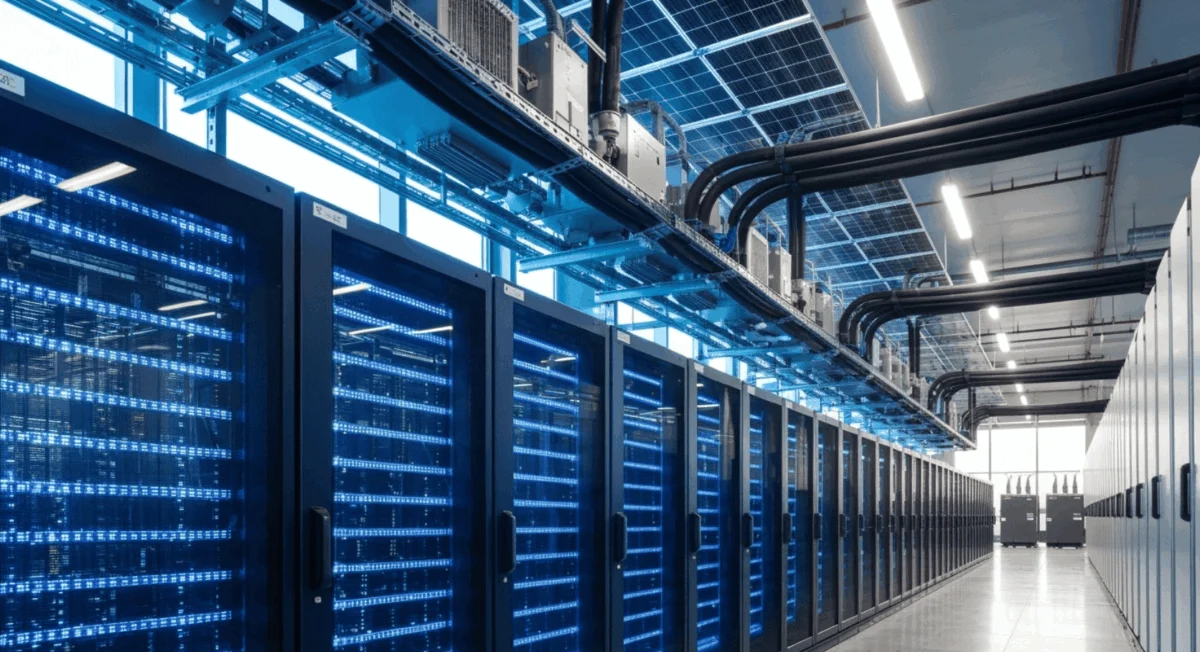
The rapid expansion of artificial intelligence has necessitated a massive build-out of physical infrastructure, yet a majority of Americans remain deeply skeptical of having these industrial giants as neighbors. According to a comprehensive study commissioned by Redfin and conducted by Ipsos in May 2026, 53% of U.S. residents oppose the construction of AI data centers in their immediate neighborhoods. While these facilities are the engines of the modern digital economy, only 34% of the population supports their development locally. This tension highlights a growing "NIMBY" (Not In My Backyard) sentiment that pits the fiscal benefits of the AI boom against concerns over quality of life, environmental sustainability, and the changing character of American suburbs.
The survey, which sampled 4,000 U.S. residents, reveals that data centers are currently the most unpopular form of local development. For comparison, the construction of new apartment complexes faced opposition from 39% of respondents, while mixed-use developments were opposed by only 32%. Even the controversial practice of converting single-family homes into smaller, multi-unit dwellings—often a flashpoint in local politics—saw less resistance (48%) than the prospect of a nearby data center. The data suggests that for many Americans, the "black box" nature of AI infrastructure represents a unique threat to the residential experience.
The Demographic Divide and the Roots of Resistance
Public sentiment regarding AI infrastructure is sharply divided along generational lines. The Redfin-Ipsos data indicates that older generations are significantly more likely to resist data center developments. Approximately 65% of Baby Boomers and 60% of Gen Xers expressed opposition to local data center construction. In contrast, younger generations appear more tolerant, though still cautious; only 42% of Gen Zers and 43% of Millennials reported similar opposition.
This generational gap may stem from differing priorities regarding neighborhood aesthetics and technological integration. Older homeowners often prioritize the preservation of traditional residential character and are more sensitive to the industrial appearance of data centers. Younger residents, who have grown up in a fully digitized world, may view these facilities as a necessary, albeit unglamorous, component of the modern world.
However, the reasons for opposition extend far beyond simple aesthetics. Respondents cited several critical concerns:
- Resource Strain: AI data centers are notoriously energy-intensive. Modern facilities require massive amounts of electricity to power high-performance GPUs and equally large volumes of water for cooling systems.
- Cost of Living: There is a growing fear that the immense power demands of data centers will outstrip local supply, leading to higher utility bills for residential consumers.
- Environmental Impact: Beyond resource consumption, the carbon footprint associated with the energy required to run these facilities has become a primary concern for climate-conscious citizens.
- Noise and Traffic: While data centers do not generate the same foot traffic as retail hubs, the constant hum of industrial cooling fans and the infrastructure required for their construction can disrupt the peace of suburban life.
- Economic Anxiety: The survey found that 58% of U.S. residents believe AI advances will eventually eliminate jobs and make homeownership less affordable, leading many to view the physical buildings as monuments to a technology they fear.
The Northern Virginia Paradox: A Case Study in Fiscal Success
While the public remains wary, the financial data from regions that have embraced data centers tells a different story. Northern Virginia, often referred to as "Data Center Alley," provides the most striking evidence of the economic benefits these facilities can provide. A Redfin analysis of county financial records from 2010 to 2025 shows that data centers have become a primary engine for public funding, particularly in the education sector.
Loudoun County and Prince William County currently lead the nation in data center density. Loudoun County is home to 176 facilities, the highest concentration in the United States, while Prince William County ranks third with 77. These counties have leveraged the presence of these facilities to generate unprecedented tax revenue through personal property taxes on the expensive computer equipment housed within the buildings.
The growth in revenue has been staggering. Over the last 15 years, personal property tax revenue per resident has surged by 639% in Loudoun County and 349% in Prince William County. This dwarf’s the 91% growth seen in neighboring Fairfax County, which has a significant but smaller data center presence. Because these taxes are levied on the physical assets—the servers and hardware—rather than just the real estate, the revenue potential is far higher than that of traditional warehouses or office buildings.
Funding the Future: The Impact on Public Education
The primary beneficiary of this "tax windfall" has been the public school system. In Loudoun and Prince William counties, education spending has outpaced nearly every other jurisdiction in the region. Between 2010 and 2025, Prince William County increased its education spending per resident by 82%, reaching $1,589. Loudoun County saw a 77% increase, bringing its per-resident education spending to $2,955.
For comparison, Fairfax County, which has a more diversified but less data-center-heavy tax base, saw a 49% increase in education spending per resident during the same period. Stafford County, which currently operates only one data center, saw a modest increase of 29%.
The impact on the ground is tangible. In Loudoun County, average teacher salaries rose by approximately 40% between 2010 and 2023, reaching an average of $83,000. In Fairfax County, salaries rose by a more modest 29% to $82,000. Local officials in Loudoun have explicitly credited data center revenue with allowing the county to meet the needs of a growing student population while simultaneously lowering the real property tax rate for individual homeowners.
The Homeowner’s Dilemma: Lower Taxes vs. Quality of Life
One of the most compelling arguments for data center development is its impact on residential property taxes. In Prince William County, the real-property tax rate was cut from $1.12 per $100 of assessed value in 2022 to $0.92 in 2025. This reduction has allowed the county to keep the residential tax levy relatively flat for homeowners, even as the cost of government services rises.
Redfin Economist Yingqi Xu notes that this creates a unique fiscal environment. "Loudoun County’s expanding data-center tax base has given local officials more capacity to invest in schools without upping tax rates on homeowners," Xu explained. "Because data centers are taxed largely through personal property taxes on computer equipment, that revenue can help fund growing budgets without putting the same pressure on residential real estate taxes."
However, real estate professionals warn that financial benefits do not always outweigh quality-of-life concerns for buyers. Matt Ferris, a Redfin Premier agent in Northern Virginia, reports that more clients are expressing unprompted concerns about data center proximity. Ferris cited a recent case in Gainesville where residents regretted their purchase after realizing the scale of nearby data center developments. "People are concerned about how a large industrial building might change the feel of their neighborhood," Ferris said. "Right or wrong, the perception is that data centers will change neighborhoods in a negative way."
Regulatory Blowback and the Path Forward
The rising tide of public opposition has begun to manifest in significant legislative action. In mid-2026, New York implemented a statewide ban on the construction of large-scale data centers in certain zones, citing environmental and grid-stability concerns. This move sent shockwaves through the tech industry, signaling that the era of unfettered expansion may be coming to an end.
Virginia, while remaining more hospitable to the industry, has also begun to adjust its stance. The state recently approved a first-in-the-nation tax on data center power consumption. Unlike the local personal property taxes that fund schools, this new state-level tax goes into Virginia’s general fund, intended to offset the broader costs of upgrading the electrical grid to handle the massive load required by AI applications.
As the demand for AI processing power continues to skyrocket, the industry faces a critical juncture. The conflict between the economic necessity of these facilities and the residential desire for quiet, resource-stable neighborhoods is likely to intensify. Developers are beginning to explore "hidden" data center designs—facilities that look like traditional office buildings or are located underground—to mitigate aesthetic concerns. Others are investing heavily in closed-loop cooling systems to reduce water usage.
Ultimately, the future of AI infrastructure in the United States will depend on whether local governments can convince their constituents that the educational and fiscal dividends are worth the industrial footprint. As the data from Northern Virginia shows, the financial rewards are undeniable, but for a majority of Americans, the price of "Data Center Alley" in their own backyard remains too high.