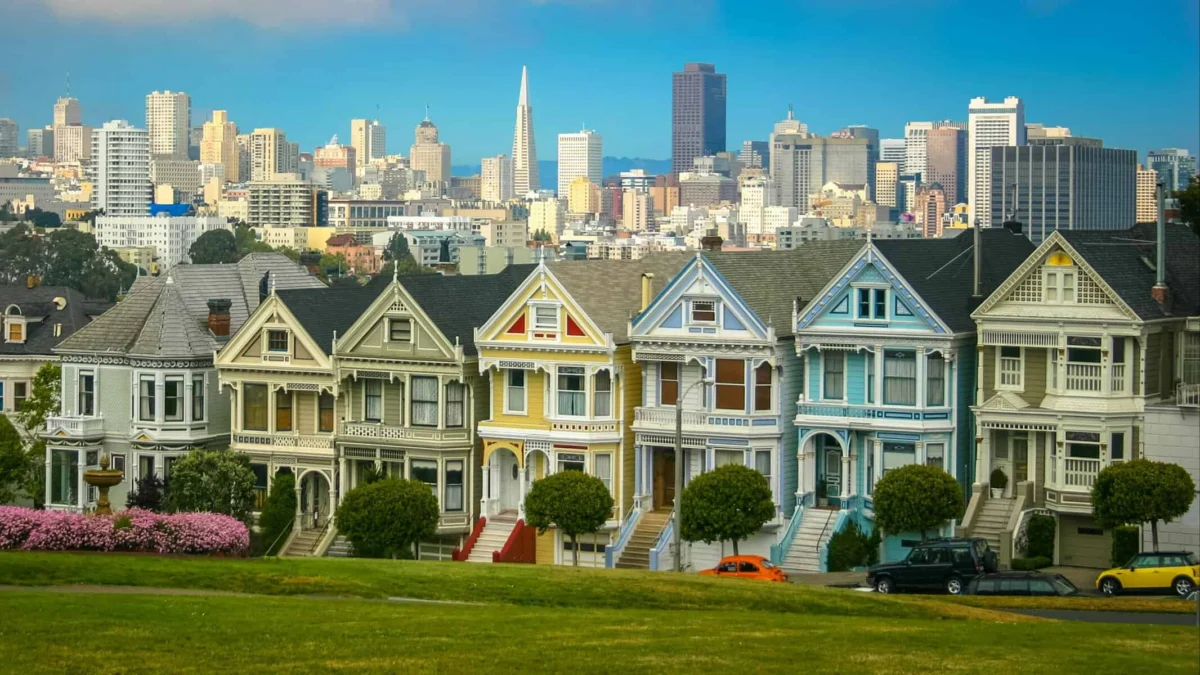
The San Francisco metropolitan area has reached a significant financial landmark in its real estate history, as the typical home now sells for more than $1 million above its price during the market’s post-Great Financial Crisis nadir. According to a comprehensive analysis of Multiple Listing Service (MLS) data by Redfin, the median sale price in the region has demonstrated a remarkable trajectory, underscored by the city’s transition from a traditional financial hub to the global epicenter of the artificial intelligence boom. This milestone reflects a resilient, albeit increasingly exclusive, market that has consistently outpaced national growth trends despite broader economic fluctuations and shifting work-from-home dynamics.
The statistical divergence began in earnest during the spring of 2026. In March 2012, as the region grappled with the lingering effects of the subprime mortgage collapse, the median home price in San Francisco bottomed out at $625,000. By March 2026, that figure had climbed to $1.7 million, marking the first time in history that the "recovery gap" exceeded seven figures. The upward momentum has shown little sign of abating; by June 2026, the median sale price reached $1.725 million, representing a $1.01 million increase over the June 2012 median of $718,000. This 140% surge in value over 14 years places San Francisco at the pinnacle of U.S. real estate costs, surpassing other high-density, high-cost markets like New York City and Los Angeles.
A Chronology of Recovery and Rapid Appreciation
To understand the current state of the San Francisco market, one must look at the sequence of economic catalysts that propelled prices upward following the 2008 financial crisis. The recovery was not a linear ascent but rather a series of waves driven by specific technological and capital cycles.
Following the 2012 bottom, the first major wave of appreciation was fueled by the "Web 2.0" and "Unicorn" era. Companies like Uber, Airbnb, and Salesforce expanded their footprints in the city, bringing a massive influx of high-earning professionals. By 2019, well before the onset of the COVID-19 pandemic or the current AI surge, the median sale price had already hit $1.5 million. This era was characterized by a chronic shortage of housing inventory—a result of the city’s notoriously stringent zoning laws and geographic constraints—clashing with an explosion of venture capital-backed wealth.
The pandemic period (2020–2022) introduced a brief period of volatility. As remote work became the norm, some predicted a permanent "exodus" from San Francisco. While the rental market saw a temporary dip, the for-sale residential market remained surprisingly stable, buoyed by low interest rates. However, the true "second wind" for San Francisco real estate arrived with the public release of generative AI technologies in late 2022. The city rapidly rebranded itself as the "AI Capital of the World," centered in neighborhoods like Hayes Valley—dubbed "Cerebral Valley" by tech enthusiasts. This new influx of capital and talent has effectively insulated the city’s housing market from the downturns seen in other metropolitan areas.
The AI Catalyst and the Luxury Market Surge
The recent acceleration in prices is inextricably linked to the concentration of artificial intelligence firms within the city limits. San Francisco’s home prices rose by 9.2% year-over-year in June 2026, a growth rate that occurred even as mortgage rates remained elevated compared to the previous decade. This growth is driven by a stark imbalance between supply and demand: while home sales jumped 23% year-over-year, new listings simultaneously fell by 16%.
The luxury segment has been the primary engine of this growth. Affluent buyers, many of whom are compensated with significant equity packages in pre-IPO or newly public AI companies, are often less sensitive to mortgage rate fluctuations. A Redfin study conducted earlier this year found that home prices in the Bay Area’s luxury ZIP codes soared 13.4% in the two years following the launch of ChatGPT. This segment of the market is currently experiencing unprecedented activity; pending sales of luxury homes in San Francisco skyrocketed 46% year-over-year in May 2026, the largest such increase in the United States.
Market analysts point toward the upcoming initial public offerings (IPOs) of industry giants such as OpenAI and Anthropic as the next major liquidity events. Projections suggest that the combined earnings of employees at these two firms could theoretically allow them to purchase nearly one-third of all available homes in San Francisco. This "IPO wealth effect" has historically led to spikes in local real estate prices, as newly minted millionaires seek to diversify their portfolios into tangible assets.
Comparative Data: San Francisco vs. The Nation
When compared to other major metropolitan areas, San Francisco’s appreciation remains an outlier. While the national median home price has risen 128% since the post-recession bottom, San Francisco’s 140% increase reflects a unique combination of high demand and extreme scarcity. Even New York City, often considered the primary rival for real estate investment, saw a slightly lower appreciation rate of 122% over the same period.
The disparity is even more pronounced when examining the income required to enter the market. As of mid-2026, a prospective homebuyer would need an annual household income of approximately $300,000 to afford the median-priced home in San Francisco. In contrast, the median household income in the city, while high by national standards, has grown by roughly 90% since 2012—trailing significantly behind the 140% rise in property values. This 50-point gap between wage growth and real estate appreciation underscores the widening divide between those with equity-based compensation and those reliant on traditional salaries.
Economic Implications and the "Missing Middle"
The implications of a $1.7 million median price point extend far beyond the real estate sector, impacting the city’s broader social and economic fabric. For long-term homeowners, the $1 million gain in equity represents a massive windfall, providing a sense of financial security and significant borrowing power. However, for the city’s essential workforce—including teachers, healthcare workers, and public servants—the dream of homeownership has become increasingly elusive.
Economists warn of a "hollowing out" of the middle class in San Francisco. When the "typical" home requires a $300,000 income, the city risks becoming a gilded enclave reserved for the tech elite and established property owners. This demographic shift has led to increased political pressure on local officials to streamline the housing approval process and incentivize the construction of "missing middle" housing—multi-family units that are affordable for those who earn too much for subsidized housing but too little for the current market rates.
Furthermore, the "lock-in effect" continues to constrain inventory. Many current homeowners are holding onto mortgages with interest rates in the 2.5% to 3.5% range, which were secured during the pandemic. Selling their homes to move within the city would mean trading those low rates for significantly higher ones, often resulting in a higher monthly payment for a smaller or comparable home. This has created a stagnant secondary market, where only those forced to move by life events or those with extreme wealth are participating in transactions.
Future Outlook and Market Resiliency
Looking toward the remainder of 2026 and into 2027, the San Francisco market appears poised for continued exclusivity. While some analysts suggest that the "AI hype" could eventually cool, the physical concentration of talent and capital in the city creates a "network effect" that is difficult to replicate elsewhere. Unlike the 2008 crisis, which was fueled by subprime lending and poor credit quality, the current price levels are supported by high-earning individuals with substantial down payments and high credit scores.
The resilience of the San Francisco market, despite the challenges of high interest rates and the "doom loop" narratives that circulated in national media during 2023, suggests that the city’s core value proposition remains intact. As long as San Francisco remains the primary laboratory for the world’s most transformative technologies, the demand for its limited housing stock is likely to maintain the $1 million-plus premium over its post-recession lows.
In conclusion, the surpassing of the $1 million appreciation mark is more than just a statistical curiosity; it is a testament to the radical transformation of San Francisco’s economy over the last decade and a half. While the city continues to lead the nation in innovation and wealth creation, the burgeoning cost of entry serves as a stark reminder of the challenges inherent in a market where housing has transitioned from a basic necessity to a high-stakes investment vehicle. For the San Francisco of 2026, the "new normal" is a market defined by seven-figure gains, AI-driven demand, and a deepening conversation about who can afford to call the city home.