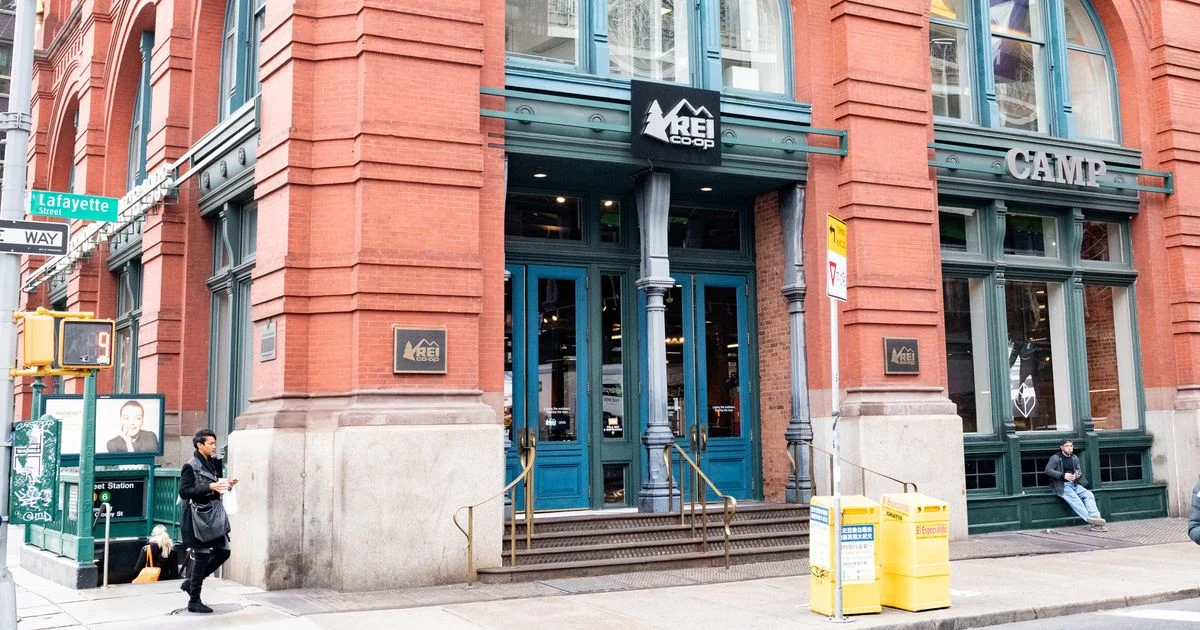
In the final week of operations, the atmosphere inside the store was a mixture of somber nostalgia and frantic scavenging. Long-time members of the outdoor retail co-op, some of whom have maintained memberships for decades, arrived to pay their respects to a staff they had come to know by name. Glen Nison, a retired Sanitation Department worker and a member of the co-op since 1975, has been a fixture at the Soho flagship since its inception. Known for bringing homemade banana bread to the employees, Nison described the closure as the loss of a primary social outlet. On a recent Tuesday, his final haul included a heavily discounted North Face parka and various gear bags from the "ReSupply" section—a popular corner of the store dedicated to used and returned items sold at steep discounts.
The "ReSupply" section remained the store’s busiest area in its twilight hours, as shoppers picked through remnants of climbing ropes, thermal layers, and subzero sleeping bags. However, for many, the shopping experience was secondary to the sense of community being dismantled. Beyond the sale of tents and hiking boots, the Soho REI served as a "third place" for urban adventurers, offering a reliable public restroom, gear repair services, and a venue for lectures on mountaineering and conservation.
A Chronology of the Soho Flagship
The REI Soho flagship opened in November 2011 during a period of significant retail expansion in Manhattan. At the time, the move was considered a calculated risk by the Seattle-based retailer. The goal was to capture a market of "high-rise-living, taxi-riding, restaurant-eating" New Yorkers who, despite their urban environment, possessed a growing appetite for outdoor recreation.
The timing coincided with the Bloomberg administration’s aggressive push to make New York City more bicycle-friendly, including the expansion of bike lanes and the precursor to the Citi Bike share program. REI leaned into this trend, installing a "quick-fix" bike-repair station and a full-service shop in the cellar to cater to the city’s burgeoning cycling community.
Architecturally, the store was a masterpiece of adaptive reuse. Housed in the Puck Building—a Romanesque Revival structure completed in phases between 1885 and 1893—the retail space was designed by the firm Callison. The renovation involved exposing the original late-19th-century brick walls and barrel-vaulted ceilings. In a nod to both the building’s industrial heritage and REI’s Pacific Northwest roots, designers repurposed original wood from the site to create cashier counters and display tables. Two massive steam flywheels, which once powered the printing presses of Puck magazine, were preserved as centerpieces of the interior design.
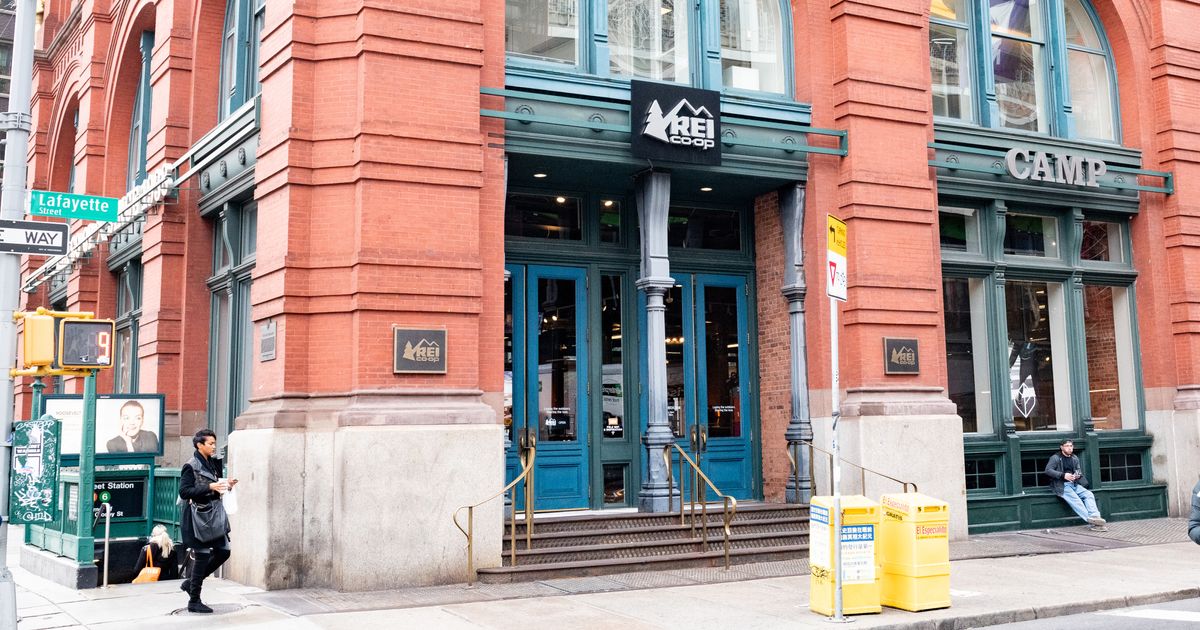
For over a decade, the store flourished as a destination for those preparing for treks to the Adirondacks, the Catskills, or more distant locales like the Himalayas. It survived the retail apocalypse of the mid-2010s and the profound disruptions of the COVID-19 pandemic, but the combination of shifting real estate dynamics and internal labor tensions eventually took their toll.
Economic and Labor Factors Behind the Closure
While REI has not pointed to a single definitive cause for the closure, several factors have converged to make the Soho flagship untenable. Primary among these is the relationship with the landlord, Kushner Companies. Reports suggest that the two parties were unable to reach an agreement on a lease renewal. As commercial rents in Soho have rebounded following the pandemic, the premium on large-format retail spaces has increased, often favoring luxury brands or tech giants over traditional retail.
The upstairs portion of the Puck Building has already signaled this transition. OpenAI, the artificial intelligence research laboratory, recently took over 90,000 square feet of office space in the building. The arrival of a high-tech tenant with massive capital reserves contrasts sharply with the "granola" aesthetic of a co-op selling freeze-dried camping meals and wool socks.
Labor relations also played a significant role in the store’s recent history. In March 2022, the Soho REI became the first of the company’s locations to unionize, with employees voting 88 to 14 to join the Retail, Wholesale and Department Store Union (RWDSU). The unionization effort was driven by concerns over wages, scheduling stability, and what employees described as a "values gap" between the company’s progressive marketing and its internal management practices. Since that historic vote, REI has faced numerous allegations of "union busting" at various locations across the country, though the company has consistently denied these claims, citing a need for operational flexibility in a challenging retail environment.
Market Analysis and the Future of Outdoor Retail
The closure of the Soho flagship reflects broader trends in the outdoor industry and the New York City retail market. Financially, REI has faced headwinds. In its 2023 annual report, the co-op reported a net loss of $311 million, despite a slight increase in sales. The company attributed these losses to rising costs, investments in employee pay, and a post-pandemic correction in outdoor gear demand.
Furthermore, the "flagship" model is being re-evaluated. Large, multi-level urban stores carry immense overhead costs in terms of rent, staffing, and security. Many retailers are shifting toward a "hub-and-spoke" model, maintaining smaller showrooms in city centers while directing heavy inventory and technical services to suburban locations where square footage is more affordable.

For New York City residents, the loss of the Soho location leaves a significant void. While specialty shops like Paragon Sports near Union Square remain, the unique co-op model of REI—where members receive an annual dividend on their purchases—provided a specific loyalty incentive that other retailers struggle to match. Loyalists will now be forced to travel to Huntington Station on Long Island or East Hanover in New Jersey for in-person consultations, or rely entirely on e-commerce.
Community Reaction and Broader Implications
The reaction from the local community has been one of collective mourning. Beyond the loss of gear access, many lament the loss of the store’s role as an educational center. Over the years, the Soho REI hosted hundreds of workshops on everything from wilderness first aid to ultralight backpacking.
Juan Pablo Baene, a local artist and frequent shopper, noted that the store represented a rare accessible space in an increasingly exclusive neighborhood. "You learn a lot about a culture from how they treat public spaces and bathrooms," Baene said. "It’s sad to see a place that welcomed everyone being replaced by something more closed off."
The departure of REI also raises questions about the future of the Puck Building’s ground floor. As a landmarked site, any new tenant will have to respect the architectural integrity of the space, but the likelihood of another community-focused retailer taking over 35,000 square feet is slim. Industry analysts suggest the space may be subdivided or converted into a more "experiential" retail concept that requires less inventory and more digital integration.
Conclusion
As the final shutters descend on the Soho REI on July 23, the event serves as a microcosm of the pressures facing modern brick-and-mortar retail. The intersection of rising real estate costs, labor activism, and the relentless march of technological giants like OpenAI has squeezed out a business that was once seen as a permanent fixture of the Manhattan cityscape.
For the employees, the closure means the end of a hard-fought chapter in labor history. For the customers, it is the end of a "base camp" in the concrete jungle. And for the city, it is a reminder that even the most grand and successful retail experiments are subject to the volatile cycles of urban real estate. While the flywheels of the old printing presses will remain in the building, the energy they once symbolized—of a bustling, accessible marketplace for the great outdoors—will be noticeably absent from the corner of Houston and Lafayette.