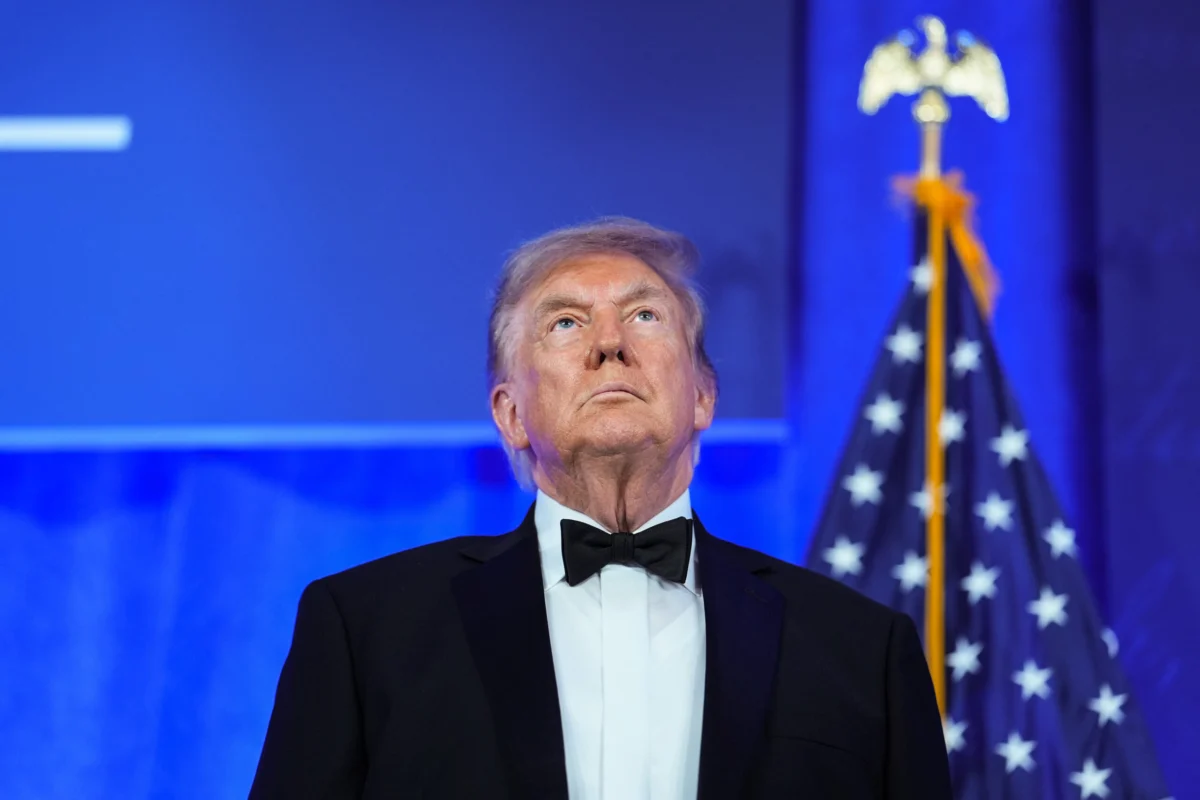
President Donald Trump made a landmark appearance on Friday evening at the White House Correspondents’ Association (WHCA) Dinner, marking the first time he has attended the annual gala. The event, held at the Waldorf Astoria in Washington, D.C., was a rescheduled affair following a security breach earlier this year. Over the course of a rambling 64-minute speech, the President delivered a characteristic blend of grievances, personal insults, and media criticism, targeting a wide array of journalists, political opponents, and entertainment figures. While the dinner has traditionally been a venue for self-deprecating humor and a celebration of the First Amendment, Trump utilized the podium to reinforce his long-standing narrative regarding the "fake news media" and to project his influence over the future of the industry.
A Delayed Gathering and Heightened Security
The gala was originally scheduled for April 25 at the Washington Hilton but was abruptly halted when a gun-wielding attacker breached security, leading to the President’s emergency evacuation. Law enforcement officials eventually apprehended the suspect, who has since been charged with multiple federal offenses. During Friday’s remarks, Trump took a moment to pivot from his usual rhetoric to thank the Secret Service and local law enforcement for their intervention during the April incident.
The move to the Waldorf Astoria and the decision to replace the traditional comedian with mentalist Oz Pearlman signaled a departure from the WHCA’s usual format. Outgoing WHCA President Weijia Jiang, the senior White House correspondent for CBS News, opened the evening before handing hosting duties to Fox News’ Jacqui Heinrich. Despite the attempt at a more neutral atmosphere, the President’s presence ensured the evening remained focused on the contentious relationship between the executive branch and the press corps.
The Rhetoric of Media Obsolescence
Trump’s speech began with a veneer of civility that quickly dissolved into a critique of the assembled press. "I am delighted to be here at the White House Correspondents’ Dinner," he stated. "Amazing people, a lot of people that I like. Some I don’t like at all, but I respect most of them." However, he soon suggested that the media’s survival was inextricably linked to his political career.
In a recurring theme of his second term, Trump claimed that news organizations would face financial ruin once he leaves office. "When I’m gone, you’re all going to be broke," he told the audience. "Your business model is going to be finished. There’s not going to be anybody to report on. Nobody gives a damn about anybody else." This assertion aligns with previous data showing "Trump bumps" in ratings and subscriptions for major news outlets during periods of high political volatility, though many industry analysts argue that the media landscape is diversifying away from traditional political coverage.
Trump also touted his success on social media, specifically TikTok, claiming he has "given up" on traditional press. He boasted about his influence in the recent ownership shift of the platform, stating he helped facilitate its sale to a "group of very wealthy people, mostly Americans." He falsely claimed a "landline" (meaning landslide) victory in the previous election, using his digital reach as evidence of his bypass of traditional journalistic gatekeepers.
Personal Attacks and the "Trump Derangement Syndrome"
The President spared few of his regular targets. He took specific aim at the late-night comedy circuit, criticizing the WHCA for even considering hosts like Jimmy Kimmel, Jimmy Fallon, and Stephen Colbert. "These guys—they’re terrible. They’re people without talent," Trump said, describing them as "angry" and "sick" rather than funny.
The President’s ire also extended to the Academy Awards, which he claimed had suffered a ratings collapse because "they took on Trump." He compared the media’s reporting to the production of "made-up stories" like those seen in Hollywood. During the speech, he referred to the audience as the "largest group of Trump derangement syndrome people ever put together," referring to a term he frequently uses to dismiss his critics, which he apparently regards as a legitimate psychological condition.
Individual journalists were also singled out. Trump labeled former CNN anchor Don Lemon "the dumbest man on television" and mocked CNN’s Kaitlan Collins, who had recently won a WHCA award for her coverage of a 2025 Oval Office confrontation involving Ukrainian President Volodymyr Zelensky. Trump dismissed the award as "fake," suggesting the reporting was only significant because it featured him. In a bizarre tangent, he urged Collins to "smile" more and made a convoluted joke involving transgender influencer Dylan Mulvaney and a 2023 Bud Light marketing campaign, which Trump described as "the worst commercial ever made."
CNN Worldwide Chairman and CEO Mark Thompson issued a statement while Trump was still speaking, defending the network’s integrity. "Honest, accurate journalism may sometimes irritate politicians, but our right to report… is fully protected by the U.S. Constitution," Thompson said.
Tensions with the Wall Street Journal and the Epstein Letter
One of the evening’s most uncomfortable moments occurred during the presentation of the Katharine Graham Award for Courage and Accountability. The prize was awarded to reporters from the Wall Street Journal for their investigation into a birthday letter allegedly written by Trump to the late Jeffrey Epstein. Trump has vehemently denied the letter’s authenticity and filed a $20 billion defamation lawsuit against the Journal.
The lawsuit was initially dismissed, but Trump refiled the complaint in May 2026. As the reporters took the stage, Trump awkwardly shook their hands before making a gesture of mock resignation. During his speech, he joked about the awards process, asking, "Do I get a say in those awards?" This moment highlighted the ongoing legal warfare between the administration and major news organizations, which the Journal’s lawyers have characterized as an "affront to the First Amendment."
Political Alliances and the 2028 Tease
The President’s remarks also touched upon his internal administration dynamics and future political ambitions. He praised White House Press Secretary Karoline Leavitt for having "one of the hardest jobs," while simultaneously suggesting that his own sensitivity might be to blame for his perception of media hostility.
He also made light of his Secretary of Health and Human Services, Robert F. Kennedy Jr. In a series of jokes that drew mixed reactions, Trump alluded to Kennedy’s past eccentricities, including a joke about "male raccoon roadkill" and a claim that Kennedy had provided the evening’s meat. "We love Bobby," Trump added, signaling a continued alliance with the former independent candidate.
In a move that stirred significant speculation regarding the 2028 election cycle, Trump donned a "Trump 2028" hat toward the end of his speech. While the 22nd Amendment of the U.S. Constitution limits a president to two terms, Trump joked about running for a fourth term (counting his 2020 loss as a win). He repeated his baseless claims regarding the 2020 election results, a staple of his political rhetoric that remains a point of deep contention in American discourse.
Industry Impact and the Future of the WHCA Dinner
The President’s attendance at the dinner, after four years of boycotting the event during his first term, suggests a new strategy of direct confrontation. By attending the gala, Trump ensured that the narrative of the night remained centered on his grievances rather than the journalistic achievements usually celebrated by the association.
Trump also alluded to a potential rebranding of the event. He claimed that Paramount CEO David Ellison, whose company owns CBS News, suggested renaming the gala "the Trump White House Correspondents’ Dinner" next year. While Trump presented this as a joke, it echoed his previous attempts to put his name on national landmarks, such as the Kennedy Center.
As the evening concluded, the contrast between the traditional goals of the WHCA and the reality of the current political climate was stark. The association, led by incoming president Jacqui Heinrich, faces a challenging year ahead as it navigates an administration that is increasingly litigious and hostile toward traditional reporting. Trump’s promise to return in 2027 suggests that the "rescheduled" 2026 dinner may have set a new, more combative precedent for the relationship between the White House and the press for the remainder of his term.
The event’s 64-minute duration and the breadth of the President’s attacks underscore a media environment where the boundaries between political campaigning, entertainment, and news reporting continue to blur. For the journalists in the room, the evening served as a reminder that while the President may "respect most of them," the conflict between his administration and the Fourth Estate shows no signs of abating.