The contemporary art world moves at a blistering pace, often chewing through young talent before they have time to properly develop their practice. Yet, every so often, an artist emerges who manages to capture both the zeitgeist of modern pop culture and the rigorous validation of institutional blue-chip galleries. Enter George Rouy, a 32-year-old British painter whose trajectory has officially reached a historic milestone. As the youngest male painter represented by international megagallery Hauser & Wirth, Rouy is stepping onto the main stage of the global art market with a solo exhibition titled "Reprise."
This debut marks a critical turning point for the artist, bridging the gap between his early acclaim as a darling of the London independent scene and his integration into the upper echelons of the commercial art world. With works that command six figures and a magnetic, fashion-adjacent personal aesthetic, Rouy represents a new breed of contemporary artist who navigates the delicate intersection of high art, digital curation, and market sustainability.
The Rise of an Art World "It" Boy
Born in Kent, England, where he continues to live and work, Rouy graduated from the Camberwell College of Arts a little over a decade ago. His early years in the industry followed a traditional, albeit accelerated, path for promising figurative painters. He was first discovered in 2017 by South London dealer Hannah Barry, a gallerist known for cultivating young artists adept at navigating digital ecosystems.
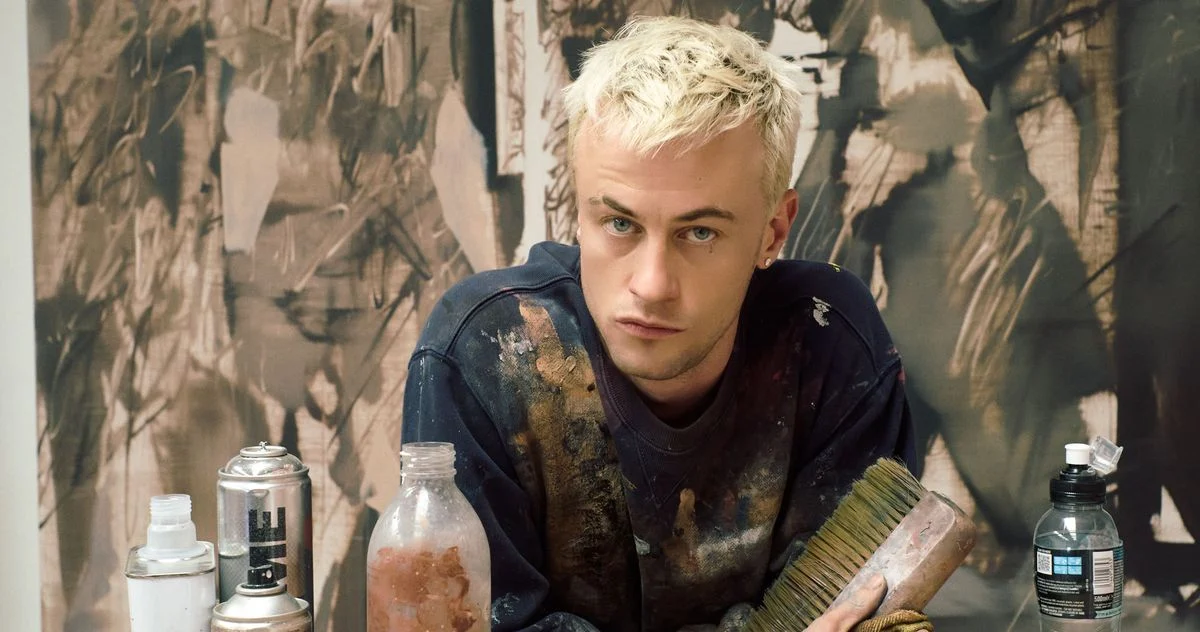
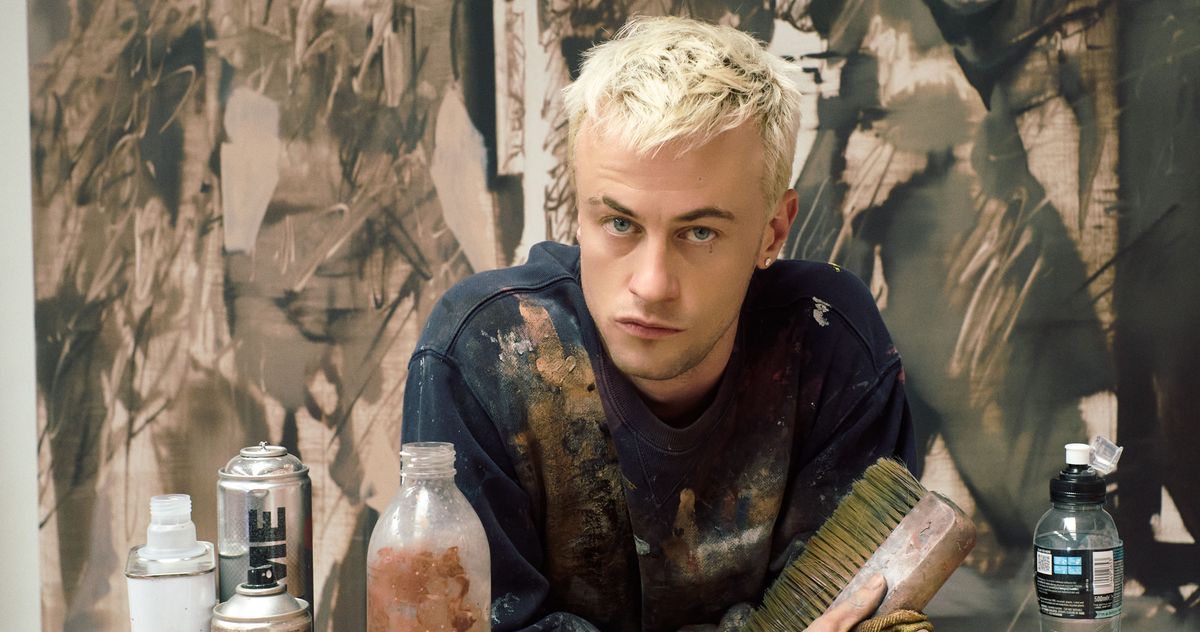
Rouy’s striking appearance—characterized by a bleach-blond, punk-inflected look reminiscent of a modern-day Billy Idol—combined with his association with high fashion, quickly made him a fixture of cultural interest. He has walked the runway for Miu Miu and posed for legendary photographers Juergen Teller and Hedi Slimane. However, unlike many who leverage brief moments of fashion-circuit fame for transient relevance, Rouy has consistently anchored his persona to his rigorous output in the studio.
His social media presence, boasting nearly 100,000 followers, is managed with a distinct awareness of modern image cultivation. Yet, the artist maintains a strict boundary between his public persona and his creative process. "The only part I have control over is what comes out of the studio," Rouy notes. "That’s my bit. And the rest is ultimately the unknown."
Chronology and Market Momentum
The path leading to the Hauser & Wirth debut has been meticulously paced. Rouy’s exhibition history includes notable solo presentations at smaller New York venues, such as Anna Zorina Gallery in 2018 and Nicola Vassell Gallery in 2023. As his market demand surged, his paintings began fetching upwards of six figures at major auction houses, signaling intense speculation and collector interest.
In 2024, Hauser & Wirth officially added Rouy to its roster, a move that placed him alongside some of the most historic names in modern and contemporary art. "Reprise" represents the culmination of this partnership, functioning as the second half of a two-part exhibition strategy. The first installment opened in June at Hannah Barry Gallery in London and sold out entirely, demonstrating sustained primary-market demand.
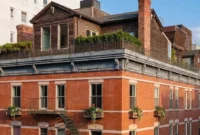
The stakes for the Hauser & Wirth debut, housed in the gallery’s pristine, skylit fifth-floor space, are undeniably higher. Featuring a suite of new works begun in January, the exhibition showcases Rouy grappling with the monumental pressure of institutional validation while maintaining his distinct visual language.
Artistic Influences and Technical Evolution
Rouy’s signature aesthetic centers on groups of nude figures with distorted, smudged, and glitched-out faces. His mark-making often incorporates dynamic black scrawls that trace the arc of a body in motion—a stylistic nod to Cy Twombly. This influence became particularly pronounced following a Vatican-commissioned project that brought Rouy to Rome, a city deeply intertwined with Twombly’s legacy.
Art critics frequently draw comparisons between Rouy’s disfigured portraits and the work of Francis Bacon. However, while a Bacon portrait often presents a subject like a dead butterfly pinned to a collector’s specimen board, Rouy’s canvases vibrate with an ambiguous, energetic life. The subjects are intentionally obscured, reflecting a conscious artistic choice to withhold full revelation. "There’s always this remove with my work, something I’m not revealing or exposing entirely," Rouy explains. "A smoke-and-mirrors quality, to some extent."
In his recent series, Rouy has expanded his technical methodology by incorporating generative artificial intelligence tools into his research phase. By utilizing AI to generate hyper-realistic, flawed passport-style images—what he terms "anti-portraits"—he explores the unsettling intersection of human identity and digital fabrication. "We’re in this moment now where humans have created their own image in the depiction of a society that doesn’t quite exist," Rouy observes. "Where’s the sense of truth? It’s all 1s and 0s now."
Furthermore, his austere palette of charcoal and graphite on chrome paint draws direct parallels to Andy Warhol’s iconic "Silver" paintings from the 1960s. Like Warhol, Rouy walks a razor-thin tightrope between earnestness and cynicism, crafting vanitas-style allegories of human mortality that possess a darkly humorous edge.
Institutional Strategy and the Long Game
For a megagallery of Hauser & Wirth’s scale—which frequently manages multi-million-dollar artist estates and boasts a roster of living artists whose average age hovers around 60—incorporating young talent is a strategic necessity. Without fresh blood, major commercial institutions risk stagnating into retrospective-heavy operations.
Yet, representing a young, highly sought-after painter comes with well-documented pitfalls, including the risk of market overheating and the dreaded "pump-and-dump" speculative cycle. Neil Wenman, global creative director and partner at Hauser & Wirth, emphasizes that the gallery is focused on the artist’s longevity rather than fleeting trends.
"It’s his career," Wenman states. "It’s not our career at the end of the day, and with Hannah [Barry], we must think of the long game to help George form building blocks that will guide him for the future, not just for the first ten minutes of fame."
Broader Impact and Implications
Rouy’s emergence reflects a broader shift within the contemporary art market. During his formal training, figurative painting was frequently dismissed by academic circles as regressive or overly conventional. However, the commercial and critical resurgence of figurative and realist painters—such as Salman Toor, Louis Fratino, and Chloe Wise—has fundamentally altered the landscape, proving that audiences and collectors retain an enduring appetite for the human form.
Unlike predecessors who shied away from visual appeal, Rouy embraces works that are unabashedly decorative, viewing aesthetic beauty merely as an introductory catalyst. "Beauty is just the catalyst for entry," he asserts. "The real point is how to navigate what comes after that."
As "Reprise" opens to the public, the art world will be watching closely to see whether Rouy can successfully transition from an internet-era "It" boy into an enduring historical voice. By balancing digital critique with classical painting traditions, George Rouy is proving that he possesses not only the stamina for the current market, but the visionary depth required to sustain it.