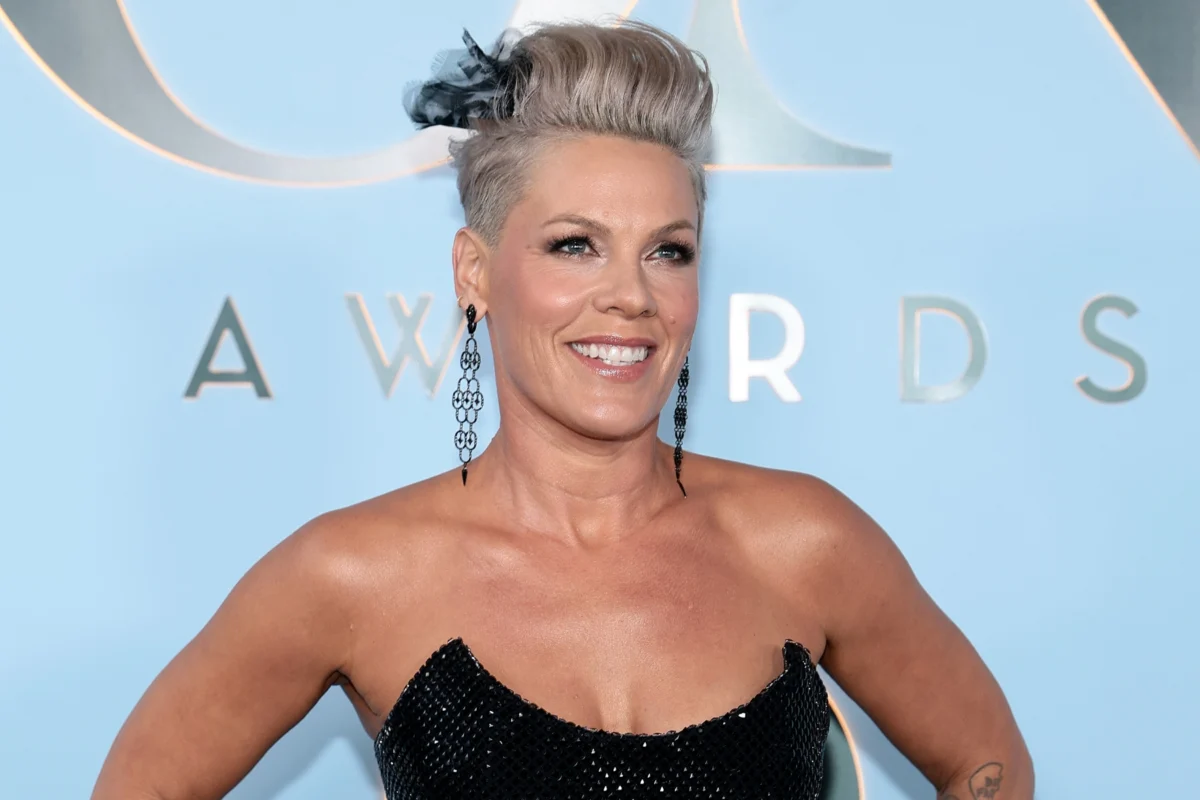
The intersection of celebrity advocacy, social media discourse, and the escalating geopolitical tensions surrounding the Middle East reached a flashpoint this week following a public exchange between pop icon Pink and rapper Macklemore. The controversy, which has played out across Instagram, X (formerly Twitter), and stadium concert venues, centers on the boundaries of political expression during high-profile music tours and the weight of digital endorsements in a polarized political climate.
The Sequence of Events: A Chronology of the Controversy
The tension began in early September 2026 during Ed Sheeran’s ongoing "Loop Tour." Macklemore, who has been serving as a supporting act for the stadium tour, utilized his platform during performances at MetLife Stadium in East Rutherford, New Jersey, on September 4 and 5 to explicitly call for a "free Palestine." These remarks were accompanied by imagery projected on the stadium screens, which caught the attention of concertgoers and digital spectators alike.
Shortly thereafter, Pink—born Alecia Beth Moore—reshared a social media post from the organization StopAntisemitism. The post criticized Macklemore’s onstage comments and advocated for his removal from the remainder of Sheeran’s tour. The act of sharing this content was perceived by many followers as a tacit endorsement of the sentiment that Macklemore’s rhetoric was crossing a line into antisemitism.
The reaction was immediate and intense. Within days, social media platforms were flooded with debates regarding the role of artists in political discourse, the definition of hate speech, and the expectations placed upon public figures to remain neutral on international conflicts. On September 11, Pink issued a formal, three-part statement via Instagram to clarify her stance, acknowledge her impulsive use of social media, and provide context for her concerns.
Pink’s Clarification and the Philosophy of Online Discourse
In her statement, Pink sought to delineate between her personal identity as a Jewish woman and the geopolitical stances attributed to her by the public. "Last Sunday I reposted somebody else’s post about Macklemore’s set at Ed Sheeran’s show," she wrote. "It said things in words I didn’t write, and I wouldn’t have chosen all of them. Then the comments came, and I did what I do when I’m hurt, which is post snarky memes and act like I’m fine. That’s on me. A repost isn’t a statement, and a meme isn’t a spine."
Pink’s candid admission reflects a growing trend among celebrities who find themselves caught in the "cheap and fast" cycle of social media, where complex ideological positions are reduced to 280-character outbursts or re-shares. She emphasized that her reaction was not an attempt to stifle free speech or demand censorship, but rather a visceral reaction to what she perceived as an exclusionary environment created by the rapper’s comments.
"I have never asked for another artist to be silenced and I’m not asking now," she added. "I don’t need anyone fired, and I don’t need a refund. What I need is to be able to say, as a Jewish mom, that scared me, and it scared people I love."
Historical Context: The 2014 Precedent
A significant element of the discourse involves a prior incident involving Macklemore in 2014. During a performance in Seattle, the rapper wore a costume that was widely denounced as a caricature of antisemitic tropes. At the time, Macklemore issued a comprehensive apology, stating, "I respect all cultures and all people."
Pink referenced this history in her recent statement, noting that while she felt the 2014 incident was offensive, she had moved past it. However, she indicated that the recent stadium performance felt different. By dedicating a song to a political movement while displaying graphic images of war, she argued, the performer shifted the atmosphere of a family-oriented concert into a space where Jewish attendees felt alienated. "You don’t get to decide that for us," she wrote, addressing the rapper’s implication that his comments were not directed at the Jewish community.

The Response from Macklemore and Advocacy Groups
Macklemore has stood firm in his advocacy. Following the surge of backlash, he addressed the situation on social media, maintaining that the desire for equality should not be a controversial stance. He has continued to advocate for Palestinian human rights, framing his stage presence as a moral imperative rather than an act of provocation.
The fallout has also invited the intervention of organized advocacy groups. The Israeli-American Council (IAC) launched a formal petition calling for the removal of Macklemore from the remaining eight dates of the Ed Sheeran tour. The petition argues that the inclusion of political slogans and inflammatory imagery in a stadium setting creates a hostile environment for ticket holders. As of mid-September, the tour organizers have remained silent regarding potential changes to the lineup, leaving the future of the remaining tour dates a subject of ongoing industry speculation.
Broader Implications for the Music Industry
This incident serves as a case study for the evolving expectations of the modern touring artist. Historically, stadium tours were viewed as neutral entertainment spaces. However, the rise of the "activist-artist" model has blurred the lines between performance art and political rally.
Industry analysts suggest that this creates a difficult management challenge for promoters and artists. When performers hold diametrically opposed views, the cohesion of a multi-act tour becomes fragile. Furthermore, the reliance on digital platforms to address these conflicts often exacerbates the divide rather than providing clarity.
Pink’s mention of her decade-long tenure as a UNICEF ambassador serves as a reminder of her established philanthropic track record, which she claims includes advocacy for children on both sides of the conflict. By emphasizing her history of working directly with children in war-torn regions, she attempted to shift the focus from abstract slogans to a broader, humanitarian perspective.
The Intersection of Identity and Political Advocacy
The controversy highlights a specific tension: the right of an artist to express political opinions versus the responsibility of an artist to consider the impact of those opinions on their audience. For Jewish performers and fans, the rise in antisemitic incidents globally has heightened sensitivity to language used in public forums. When a performer uses a platform as large as a sold-out stadium to speak on the Middle East, the lack of nuance can lead to a sense of erasure for those who feel their identity is being targeted by specific rhetoric.
Pink’s statement, while attempting to bridge this gap, also highlights the inadequacy of current digital platforms for navigating these issues. As she noted, "Social media makes all of us cheap and fast." The brevity of the platform encourages reactionary engagement, which often leads to the misinterpretation of intent and the amplification of polarization.
Future Outlook and Industry Standards
As the 2026 concert season continues, the industry is closely watching how these interactions influence booking practices and rider requirements. Some observers suggest that we may see an increase in "code of conduct" clauses for supporting acts, though others argue that such measures would infringe upon the artistic freedom that is central to music culture.
For now, the dialogue remains focused on the individual responsibilities of artists like Pink and Macklemore. The situation serves as a stark reminder that in the current era, the stage is rarely just a place for music; it is an arena where the global political climate is increasingly reflected, debated, and contested. Whether this leads to a more disciplined approach to political discourse in live entertainment remains to be seen, but the intensity of the current backlash suggests that the audience’s tolerance for "cheap and fast" political rhetoric is dwindling, regardless of which side of the argument is being presented.
As the calendar turns toward the end of the year and the holiday season—with the Jewish community observing the High Holy Days—the public, the industry, and the artists involved are left to contemplate how to navigate the tension between personal conviction and the collective experience of live music.