While the introduction of the foldable iPhone Duo undoubtedly captured the primary headlines during Apple’s landmark September 2026 product showcase, the Cupertino-based technology giant reserved its most profound engineering overhaul for the iPhone 18 Pro and Pro Max camera systems. For the first time in the history of the smartphone lineup, Apple has integrated a genuine physical variable aperture into its flagship mobile devices. Paired with an extensive suite of manual pro-level controls, enhanced computational video processing, and a revolutionary approach to image verification, this update represents the most substantial camera transformation Apple has shipped in years, effectively bridging the gap between pocket-sized communication devices and professional-grade digital single-lens reflex (DSLR) cameras.
The strategic shift was underscored during the opening moments of the September event, which kicked off entirely with cinematic scenes captured natively on the iPhone 18 Pro. By incorporating adjustable mechanical aperture settings, precise manual shutter speed controls, manual focus adjustments, and a real-time on-screen histogram, Apple is actively redefining consumer expectations of what a smartphone camera can achieve. However, this hardware-driven evolution arrives alongside a complex history of mechanical camera components in mobile devices, sparking immediate industry-wide discussions regarding durability, engineering longevity, and the future of smartphone design.
A Chronological Evolution of Mobile Photography and Mechanical Lenses
The journey toward mobile mechanical apertures is fraught with historical precedent and engineering challenges. For over a decade, smartphone manufacturers heavily relied on software-based computational photography, fixed physical apertures, and multi-lens arrays to simulate depth of field and manage low-light environments.
In early 2018, Samsung attempted to popularize variable physical apertures with the release of the Galaxy S9 and S10 lineups, utilizing a dual-stage mechanical aperture that toggled between f/1.5 and f/2.4. However, consumer demand failed to match manufacturing complexities, and Samsung quietly phased out the feature in subsequent generations, favoring ultra-high-megapixel sensors and periscope zoom lenses. Rumors persisted throughout late 2025 and early 2026 suggesting that Samsung might reintroduce variable apertures in the upcoming Galaxy S27 series; yet, industry reports from August 2026 indicated that Samsung ultimately abandoned those plans due to increased device thickness and high production costs relative to marginal image quality improvements.

Apple’s introduction of the 48-megapixel main sensor equipped with a six-blade laser-cut mechanical diaphragm on the iPhone 18 Pro and Pro Max directly challenges this historical precedent. The system autonomously or manually adjusts between four distinct physical aperture stops, altering the physical opening through which light reaches the sensor. This mechanism allows users to expand the aperture for enhanced low-light performance and shallow depth-of-field background blur, or narrow the aperture to ensure expansive group shots remain critically sharp across the entire frame.
Granular Manual Controls and Pro-Level Features
The inclusion of physical hardware adjustments is complemented by a completely redesigned "Pro controls" interface natively integrated into the iOS Camera app. Designed for professional photographers and enthusiasts who prefer granular command over automated algorithms, the interface surfaces critical exposure metrics directly on screen.
Key additions within the Pro controls panel include:
- Shutter Speed Control: Allows users to manually dictate the duration the sensor is exposed to light, freezing fast-moving subjects at high speeds or inducing artistic motion blur at slower speeds.
- White Balance Management: Provides precise color temperature correction to eliminate unwanted orange tints under indoor tungsten lighting or blue hues in shaded environments.
- Live Histogram: A real-time analytical graph displaying tonal distribution across the frame, allowing users to immediately identify underexposed shadows clustered on the left or overexposed highlights clipped on the right.
- Textured Photographic Styles: Expands upon previous generation color profiles by introducing fine-tuned controls over image texture and film grain rendering.
On the video front, the iPhone 18 Pro lineup introduces post-capture cinematic depth effects adjustable at up to 60 frames per second, native 4K time-lapse recording with Dolby Vision HDR support, and upgraded Audio Mix algorithms capable of cleanly isolating human voices while suppressing background ambient noise. Furthermore, an AI-powered smart focus tracking system dynamically locks onto erratic subjects—such as children and pets—ensuring continuous focus throughout dynamic shooting conditions.
The Urgent Need for Digital Authenticity: Apple Reference Image
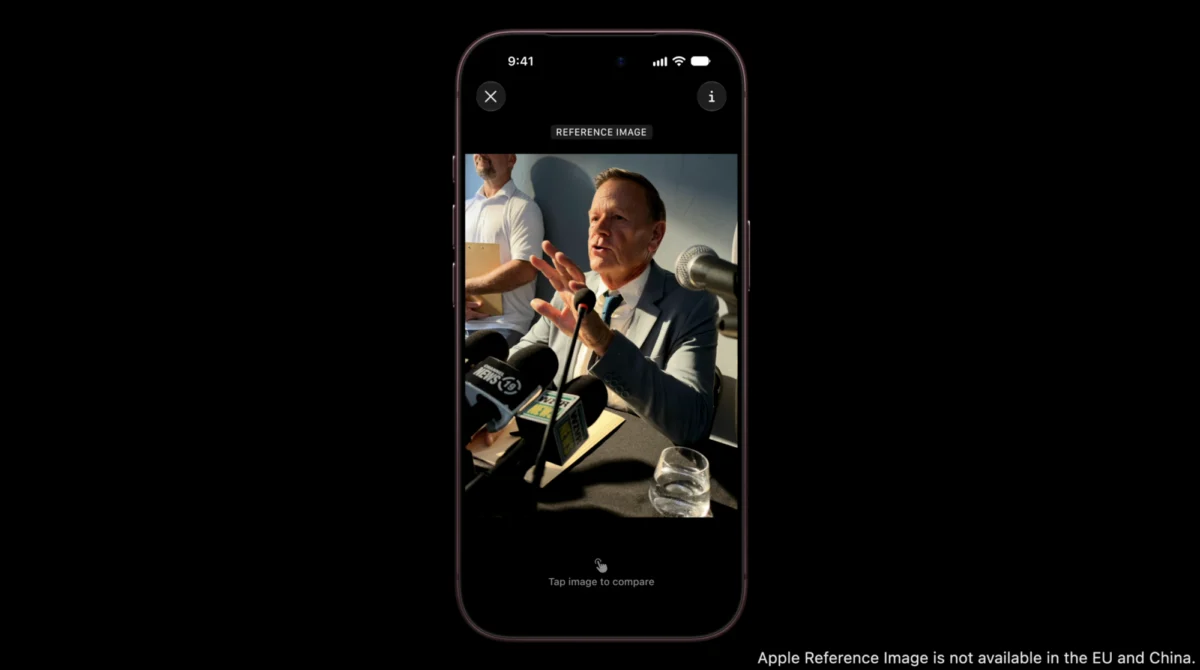
Beyond hardware mechanics, the most critical societal addition to the iPhone 18 Pro lineup is the implementation of Apple Reference Image, an advanced authenticity feature engineered in response to the proliferation of artificial intelligence-generated and manipulated media.

As generative AI tools have advanced, distinguishing between authentic photojournalism and synthetic fabrications has become increasingly difficult for consumers and news organizations alike. To combat this rising tide of misinformation, the iPhone 18 Pro introduces a specialized "Reference" capture mode linked to the newly redesigned main sensor. When activated, the raw sensor data is cryptographically signed at the hardware level and securely processed via Apple’s Private Cloud Compute infrastructure to generate an immutable digital negative.
This reference image is stored alongside the final processed capture within the iOS Photos app, enabling users, editors, and fact-checkers to visually and cryptographically compare the final file against the verified source capture. Combined with built-in metadata preservation and impending ecosystem support for the SynthID digital watermarking standard, Apple is positioning the iPhone 18 Pro as a trusted tool for professional photojournalists operating in politically sensitive or high-scrutiny environments.
Industry Implications and Future Outlook
The launch of the iPhone 18 Pro and Pro Max establishes a formidable benchmark for the mobile industry, forcing competitors to reevaluate the viability of mechanical components within ultra-slim consumer hardware. While the integration of a laser-cut, six-blade mechanical aperture yields tangible photographic benefits—such as authentic optical bokeh and superior light management—it simultaneously introduces new engineering vulnerabilities. Mobile devices frequently experience physical shocks, drops, and environmental exposure that can compromise delicate internal moving parts, making long-term hardware durability a vital metric to monitor as these devices reach consumers.
Whether Apple successfully normalizes mechanical variable apertures where predecessors stumbled remains an open question for future hardware iterations. Nevertheless, by fusing traditional optical mechanics with cutting-edge cryptographic authentication, Apple has redefined the baseline expectations for smartphone imaging technology, proving that the future of mobile photography relies as much on optical physics and verified truth as it does on computational algorithms.