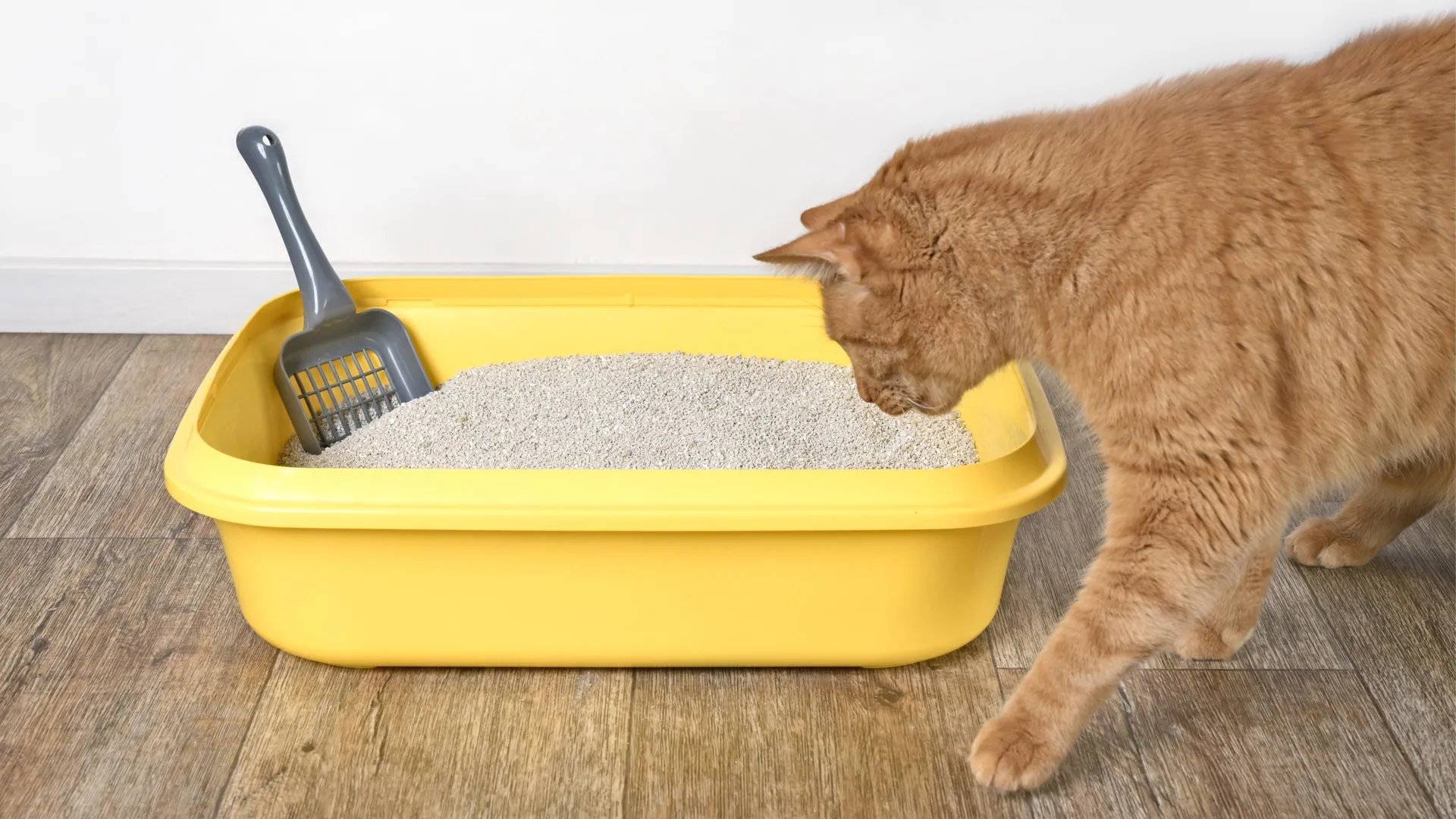
For domestic cats, the world is navigated through a complex, invisible landscape of scent. Unlike humans, who rely primarily on visual and auditory cues, cats utilize their environment as a living bulletin board, leaving behind chemical messages in the form of urine and odor marks. These traces serve as vital conduits of information, conveying details about a cat’s reproductive status, health, and, most importantly, individual identity. However, this biological system has long presented a paradox to researchers: if odor molecules are volatile and prone to rapid chemical degradation upon exposure to the environment, how can a scent mark remain a reliable, long-term identifier for other cats?
A groundbreaking study led by Professor Masao Miyazaki at Iwate University, in collaboration with researchers from Germany and Spain, has finally identified the mechanism behind this feline communication. The study, published in the journal Current Biology, reveals that cats produce a unique group of 13 branched-chain fatty acids (BFAs) that function as a stable chemical "calling card." This discovery not only provides a solution to a long-standing biological puzzle but also sheds light on a century-old mystery regarding feline kidney physiology.
The Behavioral Foundation of Feline Recognition
The research began with the observation that cats possess an extraordinary capacity for scent memory. Before isolating the specific chemical compounds responsible for identity, the research team conducted a series of behavioral experiments to confirm that domestic cats could, in fact, distinguish between the urine of different individuals.
The methodology utilized a habituation-dishabituation paradigm. When a cat was presented with the same urine sample repeatedly, its interest—measured by sniffing time and the frequency of the "flehmen response"—significantly declined. The flehmen response, a characteristic behavior where a cat curls its upper lip to expose its vomeronasal organ, is a primary mechanism for analyzing chemical signals. When researchers introduced urine from a novel donor, the cats’ investigative behavior spiked, demonstrating that they recognized the new scent as distinct from the previous one.
Most remarkably, this recognition persisted over intervals as long as several months. This indicates that cats maintain long-term olfactory memories, allowing them to catalog the identities of neighbors and rivals within their territory. By using this behavioral feedback, the team was able to isolate the specific lipid fraction in urine that triggered these responses, eventually narrowing their focus to the 13 previously unidentified branched-chain fatty acids.
The Chemistry of Identity: A Unique Lipid Signature
The identified BFAs represent a chemical class not previously documented in mammalian excretions. The brilliance of this system lies in the variability of the compounds: while the 13 BFAs are present in every cat, the specific proportions and combinations form a unique profile for each individual.
Unlike typical odor-producing molecules that evaporate quickly, these BFAs are semi-volatile, meaning they linger in the environment long after a mark has been deposited. In controlled laboratory conditions, these profiles remained stable for at least 24 hours even at temperatures of 25°C. This durability is crucial for animals that require territorial signals to persist in the absence of the individual that created them.
Furthermore, the study found that genetics play a role in the composition of these profiles. Related cats displayed more similar BFA patterns than unrelated individuals, yet each cat maintained its own unique signature. This suggests that the "scent fingerprint" is a complex trait influenced by both hereditary factors and individual metabolic processes. When researchers controlled for other lipids in the urine and presented only the BFA-containing fraction to the cats, the subjects continued to exhibit distinct responses, confirming that these molecules are the primary determinants of individual identity.
A Century-Old Renal Mystery Solved
Perhaps the most unexpected outcome of the research was the discovery of the source of these BFAs. Upon examining various feline tissues, the researchers detected the presence of these fatty acids exclusively in the kidneys. Specifically, they identified lipid droplets containing these compounds stored within the renal cortex.
These kidney lipid droplets have been a source of scientific curiosity since they were first documented over a century ago. Despite their prevalence in cats, their biological function remained entirely speculative until now. Professor Miyazaki’s team proposes that these droplets serve as a storage reservoir. By sequestering these lipids in the kidneys, the cat’s body can release them into the urine in a regulated manner, effectively buffering the scent profile against temporary fluctuations in diet, hydration, or physiological stress.
This mechanism ensures that an individual’s "calling card" remains consistent over time, providing a reliable signal for conspecifics. This finding offers a rare glimpse into how evolutionary pressure has shaped internal organ structure to support external social communication.
Comparative Biology Across the Felidae Family
The study extended its scope beyond the domestic cat (Felis catus) to examine whether this chemical communication system is a conserved trait across the Felidae family. Through sampling, researchers identified BFA-related compounds in the urine and kidney tissue of several wild felids, including lions, tigers, leopards, jaguars, and the Iriomote cat.
While the presence of these compounds appears to be a universal feature of the cat family, the specific BFA profiles and the distribution of kidney lipid droplets vary significantly between species. Even within geographically isolated populations of the leopard cat in Japan, subtle differences were noted. These findings suggest that while the "scent-based identity system" is a common evolutionary tool among felids, it has diversified alongside the species, potentially facilitating species-specific or even population-specific recognition.
Implications for Conservation and Veterinary Science
While the primary findings are rooted in basic biological research, the implications of this discovery are wide-ranging. In the field of wildlife conservation, the ability to identify individuals through non-invasive means is the "holy grail" of population monitoring. Current methods for tracking elusive wild felids often require camera traps, hair snares, or the capture and collaring of animals, all of which are costly and invasive. If scientists can establish a standardized library of BFA profiles for endangered species, urine samples collected from the wild could provide a high-precision, non-invasive method for tracking individual movements, population densities, and territorial boundaries.
In the realm of veterinary medicine, the link between renal lipid droplets and BFA production opens new avenues for studying feline health. Understanding why cats naturally accumulate these lipids could provide insights into metabolic health and the development of certain renal conditions. It bridges the gap between behavioral ecology and clinical pathology, proving that even the most "mundane" feline behaviors are linked to complex internal biology.
Conclusion: A New Understanding of Feline Communication
The research led by Iwate University fundamentally shifts our understanding of animal communication. For decades, the consensus was that mammals relied heavily on major urinary proteins to preserve identity signals—a system well-documented in mice. By demonstrating that cats utilize a sophisticated, lipid-based system, the study highlights the diversity of strategies animals employ to leave a lasting impact on their environment.
The ability of a cat to walk through a forest or a neighborhood and "read" the chemical history of its surroundings is a testament to an evolutionary adaptation that is both elegant and precise. Through the interaction of specialized kidney storage, unique branched-chain fatty acid chemistry, and highly tuned olfactory perception, the cat has mastered the art of being present even when it is long gone. As research continues, these 13 unusual fatty acids may well prove to be the key to unlocking even more mysteries of the feline world, from the evolution of the species to the practical needs of modern conservation biology.