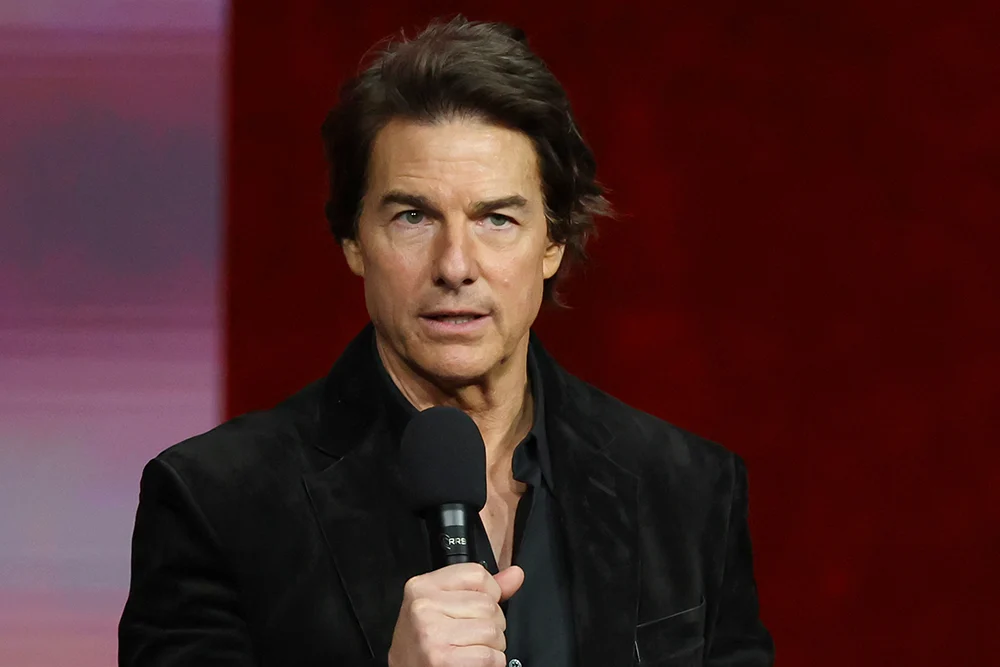
As artificial intelligence rapidly reshapes the landscape of modern entertainment, Hollywood icon Tom Cruise remains steadfast in his belief that audiences will forever crave authenticity, human connection, and tangible craftsmanship on the silver screen. Speaking candidly during an intimate BAFTA “Life in Pictures” retrospective in London, the veteran actor and producer reflected on his illustrious four-decade career while looking ahead to the future of cinema. His remarks come at a pivotal juncture for the global film industry, which is grappling simultaneously with the technological disruption of generative AI and a remarkable resurgence in traditional theatrical attendance.
The discussion, moderated by broadcaster Edith Bowman, touched upon Cruise’s long history with cutting-edge cinematic technology. Notably, the blockbuster Mission: Impossible franchise has frequently served as a testing ground for practical effects and emerging cinematic tools, with the upcoming 2025 installment, The Final Reckoning, directly confronting artificial intelligence as its central narrative antagonist. When prompted on how AI will permanently alter filmmaking, Cruise offered an optimistic yet pragmatic defense of the human element in art.
“Here’s the thing: There is nothing like human,” Cruise stated, emphasizing that the communal environment of a movie theater is irreplaceable. While acknowledging the coexistence of streaming platforms—clarifying that he harbors no animosity toward home-viewing formats—he maintained that watching a film in a theater constitutes a fundamentally distinct artistic discipline.
A Historic Box Office Revival and the Power of Shared Audiences
Cruise’s defense of the theatrical medium is supported by recent economic data that defies pessimistic industry forecasts. Pointing to the historic box office performance of the summer season—which shattered all-time industry records by grossing an astounding $4.76 billion globally between May 1 and Labor Day—the actor argued that the figures prove a persistent, unyielding consumer appetite for genuine human storytelling.
Industry analysts have noted that this record-breaking summer was anchored heavily by major tentpole releases that relied on practical stunts, authentic human drama, and scale. Cruise’s career has long been synonymous with this philosophy, defined by his insistence on performing his own death-defying physical stunts rather than relying on digital doubles or computer-generated imagery.
“People want that experience. They’re going to movie theaters,” Cruise observed. “I always believe in humanity.” Addressing the looming anxiety surrounding generative AI’s capabilities in scriptwriting, voice synthesis, and visual effects, the actor offered a clear directive for his peers: creatives must simply continue to create. “You know, it is coming and it’s going to happen,” he conceded, “but people want to see real things.”
Retrospective of a Four-Decade Cinematic Journey
The BAFTA “Life in Pictures” event provided a comprehensive platform to review Cruise’s extensive filmography, which spans 40 years of commercial success and critical acclaim. From his breakout role in 1986’s Top Gun to dramatic heavy-hitters like Jerry Maguire (1996) and Paul Thomas Anderson’s Magnolia (1999), Cruise has navigated multiple eras of Hollywood evolution.
His longevity in the industry is largely attributed to his meticulous work ethic, hands-on producing approach, and a willingness to collaborate with visionary auteurs. Throughout the 2000s and 2010s, Cruise successfully transitioned from a traditional matinee idol into a premier action star, redefining the global box-office pull of American cinema through the Mission: Impossible and Top Gun: Maverick franchises. His ability to adapt to changing audience tastes while maintaining strict adherence to high-budget practical filmmaking has made him one of the most bankable figures in cinematic history.
The Physical Metamorphosis in Alejandro G. Iñárritu’s Digger
Beyond reflecting on his past, Cruise offered attendees a glimpse into his most unconventional project to date: the upcoming Warner Bros. film Digger, directed by Academy Award-winning filmmaker Alejandro G. Iñárritu (The Revenant).
In the film, Cruise stars as a wealthy oil tycoon, a role that required an extensive and physically taxing physical transformation. Eschewing his typical leading-man aesthetic, Cruise appears virtually unrecognizable, utilizing a specialized fat suit and elaborate facial prosthetics. The actor revealed that the daily application process initially demanded up to six hours in the makeup chair—a testament to his dedication to character immersion.
“I’ve never read a movie like this,” Cruise remarked of the script. “It’s the most original film and one of the most moving films I’ve ever seen.”
The casting of Cruise in a gritty, character-driven drama helmed by Iñárritu signals a return to the deeply dramatic roots that earned him Academy Award nominations earlier in his career. Digger is scheduled for an exclusive theatrical release on October 2 via Warner Bros., positioning it firmly within the prestigious autumn awards season window.
Broader Industry Implications and the AI Debate
Cruise’s commentary on artificial intelligence arrives at a time of profound regulatory, ethical, and creative anxiety within Hollywood. Following the historic 2023 strikes by the Writers Guild of America (WGA) and SAG-AFTRA, protections against the uncompensated or unauthorized use of generative AI in scriptwriting and likeness replication became a cornerstone of labor agreements. Studios are currently navigating a delicate tightrope between leveraging AI for cost-efficiency in post-production and maintaining the artistic integrity demanded by top-tier talent and audiences alike.
Proponents of AI argue that machine learning tools can streamline background generation, de-aging processes, and script analysis, ultimately reducing ballooning production budgets. Conversely, critics and creators align with Cruise’s perspective, warning that over-reliance on synthetic media risks homogenizing cinematic art, stripping away cultural nuance, and devaluing human labor.
As studios prepare for the release of technologically ambitious projects—and concurrently market deeply human, practically crafted dramas like Digger—the industry remains locked in a philosophical debate over the soul of storytelling. By championing the visceral impact of physical reality, Tom Cruise continues to advocate for a cinematic future anchored firmly in human experiences, shared emotional responses, and the enduring magic of the theatrical dark.