The equinox represents one of the most fundamental rhythmic events in our planetary calendar, marking the precise moments when the Earth’s orientation relative to the Sun undergoes a significant transition. Occurring twice annually, in March and September, these events serve as the astronomical anchors for the change of seasons across both the Northern and Southern Hemispheres. In 2026, the March equinox is scheduled to take place on March 20 at 14:46 UTC (7:46 AM EDT), followed by the September equinox on September 23 at 00:05 UTC (September 22, 5:05 PM PDT). While modern society often views these dates as mere calendar markers, they represent the culmination of complex orbital mechanics that have dictated human agricultural, cultural, and navigational practices for millennia.
The Celestial Geometry of the Equinox
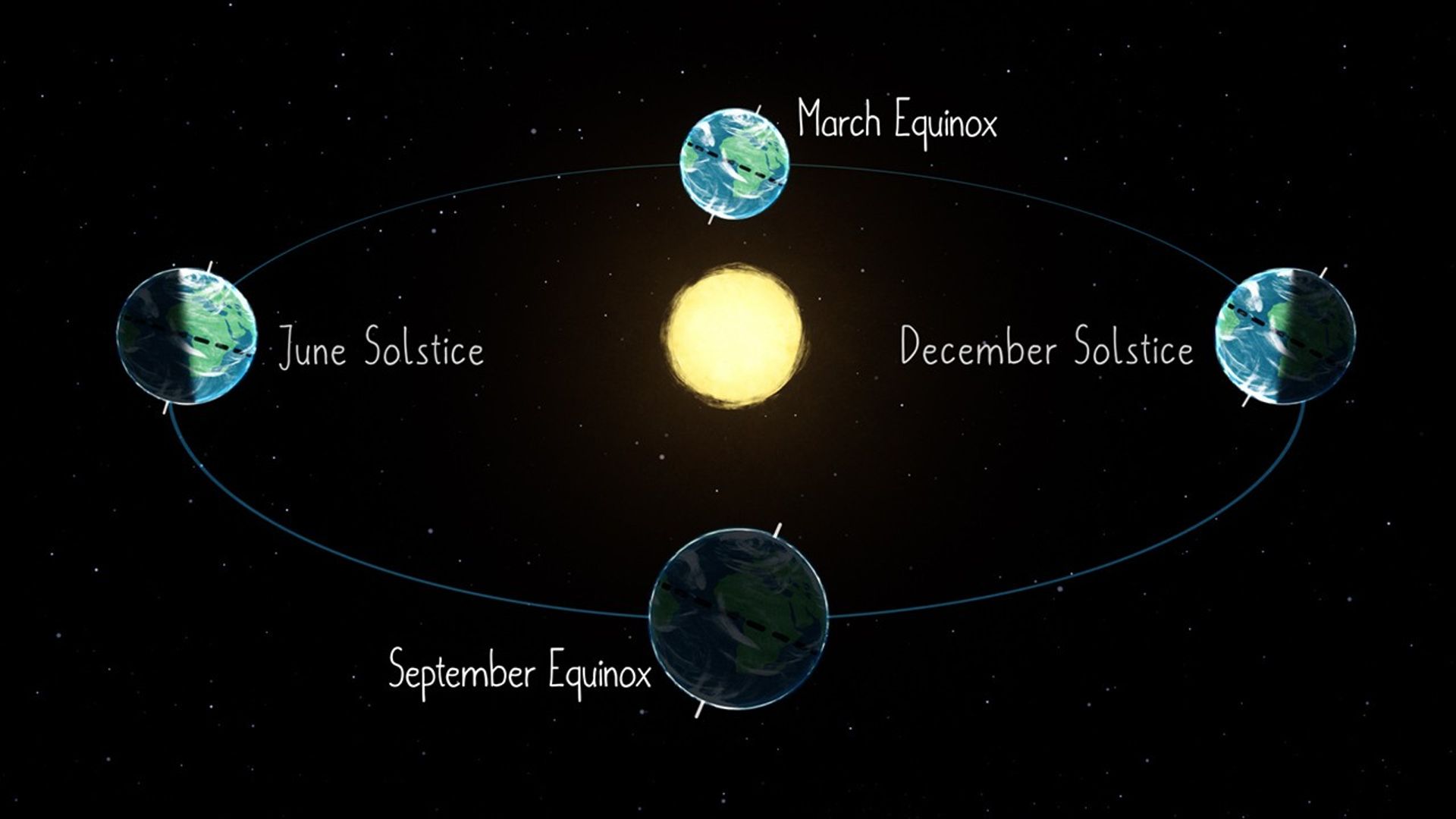
At its core, an equinox is the moment the center of the Sun’s disk crosses the Earth’s celestial equator—the imaginary line in the sky directly above the Earth’s terrestrial equator. This phenomenon is a direct consequence of the Earth’s axial tilt, which is currently inclined at approximately 23.5 degrees relative to its orbital plane around the Sun. Because of this tilt, the Earth’s poles do not point straight up and down in relation to the Sun. Instead, as the planet orbits, the orientation of this tilt changes.
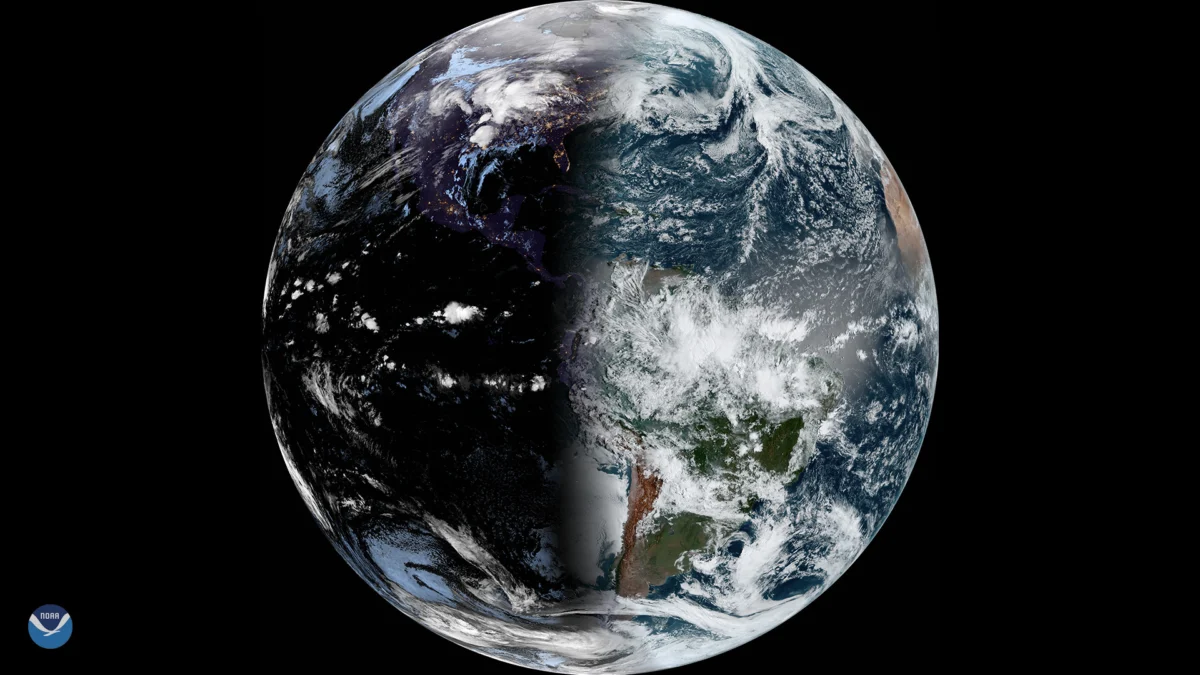
During the equinox, the Earth’s axis is tilted neither toward nor away from the Sun. As a result, the solar rays strike the equator at a 90-degree angle. This configuration ensures that both the Northern and Southern Hemispheres receive a roughly equal distribution of solar illumination. From the perspective of an observer standing exactly on the equator, the Sun appears directly overhead at local solar noon. This geometry provides the origin of the term "equinox," derived from the Latin "equi-" (equal) and "-nox" (night).
Chronology and Orbital Movement
The solar year is defined by a series of four primary events: two equinoxes and two solstices. The cycle begins with the March equinox, often referred to as the northward equinox in the Northern Hemisphere, marking the arrival of spring (vernal). Following this event, the Sun’s path in the sky appears to shift further north each day. This trajectory reaches its zenith during the June solstice, when the Sun is at its northernmost point.
From the June solstice onward, the Sun begins its apparent journey southward. This culminates in the September equinox, or the southward equinox, where the Sun crosses the equatorial plane once more, heading toward the December solstice. After reaching the southernmost point of its path in December, the cycle resets as the Sun begins its return journey toward the north. This oscillating motion of the Sun’s path is the primary driver behind the changing length of days and the variation in solar intensity that characterizes the seasons.

Debunking the Myth of Perfect Equality
A common misconception regarding the equinox is that day and night are of precisely equal duration—exactly 12 hours of light and 12 hours of darkness—everywhere on Earth. In reality, this is rarely the case. The phenomenon is complicated by two primary factors: the nature of the Sun as a light source and the refractive properties of the Earth’s atmosphere.
Because the Sun is a physical sphere rather than a dimensionless point of light, the first "glimpse" of the sunrise occurs when the top edge of the Sun breaks the horizon, not when the center does. Furthermore, the Earth’s atmosphere acts as a lens, bending sunlight (a process known as atmospheric refraction) and allowing observers to see the Sun even when it is technically below the horizon. These effects add several minutes of light to each day. Consequently, the date on which day and night are closest to equal duration depends heavily on an observer’s specific latitude, often occurring a few days before or after the actual equinox date.
Historical Significance and Ancient Observation
Humanity’s preoccupation with the equinoxes predates modern astronomy by thousands of years. Ancient civilizations recognized that the equinox provided a reliable, predictable signal for the start of agricultural cycles. Archaeological evidence from sites such as Stonehenge in England, Chichen Itza in Mexico, and various megalithic structures in Asia indicates that early humans built complex observatories specifically to track the movement of the Sun during these times.
For ancient agrarian societies, the equinox was not merely a curiosity; it was a survival necessity. It signaled the time for planting crops in the spring and harvesting them in the autumn. The ability to predict these dates allowed early cultures to synchronize their societal activities with the natural rhythms of the planet, fostering a deep, almost spiritual connection to the cosmos that persists in many cultures today.
Scientific and Atmospheric Implications
The transition during the equinox has significant implications for global climate systems. As the balance of solar radiation shifts between the hemispheres, it drives massive atmospheric and oceanic circulation patterns. The change in solar heating triggers the movement of the Intertropical Convergence Zone (ITCZ), a belt of low pressure that circles the Earth near the equator. As the ITCZ shifts, it alters rainfall patterns, affecting monsoon seasons and agricultural productivity in tropical regions.
Meteorologists and climate scientists closely monitor these transitions to calibrate global climate models. The equinox effectively acts as a "reset" for the Earth’s heat engine. In the Northern Hemisphere, the March equinox marks the beginning of the warming trend, as the energy surplus in the northern latitudes begins to overcome the heat loss accumulated during the winter. Conversely, the September equinox signals the onset of cooling, as the solar energy reaching the Northern Hemisphere wanes.
Global Reactions and Modern Perspectives
While the equinox no longer holds the same agricultural urgency for modern urbanized populations, it remains a focal point for the global scientific community. NASA and other space agencies utilize these periods to perform specific orbital maneuvers and calibration tests on Earth-observing satellites. Because the Sun is directly aligned with the equator, satellite sensors can be calibrated against the solar disk with high precision during these windows.
Public interest in the equinox has also seen a resurgence, driven by educational initiatives that emphasize the "Earth-Sun" connection. Kat Troche, a lead educator in the field, emphasizes that the equinox serves as a powerful teaching tool for understanding planetary physics. By observing the position of the sunrise and sunset relative to local landmarks, individuals can witness the Earth’s axial tilt firsthand without the need for expensive equipment.
Analysis of the 2026 Cycle
The timing of the 2026 equinoxes highlights the variance inherent in our calendar system. Because our orbital period is not a perfect multiple of our 24-hour day, the equinox shifts slightly each year. The 2026 March equinox occurs at 14:46 UTC, while the September event occurs at 00:05 UTC. These variations require periodic adjustments—such as the inclusion of leap years—to keep our calendar aligned with the astronomical reality.
From an environmental standpoint, the transition into spring (or autumn) is a critical period for biological monitoring. Phenology—the study of periodic biological phenomena—shows that many species of flora and fauna use the changing length of daylight as a trigger for migration, flowering, and hibernation. As global temperatures rise, researchers are increasingly studying whether these biological cues remain synchronized with the solar equinox, or if the "climate clock" is beginning to decouple from the "astronomical clock."
Conclusion
The equinox remains a testament to the predictable, mechanical beauty of our solar system. Whether it is viewed as a signal for the changing weather, a historical marker of ancient wisdom, or a data-driven event for modern scientists, the equinox is a reminder of our position in space. As the Earth continues its elliptical path, the equinoxes will continue to serve as the silent, steady heartbeat of our seasonal world, governing the light and life of the planet with mathematical precision. While the dates may shift by hours and the weather may vary by degree, the underlying physics remain a constant, providing a link between the ancient observers who first tracked the Sun and the modern scientists who now analyze its impact on our changing climate.