The intersection of religious fervor, modern spectacle, and repressed human desire forms the thematic bedrock of Trinity, the ambitious new feature film from acclaimed Singaporean director Boo Junfeng. Currently seeking final financial backing at the prestigious Tokyo Gap-Financing Market—a key industry event running alongside TIFFCOM and the Tokyo International Film Festival—the project has drawn significant international attention. Boasting an unprecedented 11-nation co-production footprint that spans Asia, Europe, and the Americas, Trinity positions itself as a major upcoming entry in global independent cinema.
As the project moves into its post-production phase, filmmakers Boo and Phathanavirangoon are utilizing the Tokyo platform to close the remaining financing gaps. The film’s journey to the screen reflects the evolving landscape of international film financing, where complex multi-territory partnerships are increasingly required to bring culturally specific yet universally resonant stories to life.
Plot Dynamics and Narrative Structure
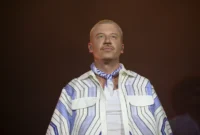
At the narrative center of Trinity is Johnny, a charismatic Taiwanese pastor whose dynamic preaching style and penchant for high-octane theatricality have propelled him to celebrity status within a massive Singaporean megachurch. Rather than relying solely on traditional homilies, Johnny’s services incorporate elaborate, Cirque du Soleil-style acrobatic stunts performed live for his devoted congregations. This fusion of evangelical ministry and death-defying physical performance creates a visually striking backdrop for a much more intimate, psychological drama.
Structured deliberately into three distinct chapters modeled after the Holy Trinity—the Father, the Son, and the Holy Spirit—the film traces the psychological fracturing of its protagonist. While publicly championing conservative religious doctrine, Johnny harbors a mounting, hidden infatuation with Yang, a young newcomer who joins the church’s rigorous training program. Johnny’s increasingly blatant preferential treatment toward Yang does not go unnoticed. It quickly breeds tension and suspicion among his inner circle, most notably unsettling his wife, Ruth, and David, his primary disciple and future son-in-law, both of whom play integral roles in the day-to-day administration of the megachurch.
The narrative reaches a critical inflection point when Yang suddenly vanishes without a explanation. Driven by desperation, a frantic Johnny launches his own private inquiry into the disappearance. As he uncovers clues, suspicion inevitably falls upon members of his own inner circle, culminating in tragic consequences that forever alter their lives.
The concluding act of Trinity finds Johnny and Ruth attempting to escape their past by relocating to a modest, rural congregation in Taiwan. Maintaining a low profile, they quietly participate in local worship until an unexpected encounter with an enigmatic stranger offers a faint, complicated glimmer of potential redemption and divine grace.
Exploring the Intersection of Sexuality and Faith
Director Boo Junfeng has noted that the psychological complexities of the film’s characters stem from a long-standing fascination with the tension between human sexuality and rigid religious frameworks.
"I’ve always been very interested in the subject of sexuality and faith, and I wanted to make a film that dives deep into the psyche of these characters within a church," Boo stated. Rather than mounting a simplistic critique of organized religion, the director aims to humanize individuals caught in the crossfire of dogma, ambition, and suppressed identity. "I hope people will empathize with the characters, despite them being flawed human beings," he added.
Producer Raymond Phathanavirangoon, who co-wrote the screenplay with Boo and has championed the project since its earliest conceptualization, points out that the cinematic exploration of contemporary evangelical culture in Asia remains largely untapped.
"Personally, I have had people close to me convert to Christianity due to evangelism, but this is seldom seen in Asian films," Phathanavirangoon observed. Furthermore, the producer emphasizes that the incorporation of extreme theatricality into modern worship services provides a unique cinematic vocabulary that sets Trinity apart from traditional religious dramas.
Addressing potential skepticism regarding the film’s depiction of stunt-heavy sermons, Phathanavirangoon highlights real-world parallels. "Some are surprised that churches can host Cirque du Soleil-style performances like in our film, but just earlier this year in Korea, a stunt sent a man dressed as Jesus into the sky, and that went super viral," he noted, illustrating how modern megachurches increasingly leverage spectacle to engage and retain congregations in an entertainment-saturated media landscape.
Filmmaking Pedigree and Production Scale
The creative forces behind Trinity bring substantial critical acclaim and industry experience to the project. Director Boo Junfeng made a significant splash on the international film circuit with his 2010 feature debut, Sandcastle, which made history as the first film from Singapore selected for the Cannes Critics’ Week. He followed this success with Apprentice, a stark and critically praised drama exploring capital punishment, which screened in the Un Certain Regard section at the 2016 Cannes Film Festival. Beyond his narrative feature work, Boo’s institutional footprint in Singapore is substantial; he serves as the chair of the Singapore International Film Festival and has held the role of creative director for Singapore’s National Day Parade, including the landmark 2025 edition celebrating the nation’s 60th anniversary.
Producer Raymond Phathanavirangoon shares a deeply collaborative history with Boo, having previously produced Apprentice. Phathanavirangoon’s extensive international resume includes producing Pen-ek Ratanaruang’s Headshot, Ron Howard’s high-profile rescue drama Thirteen Lives, and Pang Ho-Cheung’s Dream Home and Aberdeen. His background also encompasses influential festival programming roles, including international programmer for the Toronto International Film Festival and program delegate for Cannes Critics’ Week, alongside co-founding the Southeast Asia Fiction Film Lab (SEAFIC).
The sheer scale of Trinity’s production apparatus underscores the globalized nature of contemporary independent financing. The film is officially structured as a massive 11-country co-production, uniting resources, talent, and funding from Taiwan, France, Singapore, Poland, Greece, Japan, Germany, Brazil, South Korea, Indonesia, and the Philippines. Production duties are spearheaded by Peanut Pictures, Filmagic Pictures, and Gaïjin.
The Role of the Tokyo Gap-Financing Market
The inclusion of Trinity in the Tokyo Gap-Financing Market highlights the critical function that specialized co-production markets serve in completing international cinematic projects. Held annually as a cornerstone of TIFFCOM—the premier content market tied to the Tokyo International Film Festival—the Gap-Financing Market connects producers of carefully curated feature films and series with potential co-producers, sales agents, financiers, distributors, and broadcasters from around the globe.
For a complex, multi-territory project like Trinity, securing the final percentage of a budget through such targeted pitching platforms is essential. With principal photography concluded and the film well underway in post-production, the presence of Boo and Phathanavirangoon in Tokyo represents the final administrative hurdle before the film can be finalized for festival submissions and international distribution.
Broader Implications and Industry Impact
As Trinity approaches the final stages of completion, its eventual release is poised to generate considerable discourse within both arthouse cinema circles and cultural spheres sensitive to discussions of religion, media spectacle, and LGBTQ+ themes in Asia.
By utilizing the megachurch phenomenon—a rapidly growing cultural force across parts of urban and suburban Asia—as a microcosm for broader themes of hypocrisy, control, and personal reckoning, the filmmakers aim to transcend regional boundaries. The inclusion of partners from 11 distinct nations not only guarantees a diversified financial backing but also hints at a broad, cross-cultural distribution strategy designed to resonate with global audiences.
Furthermore, the film highlights a maturing Asian independent film sector capable of mounting complex, high-concept co-productions that tackle controversial or sensitive domestic taboos. As platforms like the Tokyo Gap-Financing Market continue to facilitate these transnational alliances, projects like Trinity demonstrate how regional filmmakers can leverage international networks to tell culturally specific stories with universal psychological depth. With final financing anticipated to close following the Tokyo market events, industry observers will be watching closely for news of the film’s premiere timeline and anticipated festival circuit debut.