The traditional wedding industry has long been associated with soaring costs, extensive guest lists, and months—if not years—of meticulous planning. However, a distinct shift in consumer preferences toward micro-weddings and experiential elopements has created a burgeoning market for alternative venues. Meeting this demand, the popular Las Vegas-based wedding enterprise Sure Thing has officially expanded to the East Coast, opening its first New York City location on Allen Street in the Lower East Side. Bringing the rapid-fire, high-camp aesthetic of mid-century Nevada matrimony to Manhattan, the venue offers couples a streamlined, design-forward option that bypasses the friction of conventional large-scale ceremonies.
A Lower East Side Storefront with Cinematic Flair
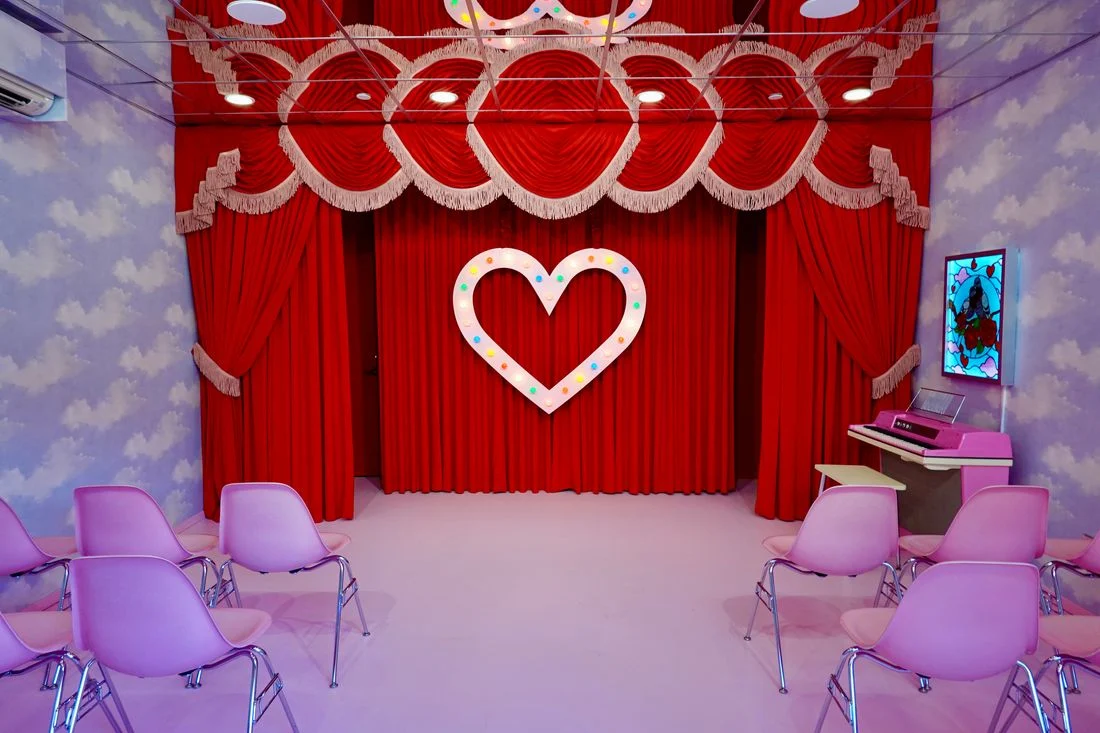
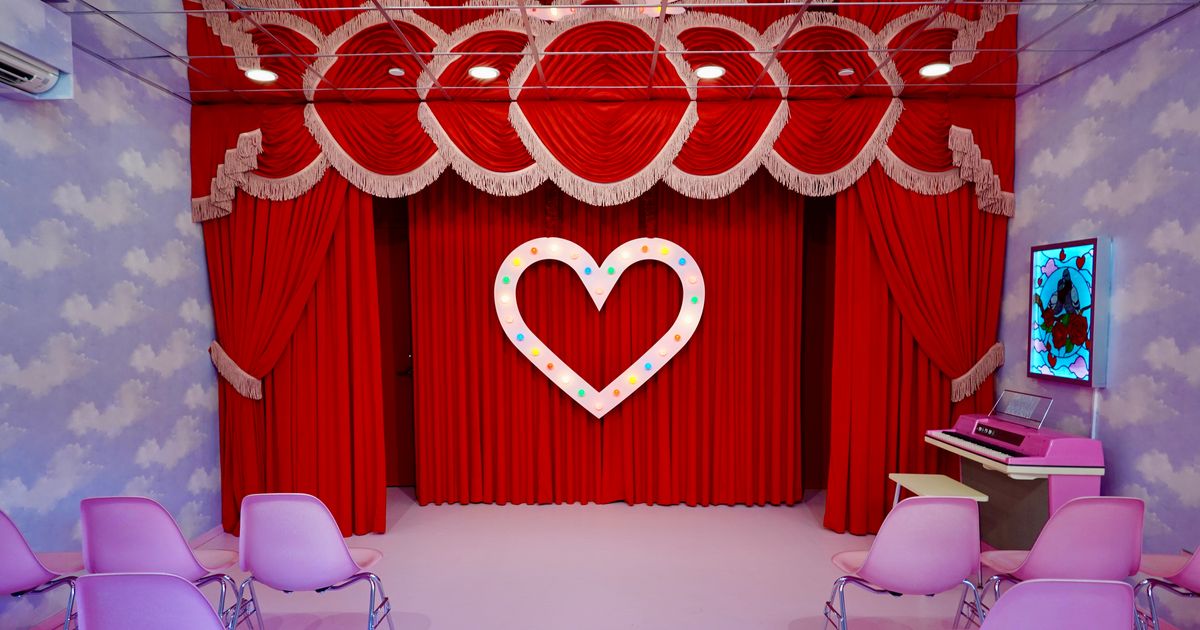
Situated at 122 Allen Street, the 400-square-foot storefront occupies a compact footprint wedged between a graffiti-adorned residential doorway and a local menswear boutique. Despite its modest dimensions, the interior delivers a maximalist visual experience meticulously engineered for both in-person immersion and digital documentation. The space features a flamingo-pink facade, a bold pink-and-red floor, pink fiberglass seating, cloud-patterned wallpaper, and heavy red velvet drapery. Overhead, a mirrored mobile of canoodling pigeons scatters spinning chips of light across the room, evoking the atmospheric extravagance of Studio 54 combined with the distinct cinematic sensibilities of directors like David Lynch and John Waters.
The venue’s design avoids both conservative, traditional church aesthetics and the ubiquitous "millennial gray" minimalism that has dominated interior design trends over the past decade. Instead, co-founders Victoria Hogan and Amy Lee curated every detail to ensure a cohesive fantasy. The color scheme extends to the back hallway, lined with baroque foil wallpaper, and a uniquely styled restroom featuring a mint-green toilet and sink set against burgundy penny tile. The lighting design was fine-tuned by Lee to strike a balance between flattering photographic conditions and atmospheric warmth.
The Evolution of the Las Vegas Wedding Industry
The concept of the quickie wedding traces its origins back to the 1940s, a period when Las Vegas was rapidly reinventing itself as a leisure and resort destination, coinciding with Reno establishing itself as the nation’s divorce capital. Travelers journeying to Nevada to dissolve previous marriages frequently found themselves with immediate incentives to remarry new partners. Small independent chapels capitalized on this transient clientele by mimicking traditional church architecture while operating with the efficiency of industrial assembly lines.
These institutions received a major cultural endorsement in 1967 when Elvis Presley married Priscilla Beaulieu at the Aladdin hotel. Over subsequent decades, the industry evolved from basic legal transaction hubs into pop-culture landmarks. Round-the-clock operating hours, drive-thru windows, and celebrity endorsements cemented the reputation of the Las Vegas Strip as the global capital of spontaneous matrimony. Modern iterations have leaned further into self-referential irony, with major brands such as Taco Bell launching branded chapels and entertainment complexes offering simulated cinematic wedding experiences.
Growth and Expansion of the Sure Thing Brand
Sure Thing was originally established in Las Vegas in 2019 by Hogan and Lee, emerging from a shared background in art school, floral design, and mobile desert ceremonies. What began as a venture operating out of a teardrop trailer expanded rapidly as consumer demand for intimate, low-stress weddings surged. In 2024, the business opened a second location in Las Vegas, culminating in a combined total of approximately 2,500 weddings hosted over the course of the previous year.
The clientele largely mirrors traditional quickie-chapel demographics: couples seeking to avoid the financial and logistical burdens of large-scale traditional weddings, those operating with limited guest counts, and individuals seeking inclusive spaces. Hogan has frequently noted that a significant portion of their clientele comprises LGBTQ+ couples who have faced familial disapproval and sought out affirming, specialized environments to mark their commitments.
Bringing the Concept to Manhattan
The expansion to the Lower East Side represents Sure Thing’s first brick-and-mortar venture outside of Nevada. The Manhattan chapel is designed specifically with digital integration in mind, utilizing high-contrast visual backdrops and custom neon installations, including a "Just Married" sign above the entrance and a neon-pink Wurlitzer organ topped with backlit stained-glass pigeon panels.
To maintain the tongue-in-cheek theatricality of the brand, the venue utilizes a rotating cast of non-traditional local officiants. Notable figures who have presided over ceremonies include Hellvis, a comedic, goth-inflected Elvis impersonator, and Tillie, a gender-neutral, vintage-attired clown. Additionally, the venue’s back door connects directly to Autophoto, a neighboring gallery of functioning vintage photo booths run by an industry colleague, allowing newly married couples to bypass waiting lines.
Booking options are structured around efficiency and accessibility. For $666, couples can reserve the chapel for a 30-minute window accommodating up to 18 guests. Higher-tier packages offer extended timeframes, increased guest capacities, and live musical accompaniment. The smooth resin flooring allows for rapid transitions between bookings, ensuring the chapel operates with the high-turnover efficiency characteristic of its Las Vegas predecessors.
Economic and Cultural Implications
The launch of Sure Thing in New York underscores a broader economic shift in how younger demographics approach milestone events. Amid persistent inflation, high housing costs, and broader economic uncertainties, traditional wedding expenditures—which frequently average tens of thousands of dollars for conventional venues and catering—have become increasingly prohibitive for many couples.
International travelers and local residents alike have demonstrated a willingness to bypass traditional ecclesiastical or catering-hall venues in favor of high-impact, low-friction alternatives. For instance, London residents Josh Bodley and Tegan Barr opted to book the New York chapel for their nuptials after discovering that local pub venues in the United Kingdom were quoting upwards of £9,000 for basic room rentals. By allocating their budget toward international travel, custom attire, and localized post-ceremony celebrations, the couple completed their wedding and honeymoon within a fraction of traditional cost parameters while maintaining a personalized experience.
The integration of alternative venues into dense urban centers like New York City reflects a growing commercial appetite for experiential retail and hospitality. By transforming a routine bureaucratic procedure into an immersive cultural event, Sure Thing highlights the ongoing commercial viability of micro-venues that prioritize aesthetic distinctiveness, speed, and emotional resonance over traditional pageantry. As urban real estate markets continue to evolve, the success of such hybrid retail-event spaces suggests that future matrimonial trends will likely favor accessibility, personality, and economic pragmatism over historical convention.