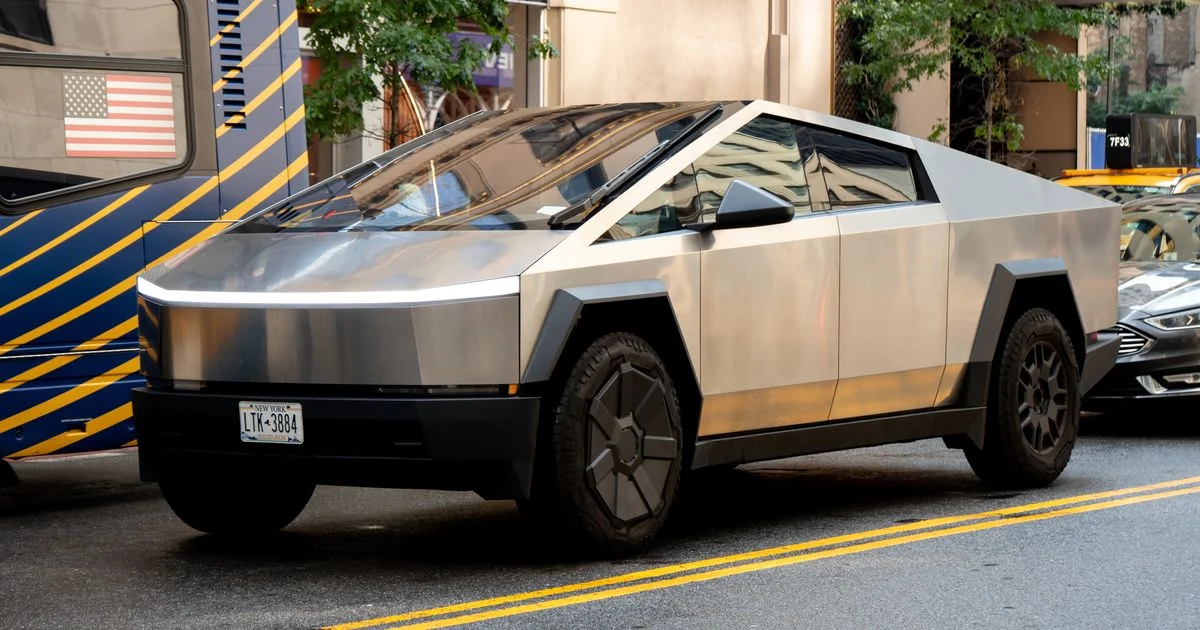
The automotive landscape is defined by its constant shifts, but few vehicles have captured the public imagination—and polarization—quite like the Tesla Cybertruck. Years after its initial unveiling promised a radical reimagining of the American pickup truck, Tesla has announced that production of the angular, stainless-steel vehicle will wind down by the middle of next year. This decision makes space on assembly lines for the upcoming Cybercab, signaling a strategic pivot for the electric vehicle manufacturer as consumer demands evolve and regulatory pressures mount.
The Rise and Fall of a Geometric Experiment
When Tesla first showcased a prototype of the Cybertruck in November 2019, it immediately disrupted conventional automotive design. Featuring a sharp-edged, origami-inspired prism geometry constructed from ultra-hard cold-rolled stainless steel, the vehicle looked less like a traditional truck and more like an artifact from a science-fiction film.
The rollout, however, was famously marred by a public relations stumble when Tesla Chief Executive Officer Elon Musk invited lead designer Franz von Holzhausen to demonstrate the vehicle’s supposedly shatterproof armor glass. Two steel balls thrown at the side windows resulted in visible fractures, creating an instant viral moment that foreshadowed the vehicle’s turbulent journey.
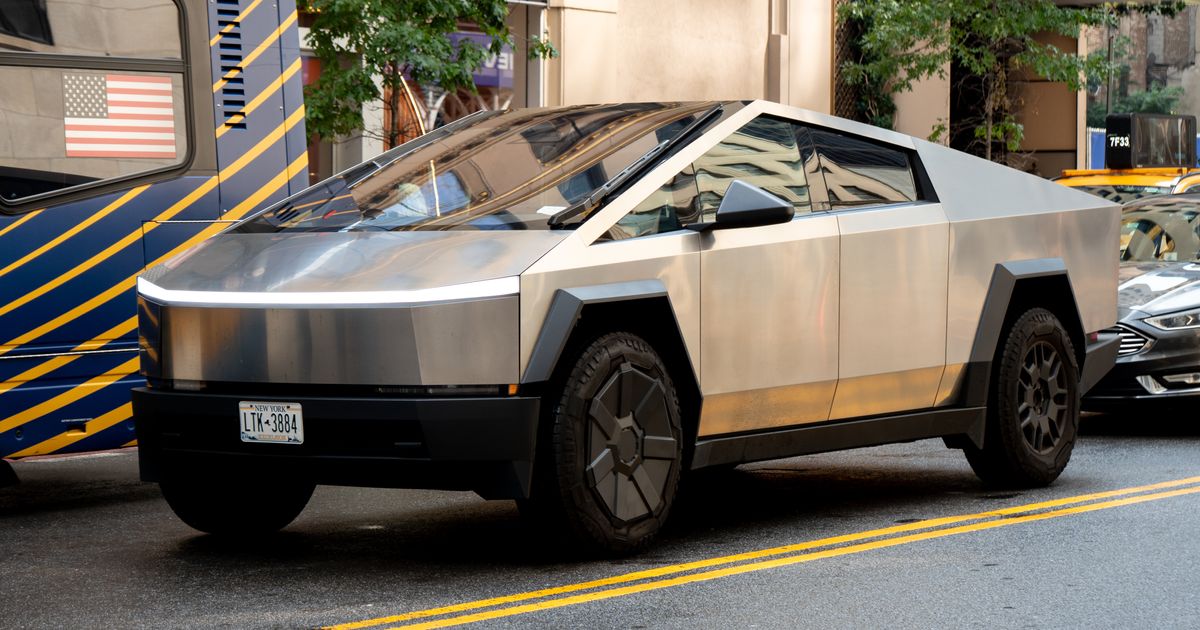
Despite the rocky introduction, reservations poured in by the hundreds of thousands. Actual production faced numerous delays due to the engineering complexities of working with thick, unpainted stainless steel and integrating unique structural components. Deliveries finally began in late 2023 for the model year, placing the vehicle’s commercial lifespan in direct parallel with a period of intense public scrutiny surrounding Musk’s personal brand, political alignments, and shifting corporate priorities.
Chronology of the Cybertruck Era
- November 2019: Tesla unveils the Cybertruck prototype in Los Angeles, drawing massive media attention and capturing hundreds of thousands of refundable pre-orders.
- 2021–2022: Production timelines face repeated delays caused by supply chain disruptions, engineering challenges regarding the vehicle’s exoskeleton, and manufacturing hurdles with stainless-steel stamping.
- November 2023: The first production models officially roll off the assembly line at Tesla’s Gigafactory Texas, initiating deliveries to initial reservation holders.
- 2024–2025: Sales ramp up before plateauing. Reports highlight recurring safety controversies, including pedestrian impact concerns and automated trunk sensor issues, while the vehicle simultaneously becomes popular for commercial advertising wraps.
- November 2026: Tesla announces plans to wind down Cybertruck production by mid-next year, reallocating manufacturing resources toward the autonomous Cybercab platform.
Design, Safety, and Regulatory Roadblocks
From its inception, the Cybertruck’s polarizing aesthetics sparked intense debate among urban planners, safety advocates, and automotive purists. While aerodynamic efficiency dictates the teardrop profiles of modern sedans and crossovers, the Cybertruck embraced a brutalist, flat-panel geometry that rejected conventional wind-tunnel optimization.
The vehicle’s massive footprint and heavy curb weight made it a dominant and intimidating presence on municipal streets. However, these same characteristics created significant hurdles for global distribution. European safety regulators raised immediate concerns regarding pedestrian safety, noting that the vehicle’s rigid exterior and sharp exterior angles lacked the crumple zones and forgiving deformation characteristics required to protect bystanders in the event of a collision. Consequently, the vehicle was effectively barred from the European market, cutting off a critical revenue stream at a time when EV adoption in Europe faced separate headwinds.
Domestically, the vehicle drew criticism from consumer safety groups over pinch-point vulnerabilities, such as motorized trunk lids lacking sensitive automatic-reversal sensors. While Tesla defenders attributed these incidents to user error, critics argued that automotive design must inherently account for human behavior rather than expecting operators to navigate mechanical risks flawlessly.

Sales Performance and the Billboard Effect
Industry estimates suggest that Cybertruck sales peaked at roughly 30,000 units annually—falling significantly short of early internal projections that anticipated up to 250,000 vehicles per year. By comparison, Tesla’s mass-market offerings, such as the Model 3 and Model Y, continued to move millions of units globally.
Yet, viewed through the lens of marketing and brand visibility, the Cybertruck achieved unprecedented success. Industry analysts note that its unconventional flat surfaces turned the vehicle into a mobile billboard. Commercial fleets, local service providers, and independent businesses frequently utilized custom vinyl wraps on the trucks for promotional campaigns, generating millions of impressions that traditional advertising budgets could rarely purchase. In essence, the vehicle functioned less as a high-volume utility truck and more as a rolling halo product that kept the Tesla brand firmly in the cultural conversation.
Historical Parallels and Broader Implications
Automotive historians have quickly drawn parallels between the lifecycle of the Cybertruck and other notable misfires in transportation history. Most prominently, the Ford Motor Company’s introduction of the Edsel in the late 1950s serves as a cautionary tale of overhyped, radically styled vehicles that failed to meet market expectations. Introduced with bold, unconventional styling—most notably its distinctive vertical front grille—the Edsel line lasted barely two years before Ford pulled the plug, cementing its name in the lexicon as a permanent shorthand for a commercial flop.
While the Cybertruck avoided an absolute financial catastrophe by functioning as an effective marketing instrument and a testing ground for structural manufacturing techniques, its discontinuation marks the end of a uniquely audacious chapter in modern car culture. As Tesla shifts its engineering focus toward automated transit solutions like the Cybercab, the era of the stainless-steel wedge on American roads is drawing to a close, leaving behind a complex legacy of technological ambition, polarizing design, and cultural controversy.