NASA has officially launched its search for the next cadre of explorers, inviting qualified United States citizens to apply for a position within the prestigious astronaut corps. This recruitment drive marks a pivotal moment in the agency’s history, as the selected candidates will be instrumental in executing the Artemis program’s ambitious goals: returning humans to the lunar surface, establishing a sustained Moon Base, and developing the operational protocols necessary for the first crewed mission to Mars. Applications are being accepted through the official agency portal until 11:59 p.m. EST on Thursday, December 3.
The selection process is rigorous, designed to identify individuals who possess not only technical mastery in STEM fields but also the psychological resilience, leadership capacity, and collaborative spirit required for long-duration spaceflight. Those who are ultimately chosen in late 2027 will join an elite group of explorers tasked with pushing the frontiers of human civilization beyond low-Earth orbit.
A Historical Legacy of Exploration
Since the inception of the astronaut corps in the 1960s, NASA has selected only 370 individuals to train as candidates. This exclusivity underscores the high threshold for entry. Currently, the active corps consists of 32 astronauts, a number that the agency intends to bolster to meet the intensifying demands of deep-space exploration.
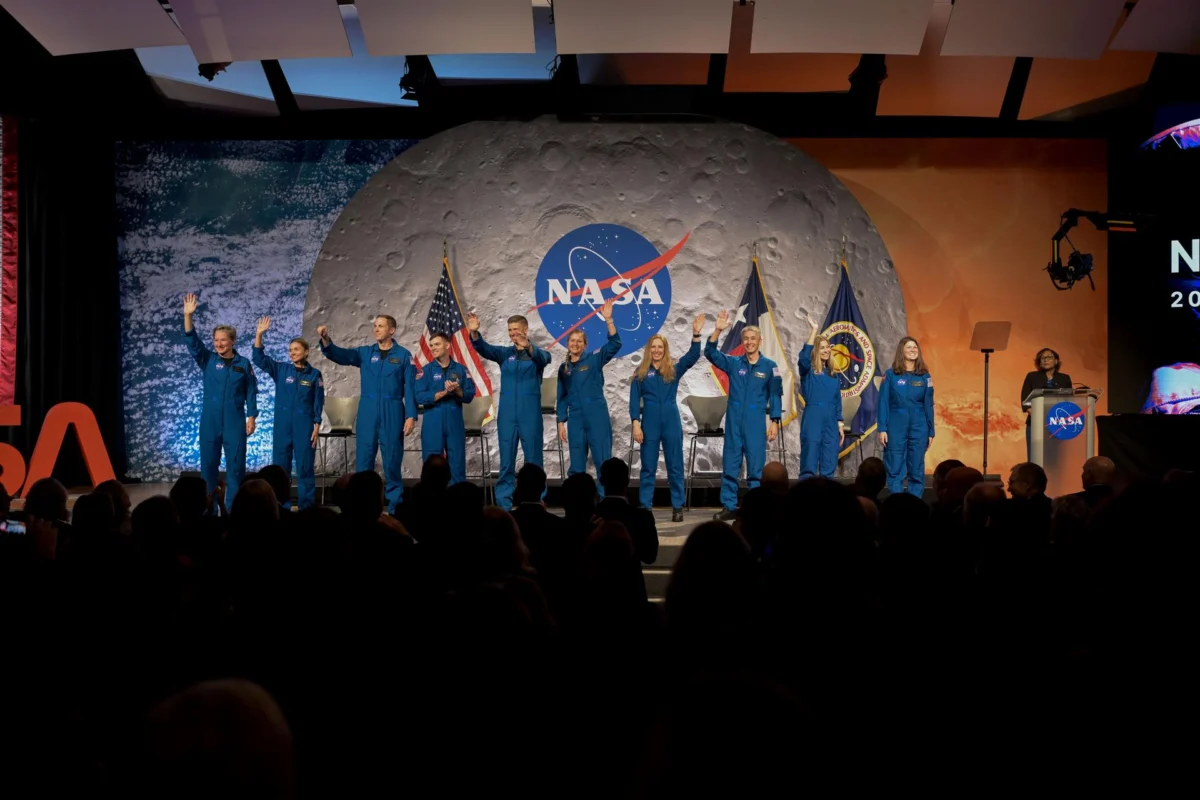
The previous recruitment cycle in 2024 saw an overwhelming response, with more than 8,000 applications submitted. From that pool, only 10 candidates were selected in 2025. These individuals are currently midway through a two-year intensive training regimen, which includes training in spacewalking (Extravehicular Activity or EVA), systems operation, lunar geology, and the handling of high-performance T-38 jet aircraft. The incoming class will face an even more specialized curriculum, tailored to the unique challenges of the lunar environment, including navigation near the lunar South Pole and the complexities of long-term life support in extraterrestrial habitats.
Qualifications and Application Requirements
The threshold for eligibility remains high, reflecting the complex nature of modern space missions. To be considered, applicants must hold United States citizenship and possess a master’s degree in a STEM field—encompassing engineering, biological science, physical science, or computer science—from an accredited institution.
Beyond academic credentials, the agency requires a minimum of three years of progressively responsible professional experience following the completion of the qualifying degree. For those coming from an aviation background, significant flight experience in high-performance jet aircraft is essential, while medical doctors may count residency training toward their professional requirements, provided that training is completed by July 2027.
Crucially, all candidates must pass the NASA long-duration astronaut flight physical, a comprehensive medical assessment that evaluates the physical viability for extended missions in microgravity. Beyond the physical, the selection board—chaired by Chief Astronaut Scott Tingle at the Johnson Space Center in Houston—prioritizes "soft skills": sound judgment under pressure, the ability to work in confined environments for extended periods, and exceptional communication skills.
The Artemis Program and the Road to Mars
The urgency of this recruitment cycle is driven by the rapid progression of the Artemis missions. Unlike the Apollo era, which was defined by short-duration lunar landings, the Artemis initiative is focused on permanence. The establishment of a Moon Base is a strategic requirement, serving as a proving ground for the technologies that will sustain life on Mars.
"The people we select could walk on the Moon, live and work at the Moon Base, and help pioneer the systems and operations that will ultimately carry crews to Mars," said NASA Administrator Jared Isaacman. "Those missions will demand technical excellence, sound judgment, teamwork, and courage. NASA’s astronaut corps has always called on remarkable Americans willing to take on extraordinary challenges in service to the nation."
The implications of this mission are broad. By establishing a presence at the lunar South Pole, where water ice is believed to be present in permanently shadowed craters, NASA aims to utilize in-situ resource utilization (ISRU) to create fuel, oxygen, and water. This mastery of local resources is the "holy grail" of space exploration; it represents the shift from Earth-reliant missions to a self-sustaining interplanetary economy.
Expert Analysis: The Shift in Astronaut Profile
Industry analysts observe that the profile of a modern astronaut has evolved significantly since the early days of the Space Shuttle program. While pilots and test pilots remain essential, the current requirements place an equal emphasis on scientific research and operational engineering.
"The modern astronaut is a hybrid," notes an aerospace analyst familiar with the selection process. "They must be able to perform delicate biological experiments in a laboratory setting one day and conduct emergency maintenance on a complex life-support system the next, all while operating in an environment that is constantly trying to kill them. The selection board is looking for people who are comfortable with that dichotomy."
Furthermore, the integration of private-sector partners—such as SpaceX, Blue Origin, and other aerospace firms—into the lunar architecture means that today’s astronauts must also possess the political and communicative acumen to coordinate across institutional and corporate boundaries.
A Call to the Next Generation
The message from NASA leadership is one of invitation and urgency. NASA Deputy Administrator Matt Anderson emphasized the historical weight of the opportunity, stating, "The window is open. The mission is waiting. And the only thing missing from the greatest adventure humanity has ever embarked upon is you."
For the candidates who succeed in the selection process, the career path is not merely a job but a contribution to the global scientific record. As Scott Tingle noted, these astronauts will become the faces of a new era of discovery. They will be tasked with inspiring the next generation of students who, in turn, will become the engineers and scientists of the 2040s and 2050s.
Timeline of the Selection Process
The road to becoming a NASA astronaut is a marathon, not a sprint. The current timeline for the 2026 selection cycle is as follows:
- Application Period: Open now through December 3, 2024.
- Initial Screening: December 2024 through mid-2025, where thousands of applications are whittled down to a pool of highly qualified interviewees.
- Interview and Selection: Late 2025 through 2026, involving intense physical and psychological evaluations at Johnson Space Center.
- Final Selection: Announcement of the new class expected in late 2027.
- Training: Once selected, candidates will begin a two-year training program, likely culminating in a graduation ceremony that qualifies them for flight assignment.
Broader Economic and Scientific Implications
The expansion of the astronaut corps is indicative of a broader strategy to solidify American leadership in space. With international competitors also eyeing lunar resources and Martian landing sites, the ability to consistently launch and support crews is a matter of national security and economic interest.
The economic benefits of these missions extend far beyond the launchpad. Historically, NASA’s R&D efforts have yielded technological breakthroughs in materials science, medical imaging, water purification, and telecommunications. The requirement for a Moon Base will undoubtedly accelerate advancements in modular construction, robotics, and long-range communication systems.
As the agency moves toward the final deadline in December, the interest is expected to be record-breaking. The combination of renewed public interest in space exploration, fueled by the visibility of the Artemis program, and the aspirational nature of the mission to Mars, suggests that the competition will be stiffer than ever. For the thousands of applicants who will submit their credentials, the dream of being part of the first generation of humans to walk on two worlds is the driving force.
Those interested in pursuing this path are encouraged to review the comprehensive requirements and application portal at go.nasa.gov/astro2026. The agency reminds potential candidates that the process is designed to be as challenging as the missions themselves, ensuring that only those with the highest degree of dedication and skill earn their place among the stars.