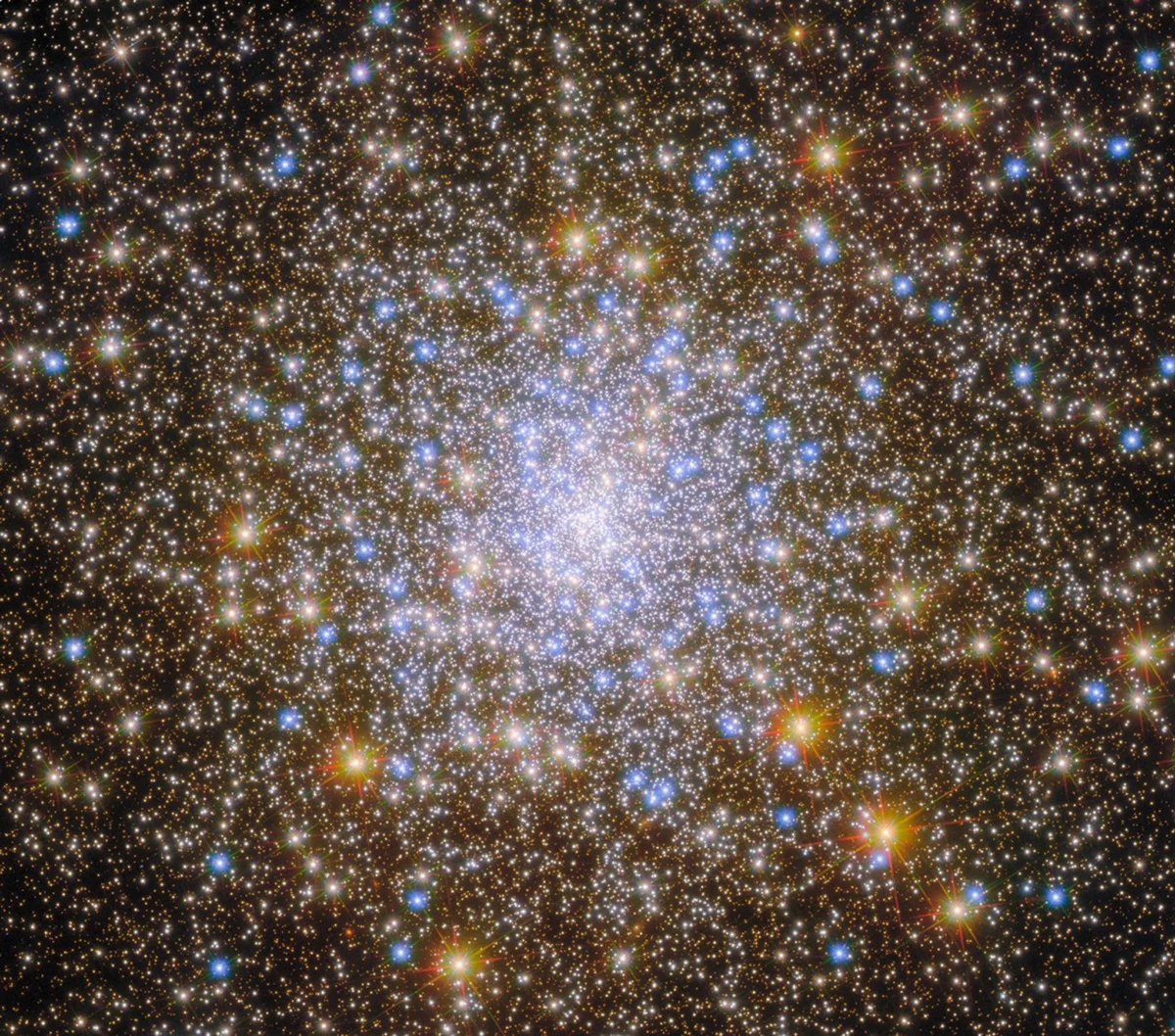
The NASA/ESA Hubble Space Telescope has once again provided astronomers with an unprecedented window into the cosmic past, releasing a high-resolution image on November 5, 2026, of the globular cluster Messier 30 (M30). Located approximately 27,500 light-years from Earth in the constellation Capricornus, this dense, spherical collection of stars serves as a stellar laboratory for understanding the life cycles of stars and the intricate evolutionary history of the Milky Way galaxy. The image, which captures thousands of individual stars in exquisite detail, highlights the stark color contrast between the cluster’s aging yellow population and its more vibrant, blue-hued members, offering researchers a visual representation of stellar stratification.
A Legacy Cataloged in the 18th Century
The history of Messier 30 is inextricably linked to the work of the 18th-century French astronomer Charles Messier. During the mid-1700s, as a comet hunter, Messier sought to catalog "deep-sky" objects—nebulae and clusters—that could be easily mistaken for comets by the era’s relatively primitive telescopes. M30, formally cataloged by Messier in 1764, was one of the many entries in his famous list, which remains a cornerstone of amateur and professional astronomy today.
While Messier initially viewed these objects as mere nuisances to his search for comets, modern astrophysics has transformed our understanding of M30. It is a globular cluster, a tightly bound group of hundreds of thousands of stars held together by gravity. These clusters are among the oldest objects in the universe, often formed during the early stages of galaxy formation, making them living fossils that provide clues about the conditions of the nascent universe.
Analyzing the Stellar Population
The visual data provided by the latest Hubble observation reveals a complex distribution of stellar types. The core of M30 is densely packed, characterized by a concentration of blue stars. In stellar evolution, blue stars are typically younger, hotter, and more massive. However, in the context of an ancient globular cluster, these blue stars represent a phenomenon known as "blue stragglers." These are stars that appear younger than they should be because they have gained mass through collisions or mergers with other stars, effectively resetting their evolutionary clocks.
Conversely, the outskirts of the cluster are dominated by older, cooler, yellow-hued stars. This stratification is a byproduct of mass segregation, a dynamical process where the most massive stars sink toward the gravitational center of the cluster, while lower-mass stars are pushed to the outer regions. The presence of a few bright orange stars in the foreground—closer to our perspective—serves as a reminder of the vast distance between Earth and this stellar nursery, adding a sense of depth to the two-dimensional image.
Chronology of Observation and Research
The study of Messier 30 has evolved significantly since the advent of space-based observatories.
- 1764: Charles Messier formally records the object, noting its fuzzy, comet-like appearance.
- 20th Century: Ground-based spectroscopic studies allow astronomers to determine the cluster’s metallic composition, confirming its extreme age.
- 1990s–2000s: The Hubble Space Telescope begins routine monitoring of globular clusters, revealing the complex internal dynamics of M30, including evidence of core collapse.
- November 5, 2026: NASA/ESA releases the latest, high-fidelity imaging, utilizing advanced digital processing to resolve individual stars within the dense core, providing new data for researchers like M. Libralato, G. Piotto, and A. Sarajedini.
Scientific Implications of the M30 Dataset
The data harvested from this recent observation is vital for testing models of stellar evolution. By analyzing the "main sequence turnoff"—the point at which stars leave the main sequence as they exhaust their hydrogen fuel—astronomers can determine the age of the cluster with remarkable precision. Globular clusters like M30 are generally estimated to be roughly 12 to 13 billion years old, nearly as old as the universe itself.
The implications of studying M30 extend beyond the cluster itself. As a satellite of the Milky Way, M30 provides insight into the history of our galaxy. Many globular clusters are believed to have been captured from smaller galaxies that the Milky Way consumed over eons. By tracking the motion and chemical signatures of the stars in M30, scientists can reconstruct the merger history of the Milky Way, identifying which stars are "native" and which were "acquired" from external sources.
Expert Perspectives on Galactic Archaeology
Researchers involved in the latest data analysis emphasize that M30 is an ideal subject for "galactic archaeology." Dr. M. Libralato, one of the primary investigators associated with the latest imaging release, noted that the ability to differentiate between stellar generations within a single cluster allows for a better understanding of how heavy elements—metals—are distributed throughout the galaxy.
"Every time we refine our view of a cluster like M30, we aren’t just looking at pretty pictures," stated an independent expert in stellar dynamics familiar with the Hubble mission data. "We are effectively performing an autopsy on a stellar system that has survived for billions of years. The color distribution in this new image is not just aesthetic; it is a map of the cluster’s gravitational history and its current health."
The Role of Hubble in the Modern Era
Despite the existence of newer, infrared-focused observatories like the James Webb Space Telescope (JWST), the Hubble Space Telescope remains the gold standard for visible-light imaging of dense stellar fields. Its high-resolution cameras allow for the precise astrometry needed to track the movement of stars within a cluster. In the case of M30, tracking these individual movements over years—a process known as proper motion study—has allowed astronomers to create a three-dimensional map of the cluster’s interior.
The data gathered by the 2026 observation will be used to calibrate future stellar evolution models. By comparing the light curves and color indices of the stars in M30 with theoretical models, scientists can better understand the role of binary star systems, which are disproportionately common in the dense centers of globular clusters. These binary systems are crucial for understanding the formation of exotic objects like X-ray binaries and millisecond pulsars.
Future Directions
As researchers continue to process the data from this latest Hubble campaign, the scientific community anticipates new papers focusing on the cluster’s chemical abundance patterns. Understanding why certain clusters exhibit different chemical fingerprints compared to others remains a central mystery in modern astronomy.
The public release of this image serves a dual purpose: it educates the public on the necessity of long-term astronomical surveillance and provides a foundational data set for the next generation of astrophysicists. As we look toward the potential for future missions to explore even more distant clusters, the work done on Messier 30 remains the bedrock upon which our knowledge of the Milky Way’s early history is built.
The image of M30 is not merely a photograph of a distant collection of stars; it is a profound testament to the power of human ingenuity. Through the lens of the Hubble Space Telescope, humanity has bridged the gap of 27,500 light-years, turning a faint smudge in an 18th-century notebook into a vibrant, living history of the cosmos. As the data continues to be analyzed, it is certain that M30 will continue to offer up its secrets, reminding us that even the most ancient objects have stories left to tell.