
The modern smartphone user relies heavily on automated screen captures, quick photos of dinner reservation confirmations, and address snippets texted by friends to navigate daily life. As artificial intelligence becomes deeply embedded within operating systems, software like Meta’s Muse and Apple’s Siri AI have evolved beyond simple voice commands. They now possess the capability to actively scan what is displayed on a user’s screen in real time to answer context-dependent questions, draft replies, and automatically populate calendar events.
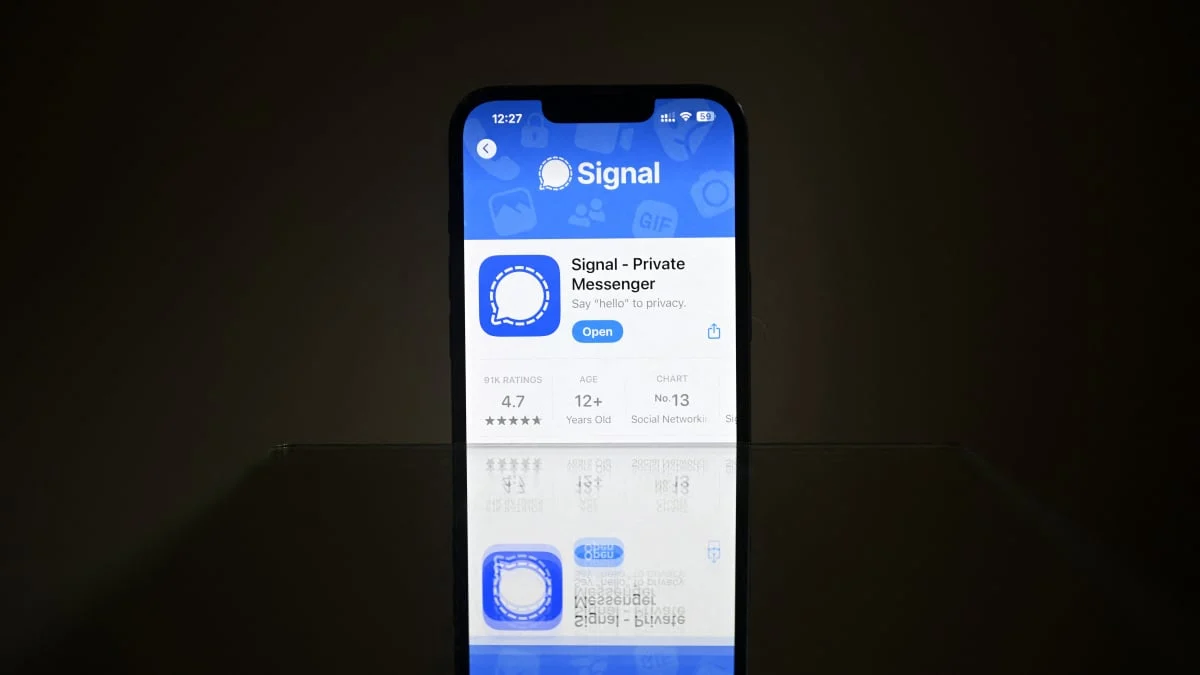
However, this convenience creates an inherent clash with digital privacy, particularly for platforms built from the ground up to keep communications shielded from prying eyes. Signal, the renowned nonprofit messaging application operating on end-to-end encryption to secure texts, voice calls, and media, has drawn a definitive line in the sand. On Friday, November 20, the organization announced a sweeping update designed to restrict what modern AI assistants can observe. Under the new protocol, the application will block screenshots on iPhones running iOS 27 and systematically restrict AI screen-capture functions across compatible Android devices.
The rollout shifts the default security posture for millions of privacy-conscious consumers. On supported Apple devices operating on iOS 27, Signal’s newly introduced "Block Siri AI" setting is enabled automatically upon installation or update. Similarly, on compatible Android hardware, Signal activates its robust "Screen security" layer the moment it detects an external assistant attempting to read the visual contents of the display. While users retain the manual option within the application settings to toggle these protections off, doing so strips away the barrier, potentially exposing bilateral conversations to systemic artificial intelligence harvesting.
"Privacy is our mission; it’s why we exist, and we do everything we can to protect it," wrote Signal President Meredith Whittaker in an official blog post detailing the defensive measures.
The Illusion of End-to-End Encryption
To understand why Signal views modern AI agents as a foundational threat, one must examine how end-to-end encryption operates in practice. End-to-end encryption ensures that a message remains indecipherable ciphertext as it traverses public networks from a sender to a recipient. Only the receiving device possesses the cryptographic keys necessary to decrypt the data stream and translate it back into readable human language.
Once the message is successfully decrypted on the recipient’s physical hardware, it must inevitably be rendered into text so the user can read it. Typically, this plaintext appears either inside the application interface or within the phone’s system notification banner.
This exact vulnerability point is where AI assistants intercept the data. Once an artificial intelligence agent gains access to either the active application window or incoming notification logs, it can read the decrypted text effortlessly. According to Signal’s technical documentation, once the text is acquired by the operating system’s assistant layer, the messaging app has zero control over whether the data is processed locally on the device or transmitted to remote corporate servers for model training and cloud-based reasoning.
Real-World Exposure: The Meta Muse Incident
The theoretical risks highlighted by privacy advocates materialized in tangible form shortly before Signal’s announcement. An investigative report published by Reuters revealed that a Meta employee received an active reminder from the company’s proprietary Muse AI assistant, prompting her to reply to a text message sent by her sister. The catch? The original conversation had taken place entirely inside Signal.

"This seems like an extreme privacy violation. I definitely did not grant it access to other apps, or recall being asked about this," the employee wrote in an internal corporate forum post, drawing immediate concern from industry watchers.
Reuters, collaborating closely with security researchers at Signal and the AI Now Institute, set out to replicate and diagnose the breach vectors using an Android smartphone paired with a macOS environment. Their findings uncovered distinct vulnerabilities across platforms. On the Android handset, the Muse assistant successfully harvested message content straight from the device’s incoming notification stream. On the Mac setup, the assistant leveraged system-level accessibility tools and background screenshot capabilities to parse chat histories.
In both instances, the AI agent operated within permissions that had been granted during initial device setup or app configuration. In response to the findings, Meta maintained that the Muse assistant can only access external applications through explicit permissions granted by the user during operation.
The Accessibility Trap and the Call for Regulatory Clarity
Meredith Whittaker and other cybersecurity experts have repeatedly pointed to accessibility features as a primary vector for unintended data exposure. Accessibility tools were originally engineered with a noble purpose: to assist individuals with visual, auditory, or motor impairments in navigating complex digital interfaces. However, when paired with modern, context-hungry artificial intelligence agents, these broad system permissions effectively function as a digital skeleton key.
Instead of isolating third-party communications, these sweeping accessibility privileges allow AI models to quietly observe virtually every action taken on a device, bypassing traditional application-layer security boundaries.
In light of these structural vulnerabilities, Signal is publicly demanding accountability from the world’s leading platform operators, specifically targeting Apple, Google, and Microsoft. Whittaker has urged these technology conglomerates to clearly define the exact boundaries of what their native assistants are permitted to read, while simultaneously demanding that operating system developers provide application creators with robust, native APIs to actively block unauthorized screen scraping and assistant integration.
Broader Industry Implications and the Future of Mobile Privacy
The confrontation between Signal and the developers of mainstream AI operating systems signals a broader, high-stakes battleground over the future of personal data ownership. As tech giants race to integrate autonomous agents—often referred to as AI agents—deep into the core architecture of mobile operating systems, the expectation of ambient surveillance is increasingly colliding with the fundamental right to confidential communication.
For organizations, journalists, activists, and everyday citizens who rely on encrypted communications to shield sensitive discussions from corporate data harvesting and state-level surveillance, the encroachment of AI screen-scraping represents an existential threat. Encryption protocols can successfully protect data in transit, but they are rendered entirely obsolete if an operating system quietly photographs or transcribes plaintext the moment it hits the screen.
As regulatory bodies around the globe grapple with the rapid deployment of generative AI and autonomous software agents, Signal’s preemptive strike establishes a critical precedent. By turning on anti-screenshot and anti-assistant blocks by default, the nonprofit is forcing a public reckoning. The fundamental question now facing Apple, Google, and the broader tech industry is whether operating systems will respect user-chosen boundaries of privacy, or if convenience will permanently supersede confidentiality in the age of ambient artificial intelligence.