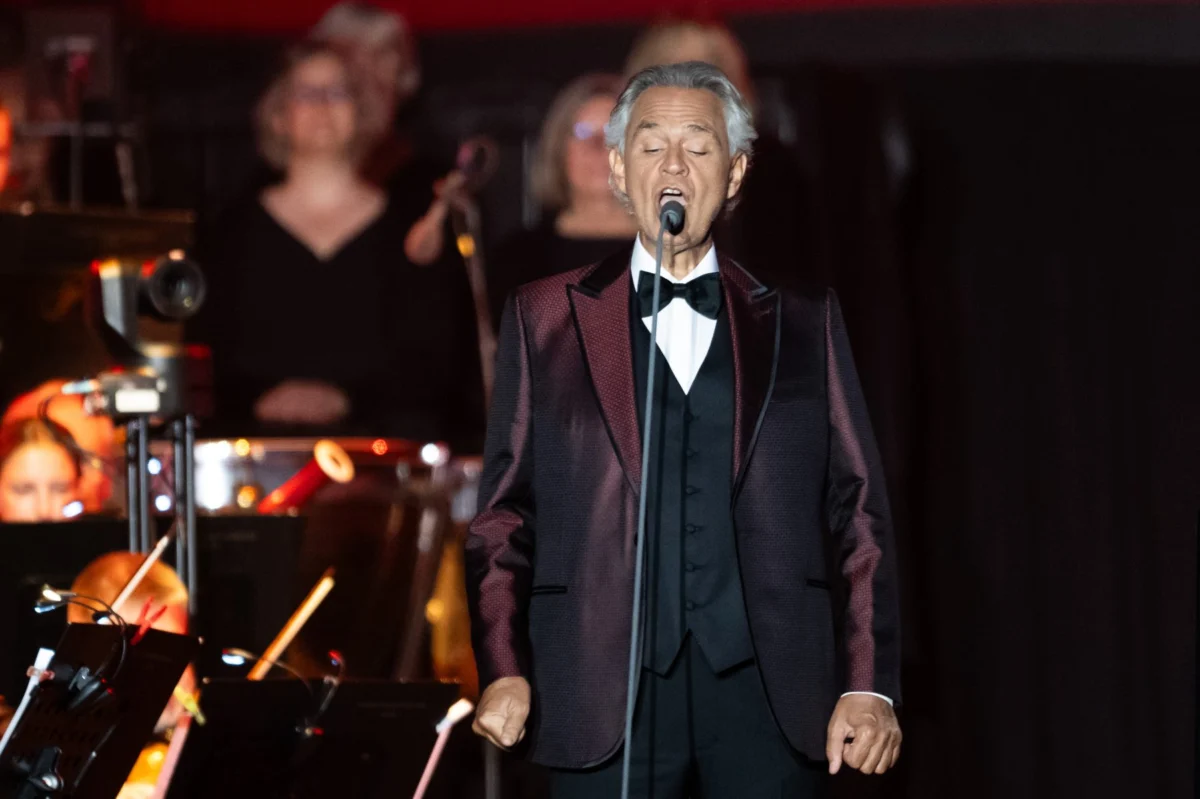
The world-renowned Italian tenor Andrea Bocelli delivered a sold-out performance at the historic Hollywood Bowl in Los Angeles on Tuesday, September 15, 2026, marking a significant milestone in his illustrious career. The concert served as a centerpiece for his ongoing global tour, which commemorates the 30th anniversary of his breakthrough 1997 compilation album, Romanza. While the evening was characterized by orchestral grandeur and a high-profile ensemble of guest artists, the production also highlighted the complexities of staging a massive, career-spanning retrospective for a global icon.
The Legacy of Romanza
To understand the gravity of the current tour, one must look back to 1997. Romanza was not merely a collection of songs; it was the catalyst that propelled Bocelli from an Italian operatic curiosity to a household name in the international music industry. Featuring the definitive hit "Con te partirò" (and its English-language adaptation "Time to Say Goodbye" with Sarah Brightman), the album shattered genre boundaries.
It remains one of the best-selling albums in history, boasting certified sales in the tens of millions and effectively bridging the gap between classical crossover and mainstream pop. By centering the 2026 world tour on this specific body of work, Bocelli is revisiting the foundation of his commercial success, offering audiences a nostalgic exploration of the tracks that defined his early trajectory. The tour, produced by AEG Presents, spans major international venues, emphasizing the enduring appeal of Bocelli’s vocal style three decades after his ascent to stardom.
Production and Performance Dynamics
The Hollywood Bowl engagement was a sprawling production, utilizing a massive orchestra and a rotating cast of supporting musicians and dancers. The technical scale of the performance underscored Bocelli’s commitment to providing a cinematic experience. The event began with a highly produced promotional video montage, which set the stage for the tenor’s arrival. While the visual quality was consistent with high-budget touring productions, the opening segment served primarily to establish the narrative of Bocelli’s career.
A notable aspect of the evening was the structural approach to audience engagement. Bocelli, who has historically maintained a formal stage persona, limited his direct address to the audience until the final stages of the show. During these brief moments of interaction, he referenced his previous concerns regarding his English-language proficiency. While the tenor expressed humility about his command of the language, his limited interaction for much of the evening created a distinct separation between the performer and the attendees, a contrast to the intimacy often associated with the Hollywood Bowl’s open-air setting.
The Supporting Ensemble
While the evening was billed as an Andrea Bocelli show, the production relied heavily on a sophisticated team of musicians and performers to maintain the concert’s momentum. The roster of talent included soprano Aida Garifullina and bass Edward Parks, who provided essential vocal texture during Bocelli’s brief periods offstage. Violinist Rusanda Panfili offered virtuosic instrumental support, while pop vocalist Pia Toscano provided a contemporary vocal element to several of the set’s crossover tracks.
The choreography, performed by Francesco Costa, Angelica Gismondo, Brittany O’Connor, and Paul Barris, integrated balletic movements into the musical numbers. While these performers were credited via text on the side-stage video screens during the production’s conclusion, the lack of live introductions during the performance prompted discussions among industry observers regarding the balance between star power and the collaborative nature of modern orchestral shows.
High-Profile Collaborations
Bocelli’s ability to attract top-tier talent remained evident throughout the evening. The performance featured appearances by prominent industry figures, including Academy Award-winning singer Jennifer Hudson, esteemed songwriter Diane Warren, and prolific producer David Foster. Under the baton of conductor Steven Mercurio, these collaborations added a layer of prestige to the event, effectively blending the worlds of Broadway, film, and classical music.
The presence of David Foster, in particular, highlighted the technical and commercial success that has defined Bocelli’s career in the United States. Such collaborations are representative of Bocelli’s strategy to maintain relevance across diverse demographics, ensuring that his 30th-anniversary tour appeals to both his original classical base and the broader pop-music audiences he has cultivated over the decades.
Chronology of the Romanza Anniversary Tour
The Romanza 30th Anniversary World Tour has been meticulously scheduled to maximize international reach. Following his summer performances in Europe—notably the August 22 show at the Ernst-Happel-Stadion in Vienna—Bocelli transitioned to the North American leg of the tour. The Hollywood Bowl engagement represents a critical point in this itinerary, as it serves as a high-visibility platform in the heart of the American entertainment industry.
- 1997: Initial release of the Romanza compilation.
- 2026 (Spring): Commencement of the 30th-anniversary world tour in select European markets.
- August 22, 2026: Performance at the Ernst-Happel-Stadion, Vienna.
- September 15, 2026: First of two consecutive nights at the Hollywood Bowl, Los Angeles.
- Late 2026/Early 2027: Scheduled continuation of tour dates across global markets.
Industry Implications and Analysis
From an industry perspective, the success of the Romanza tour serves as a case study in the longevity of legacy acts in the post-streaming era. By leveraging a specific, high-performing asset—the Romanza album—Bocelli is able to drive ticket sales based on deep-seated emotional associations held by his audience.
The logistical challenges noted during the Hollywood Bowl show, particularly regarding audience connection and the handling of supporting talent, are common in large-scale productions that attempt to balance operatic tradition with modern stadium-tour demands. The "distance" experienced by some attendees suggests that while the music remains pristine, the challenge for touring artists of Bocelli’s stature lies in maintaining a sense of genuine connection in increasingly cavernous venues.
Furthermore, the integration of digital, high-definition projection and complex light shows, while essential for stadium acoustics and sightlines, creates a barrier that can feel impersonal to those accustomed to the intimacy of a traditional recital. Future iterations of this tour may benefit from a more deliberate integration of the supporting cast into the narrative of the show, acknowledging the collaborative effort required to sustain such a high-caliber performance.
Looking Ahead
As the Romanza 30th Anniversary World Tour continues, the focus will likely remain on the tension between the artist’s classical roots and the requirements of global, multi-genre stardom. The tour stands as a testament to Bocelli’s role in the music industry; he remains one of the few artists capable of filling major arenas with a program that bridges the gap between Puccini and contemporary pop.
The Hollywood Bowl, known for its discerning audience and acoustic challenges, provided an ideal venue to test the resonance of this retrospective. Despite the minor criticisms regarding stage management and personal interaction, the overwhelming attendance and the high caliber of guest artists confirm that the demand for Bocelli’s particular brand of musical storytelling remains as potent as it was three decades ago. As he moves forward with the remaining dates of the world tour, the legacy of Romanza appears secure, reinforced by a production that continues to reach thousands of listeners across multiple continents.