The year 2025 marked a watershed moment in the centuries-old quest to determine whether humanity is the sole intelligent occupant of the universe. Within a span of months, the scientific community—and the global public—were confronted with two distinct, high-profile reports suggesting that the signatures of biological activity had been identified beyond Earth. In April, researchers analyzing data from the James Webb Space Telescope (JWST) suggested the potential presence of dimethyl sulfide in the atmosphere of the exoplanet K2-18b. By September, the focus shifted back to our own planetary neighbor, when NASA’s Perseverance rover discovered a rock formation dubbed "Cheyava Falls," featuring mineralized rings that bore a striking resemblance to microbial biosignatures found on Earth.
These announcements triggered an immediate surge in media coverage, with headlines frequently framing the findings as the "strongest hints yet" of extraterrestrial life. However, these proclamations often obscured the nuanced, and at times deeply skeptical, reality of the wider astrobiology community. While public discourse often relies on binary interpretations—asserting that "science says" life has been found—the actual internal climate of the research community is far more measured. A recent systematic survey conducted by researchers at Durham University’s Centre for Scientific Community Opinion Polling and Evaluation (C-Scope) reveals that when the headlines fade, the consensus remains elusive, characterized by cautious uncertainty rather than celebratory endorsement.
A Chronology of Anticipation and Inquiry
The path to these 2025 revelations was paved by decades of incremental technological progress. The search for life has shifted from the broad, statistical efforts of the SETI (Search for Extraterrestrial Intelligence) programs to the high-precision spectroscopy of modern exoplanet research and the robotic exploration of the Martian surface.
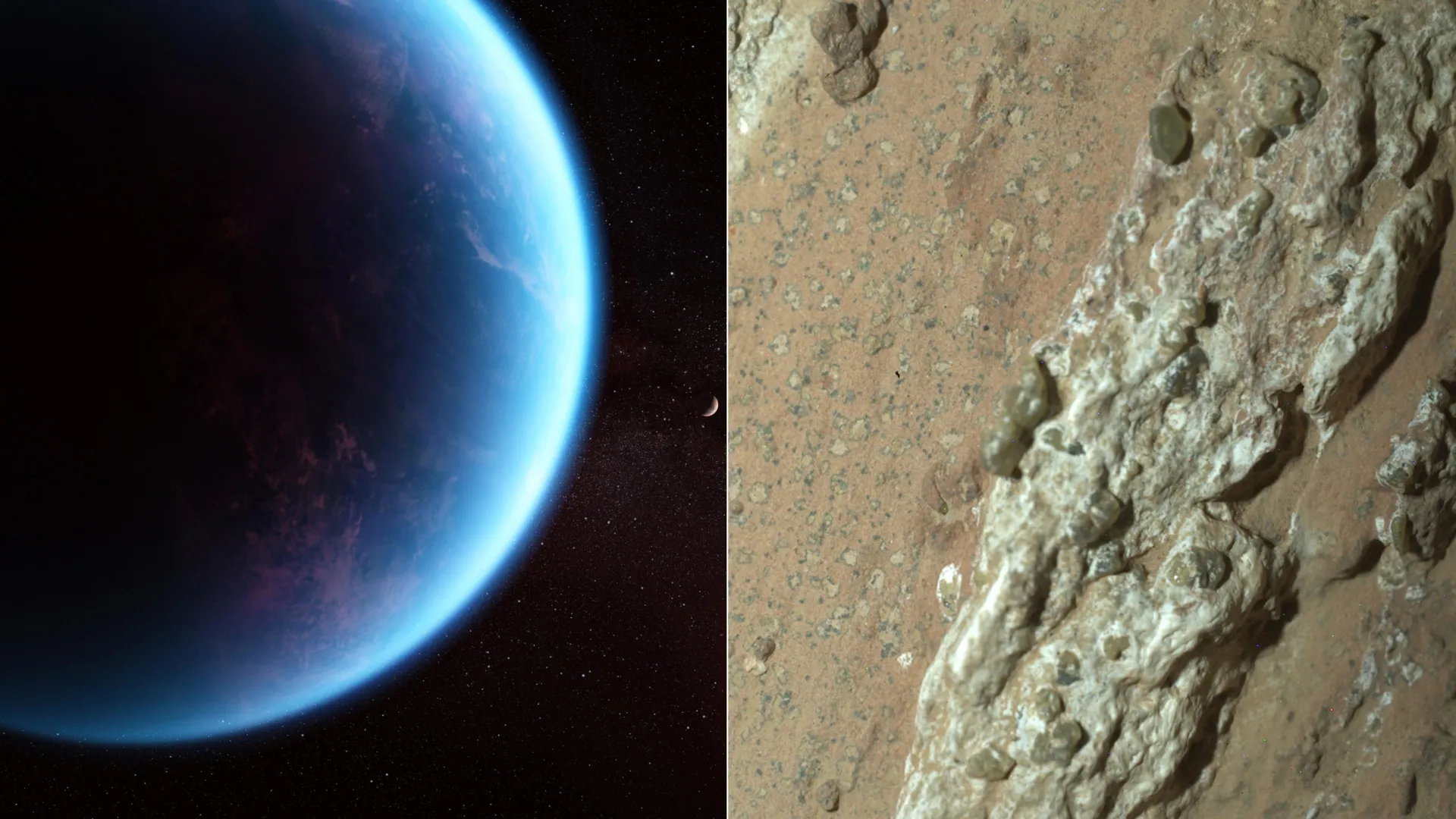
The first major 2025 event occurred on April 15, when an international team published findings in The Astrophysical Journal Letters concerning K2-18b, a "Hycean" world—a planet potentially covered in liquid oceans beneath a hydrogen-rich atmosphere. The identification of dimethyl sulfide (DMS) was particularly provocative because, on Earth, DMS is produced almost exclusively by life, specifically marine phytoplankton. The discovery sent ripples through the astronomical community, prompting an intense debate over whether the signal was a genuine biosignature or a complex artifact of atmospheric chemistry.
Following this, the focus transitioned to the Jezero Crater on Mars. On September 10, 2025, NASA confirmed that the Perseverance rover had successfully collected a sample from the "Cheyava Falls" site. The rock contained "leopard spots"—white mineral rings surrounding black cores—which are consistent with chemical reactions that, on Earth, are frequently mediated by microbial life. NASA Administrator Sean Duffy characterized the find as the "closest we have ever come" to identifying biological activity on the red planet, a statement that catalyzed a new wave of international speculation.
Quantifying the Scientific Pulse
To move beyond anecdotal evidence and selective quoting, researchers associated with C-Scope launched a rapid-response survey of hundreds of astrobiologists immediately following each announcement. The goal was to quantify the distribution of expert judgment in real-time.
The data provided a stark contrast to the optimistic framing found in mass media. Regarding the K2-18b discovery, the survey revealed that only 6.6% of astrobiologists were convinced that the findings indicated the presence of extraterrestrial life. Conversely, 65.4% of respondents expressed disagreement with that conclusion, while 28% remained neutral, citing the need for further data.
The response to the Martian discovery was marginally more optimistic but remained firmly rooted in scientific caution. In the wake of the Cheyava Falls announcement, 15.1% of astrobiologists agreed that the evidence likely pointed to life. The proportion of those in direct disagreement fell to 44.6%, while the number of neutral respondents rose significantly to 40.3%.
Perhaps most telling was the shift in the intensity of skepticism. For the K2-18b case, 35.1% of scientists expressed "strong disagreement" with the conclusion that life had been found. When the Mars findings were announced, that figure dropped to 11.1%. This transition suggests that while the community remains far from a consensus, the nature of the skepticism is evolving from outright dismissal to a more nuanced, tentative engagement with the evidence.
The Problem of "False Positives"
The primary reason for this collective caution is the historical prevalence of "false biosignatures." In the field of astrobiology, the challenge is rarely just to identify a signal that could be created by life, but rather to exhaustively rule out every possible non-biological, or "abiotic," process that could produce an identical result.
On Mars, for example, mineral rings similar to those seen at Cheyava Falls can be formed through high-temperature geochemistry or fluid interactions that have nothing to do with biology. Because the Martian surface is subject to extreme radiation and temperature fluctuations, mineralogy can mimic biological structures in ways that are currently difficult to distinguish without sophisticated laboratory analysis.
The difference in how scientists reacted to the two cases also highlights a fundamental methodological divide. The K2-18b discovery relied on remote atmospheric spectroscopy, a method that is subject to the limitations of distance and the difficulty of modeling alien planetary climates. In contrast, the Mars discovery involved physical samples that allow for higher-fidelity analysis, even if the current robotic instrumentation remains limited compared to terrestrial laboratories.
Implications for Public Discourse and Policy
The reliance on phrases like "the science says" presents a significant hurdle for scientific literacy. When the public is led to believe that a discovery is a "done deal," any subsequent revision of that finding or the emergence of conflicting data can be perceived as a "failure" of science, rather than the standard operation of the scientific method.
The researchers at C-Scope argue that the distribution of opinion is as important as the result itself. A large neutral response is not an indication of scientific ignorance; rather, it often signifies that a claim is currently too speculative for the community to endorse. In such cases, the "neutral" position is arguably the most accurate reflection of the current state of human knowledge.
The broader implications of this gap between public perception and expert consensus extend to critical policy areas such as climate change, vaccine efficacy, and artificial intelligence safety. In these fields, as in astrobiology, there is a tendency to demand binary answers where only probabilities exist. By failing to acknowledge the full spectrum of expert opinion—the strong agreement, the cautious neutrality, and the well-reasoned dissent—the public dialogue risks becoming polarized, leaving it vulnerable to misinformation.
Moving Forward: A More Transparent Dialogue
As humanity continues to probe the cosmos, the frequency of these "potential discovery" headlines is likely to increase. The James Webb Space Telescope and future missions like the Mars Sample Return will continue to yield data that sits on the knife-edge of discovery.
The initiative by groups like C-Scope to systematically measure and report on expert opinion represents a vital evolution in how we communicate science. By treating the scientific community as a diverse body of experts with varying levels of confidence, rather than a monolith that speaks with a single voice, we can foster a more mature understanding of how knowledge is built.
Science does not progress through a series of absolute, sudden truths. It moves forward through the slow accumulation of evidence, the rigorous testing of hypotheses, and the continuous, often messy, process of peer disagreement. As the search for life beyond Earth intensifies, the most important lesson may be that the most exciting findings are not those that provide an immediate answer, but those that force us to look closer, think harder, and remain comfortable with the uncertainty that defines the frontier of human exploration.