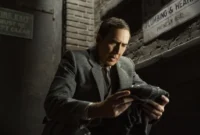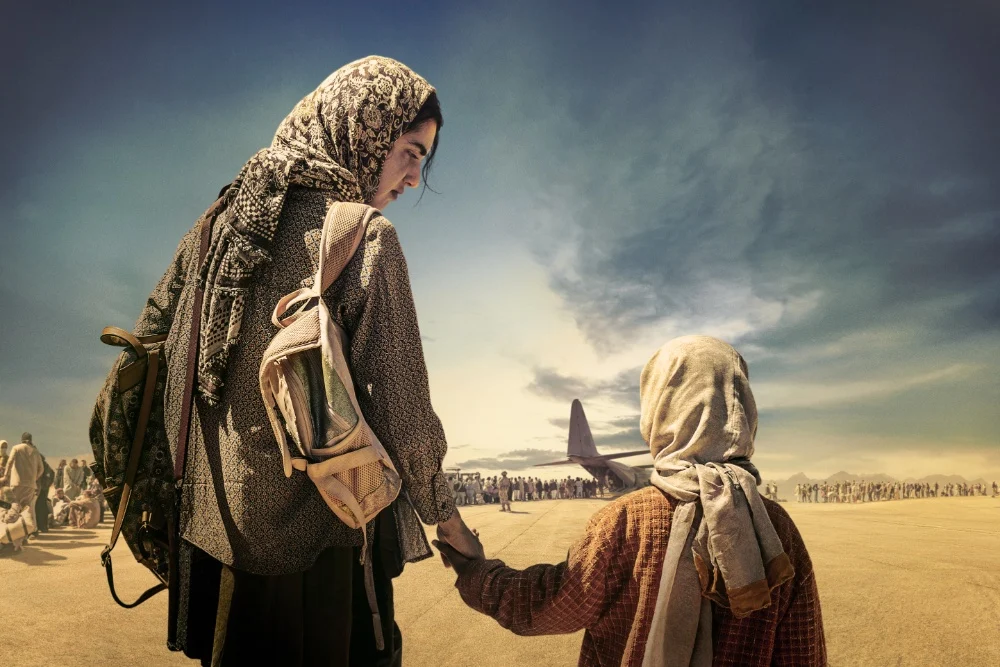
The BBC has officially announced the acquisition of the high-octane thriller series Kabul, a six-part dramatization of the chaotic final days of the United States’ military presence in Afghanistan. Procured from Mediawan Rights, the series features an international ensemble cast led by Eric Dane, known for his roles in Grey’s Anatomy and Euphoria, and Shervin Alenabi, who gained international acclaim for his performance in the espionage hit Tehran. The series is set to offer a harrowing look at the intersection of global politics and human survival during one of the most significant geopolitical shifts of the 21st century.
Set against the visceral backdrop of the Taliban’s rapid reclamation of the Afghan capital in August 2021, Kabul explores the frantic evacuation efforts through the eyes of a diverse group of characters. As the city falls, the narrative follows the lives of diplomats, soldiers, and ordinary civilians caught in a desperate race against time. The production, a collaboration between France’s 24 25 Films and Cinétévé, aims to capture the multifaceted nature of the crisis, blending elements of a political thriller with the intimate drama of a family in peril.
A Narrative of Survival and Global Intersection
The core of the series revolves around the Nazany family, Afghan civilians who find themselves in the crosshairs of a regime they once fled. Their story serves as the emotional anchor for a broader tapestry of international involvement. As the Taliban enters the city on August 15, 2021, the Nazany family is forced into a desperate bid for escape, fearing the inevitable retaliation that follows the collapse of the previous government.
However, Kabul is not merely a story of local flight; it is a portrayal of a global failure and a subsequent humanitarian scramble. The series weaves in the perspectives of French police officers, Italian diplomats, German military personnel, and American intelligence operatives. These disparate groups, often working with conflicting mandates and limited resources, must coordinate under the looming shadow of a terrorist threat from ISIS-K. The "ticking clock" element is intensified by the real-world historical accuracy of the evacuation window, creating a sense of urgency that permeates every episode.
Cast and Creative Vision
The series boasts a prestigious international cast that reflects its multi-national production roots. Joining Eric Dane and Shervin Alenabi are Jonathan Zaccaï (Le Bureau des Légendes), Thibault Evrard (The Night of the 12th), and Vassilis Kukalawi (Kandahar). The ensemble is further bolstered by Jeanne Goursaud (Pax Massilia), Gianmarco Saurino (L’estate più Calda), and Valentina Cervi (Medici: Masters of Florence).
Behind the camera, the series is helmed by directors Kasia Adamik (No Escape) and Olga Chajdas (Imago). The screenplay is the work of a sophisticated writing team including Olivier Demangel, whose credits include the critically acclaimed Atlantics and November, alongside Thomas Finkelkraut and Joey Lavy. This creative team was tasked with balancing the spectacle of a war zone with the nuanced psychological toll of the evacuation on those involved.
Nick Lee, the BBC’s Head of Program Acquisition, emphasized the gravity of the project upon the announcement of the deal. "Kabul is a tragedy of the highest stakes," Lee stated. "It is a warzone story propelled by the real ticking clock of the evacuation that occurred just a few years ago. While global politics remain complex, the series manages to dramatize the biggest view of history through the smallest window of a human family."
Historical Context: The Fall of Kabul and Operation Allies Refuge
To understand the weight of the series, one must look at the historical events of August 2021. The withdrawal of U.S. and NATO forces from Afghanistan marked the end of a two-decade conflict that began following the September 11 attacks. The withdrawal, while long-planned, unfolded with a speed that caught the international community off guard.
The Doha Agreement, signed in February 2020 between the United States and the Taliban, set the stage for the exit of foreign troops. However, as the final deadline approached in the summer of 2021, the Taliban launched a lightning-fast offensive, capturing provincial capitals with little resistance. On August 15, 2021, the Taliban entered Kabul, leading to the collapse of the Islamic Republic of Afghanistan and the flight of President Ashraf Ghani.
What followed was Operation Allies Refuge, one of the largest airlifts in history. Between August 14 and August 31, the United States and its allies evacuated more than 120,000 people from Hamid Karzai International Airport. The scenes at the airport—civilians clinging to the sides of moving C-17 transport planes and the desperate pleas for passage at the airport gates—became the defining images of the era and serve as the primary visual and thematic inspiration for the series.
Timeline of the 2021 Evacuation Crisis
The series Kabul operates within a timeline that mirrors the actual events of the 2021 crisis:
- August 13-14, 2021: Taliban forces seize Kandahar and Herat, moving within striking distance of Kabul. International embassies begin shredding sensitive documents and preparing for staff evacuations.
- August 15, 2021: The Taliban enters Kabul. Panic ensues as thousands of civilians head to the airport. The U.S. Embassy is evacuated by helicopter.
- August 16, 2021: Chaos erupts on the tarmac of Hamid Karzai International Airport. Commercial flights are suspended, and military evacuations become the only way out.
- August 26, 2021: A suicide bombing at the airport’s Abbey Gate, claimed by ISIS-K, kills at least 183 people, including 13 U.S. service members. This event added a layer of extreme danger to an already volatile situation, a plot point heavily featured in the series’ synopsis.
- August 30, 2021: The final U.S. military flight leaves Kabul, ending the 20-year military presence.
Production and the European Alliance
The production of Kabul is a significant milestone for the European Alliance, a consortium of public broadcasters including France Télévisions, Germany’s ZDF, and Italy’s RAI. The Alliance was formed to pool resources and compete with the massive production budgets of global streaming giants like Netflix and Amazon. By collaborating on high-end drama, these broadcasters can produce content with cinematic scale that remains rooted in European and global perspectives.
The series was produced by Fabienne Servan-Schreiber and Charlotte Ortiz at Cinétévé, alongside Matthias Weber and Thibault Gast at 24 25 Films, a subsidiary of Mediawan. Sandrine Paquot served as executive producer. Mediawan Rights, one of Europe’s leading independent studios, is handling the global distribution, with the BBC acquisition representing a major foothold in the English-speaking market.
Implications and the Role of Modern War Drama
The acquisition of Kabul by the BBC reflects a growing appetite for "recent history" dramas—shows that tackle events still fresh in the collective memory. Similar to series like Chernobyl or The Crown, Kabul seeks to provide a narrative framework for events that were largely experienced through fragmented news reports and social media clips.
The series also touches upon the enduring humanitarian implications of the withdrawal. Three years after the fall of the city, Afghanistan remains in a state of severe economic and social crisis. The rights of women and girls have been drastically curtailed, and many of the "allies" who worked with Western forces remain in hiding or in limbo in third countries. By focusing on the Nazany family, the series highlights the human cost of policy decisions made in distant capitals.
Furthermore, the inclusion of the ISIS-K threat in the storyline serves as a reminder of the complex security environment that persists in the region. The series does not just look back at a closed chapter of history; it examines a turning point that continues to influence global security and migration patterns today.
Broadcast Schedule and Accessibility
The BBC has scheduled the rollout of Kabul to coincide with the third anniversary of the events it depicts. The series will be available in its entirety on the BBC’s streaming platform, iPlayer, starting August 2. For traditional television audiences, the series will begin broadcasting on BBC Four on August 15, the exact anniversary of the fall of Kabul.
This dual-platform release strategy ensures that the high-stakes thriller reaches both the binge-watching digital audience and the viewers of BBC Four, a channel traditionally known for its high-quality international acquisitions and documentaries. As the BBC continues to expand its library of international drama, Kabul stands out as a flagship acquisition that combines star power with a profound, real-world resonance.