For more than half a century, the iconic educational children’s television program Sesame Street has maintained a celebrated tradition of bridging contemporary pop culture with early childhood education. This artistic endeavor has consistently involved welcoming legendary musical guests and producing inventive, child-friendly adaptations of major hits. From Stevie Wonder’s groundbreaking performances in the early 1970s to Tony Bennett transforming his classic standard Fly Me to the Moon into a whimsical narrative about Slimy the worm’s lunar expedition—titled Slimy to the Moon—the show has continually demonstrated an unparalleled ability to engage audiences of all ages.
Additional historic musical milestones on the program include the Fugees delivering their powerful inclusion anthem Just Happy to Be Me, blues icon B.B. King performing an affectionate tribute to a foundational letter of the alphabet, and Smokey Robinson playfully interacting with a costumed letter U for a rendition of U Really Got a Hold on Me. Opera legend Marilyn Horne even once delivered an elaborate, orchestral trill of C Is for Cookie on a mock-Egyptian set while wearing a tiara adorned with a bouncing pastry.
Continuing this rich and enduring legacy nearly 57 years after the series first premiered on public television, Sesame Street has demonstrated that its brilliant synthesis of education, musicality, and humor remains as vibrant as ever. In a newly released promotional and educational video, the production team has transformed pop sensation Chappell Roan’s explosive chart-topping hit Hot to Go into a clever, potty-training anthem titled Got to Go. Featuring the inimitable lead vocals of the beloved Cookie Monster, the segment merges modern pop music trends with essential developmental milestones for toddlers.
The Anatomy of a Modern Educational Parody
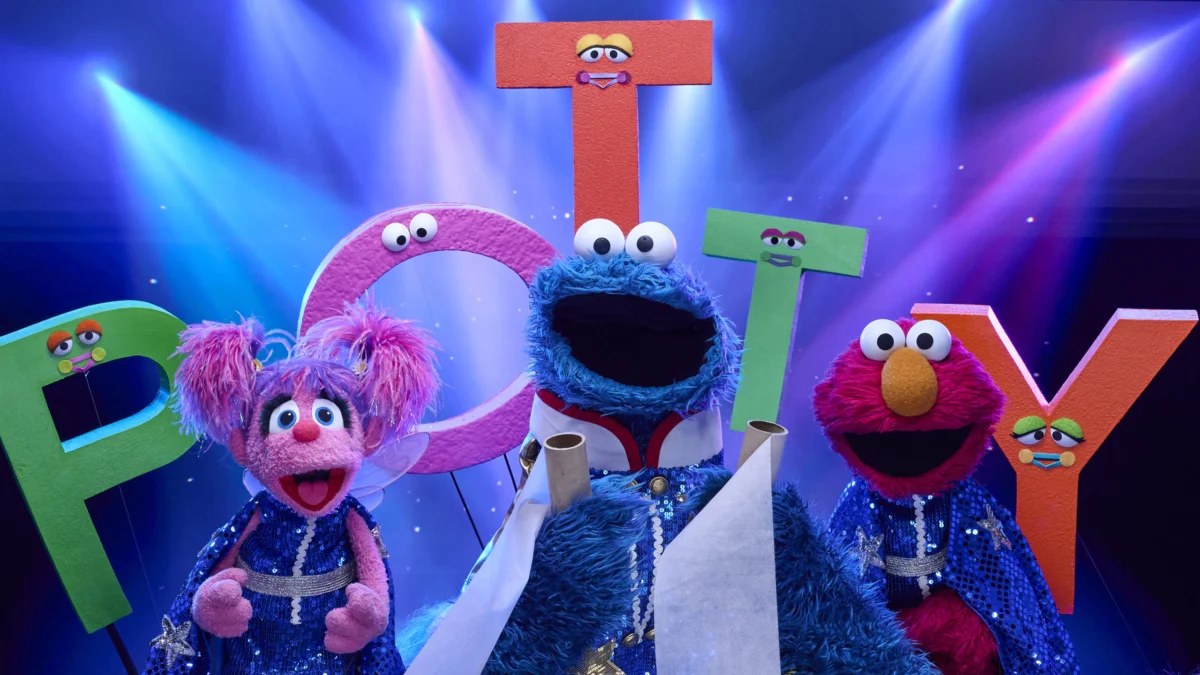
The newly released adaptation is a remarkably faithful, note-for-note rendition of Roan’s original track, preserving the infectious synth-pop energy that propelled the song to mainstream dominance. Complete with the distinctive chanted middle section delivered by guest Muppet vocalists Elmo and Abby Cadabby, the track maintains the structural integrity of the original recording while completely overhauling the lyrical content to focus on the urgency of childhood bathroom habits.
While the original music video for Hot to Go is internationally famous for its choreography, featuring crowds performing specific arm movements to spell out the song’s title, the Sesame Street adaptation takes a characteristically literal and educational approach. Instead of human dancers performing physical hand gestures, the visual features singing, animated letters spelling out the word POTTY in vibrant typography. Furthermore, in a touch of classic Sesame Street meta-humor, the track cleverly begins with a personified talking number one and number two, setting a lighthearted tone for a universally relatable childhood experience.
Cookie Monster delivers the verses in his trademark, unmistakable cadence, blending playful phrasing with practical physiological advice for young viewers. The lyrics playfully instruct children to tune into their bodies:
Stop and listen to me body / It’s saying that it’s time for potty,
There’s a growing feeling in my tummy, that me gotta go pee, me gotta go pee…
There they go again, now me legs are grooving / There might be a mess if me don’t get movin’…
P-O-T-T-Y, woah-oh, your body knows when you’ve got to go…
This creative lyricism successfully translates the abstract concept of bodily awareness into concrete, actionable steps for toddlers navigating the challenging phase of toilet training. By anchoring the lesson to a high-energy, recognizable pop song, the program harnesses the psychological power of rhythm and repetition to reinforce positive behavioral habits.
Historical Context of Music on Sesame Street
To fully understand the cultural weight of the Got to Go adaptation, one must examine the profound historical role that music has played within the framework of Sesame Street. Since its debut on November 10, 1969, the series—created by Joan Ganz Cooney and Lloyd Morrisett under the auspices of the Children’s Television Workshop (now known as Sesame Workshop)—has utilized music as a primary vehicle for cognitive and social-emotional development.
Early musical segments featured luminaries such as Ray Charles, Johnny Cash, and Paul Simon, who recognized the unique platform the show provided to reach millions of children nationwide. Over the decades, the series evolved from traditional folk, jazz, and blues arrangements to incorporate contemporary genres, including hip-hop, indie rock, and modern pop. This continuous evolution ensures that parents and caregivers, who often watch alongside their children, remain engaged, while contemporary artists view an invitation to appear on the show as a significant cultural badge of honor.
The meteoric rise of Chappell Roan throughout 2023 and 2024 made her catalog an inevitable target for cultural parody. Known for her theatrical performance style, vintage aesthetics, and anthemic pop hooks, Roan captured the zeitgeist with tracks like Good Luck, Babe! and Hot to Go. By selecting the latter for a potty-training adaptation, the producers of Sesame Street tapped into the song’s natural cadence and call-and-response structure, which naturally lends itself to educational reinforcement.
Official Responses and Industry Implications
Following the release of the video, representatives for Chappell Roan were contacted by entertainment trade publication Variety for comment regarding the pop star’s reaction to the whimsical tribute. A spokesperson for the singer indicated that Roan had no official statement to offer.
Industry analysts note that no statement was truly necessary. Granting formal permission for her work—co-written and produced alongside frequent collaborator Dan Nigro—to be utilized in such an amusing, imaginatively instructive format for young children serves as a powerful endorsement in its own right. In the modern music industry, clearance for parody and educational transformation requires artist sign-off, and aligning with Sesame Street places Roan in the company of elite musical icons who have willingly lent their repertoires to the institution of public broadcasting.
The broader implications of this crossover highlight the shifting dynamics between mainstream pop culture and children’s entertainment. In an era heavily saturated by digital media and fragmented viewing habits, viral moments that successfully bridge generations hold immense value. For parents, the video offers a humorous respite during a notoriously stressful phase of parenting, utilizing a beloved pop culture reference to ease domestic friction. For educators and developmental psychologists, the segment exemplifies the enduring pedagogical value of embedding fundamental life skills within memorable artistic frameworks.
As Sesame Street approaches its sixth decade of continuous production, initiatives like Got to Go prove that the series’ foundational mission remains unaltered. By listening to contemporary cultural trends and translating them through the lens of early childhood education, the program continues to shape the developmental milestones of new generations while securing its place in television history.