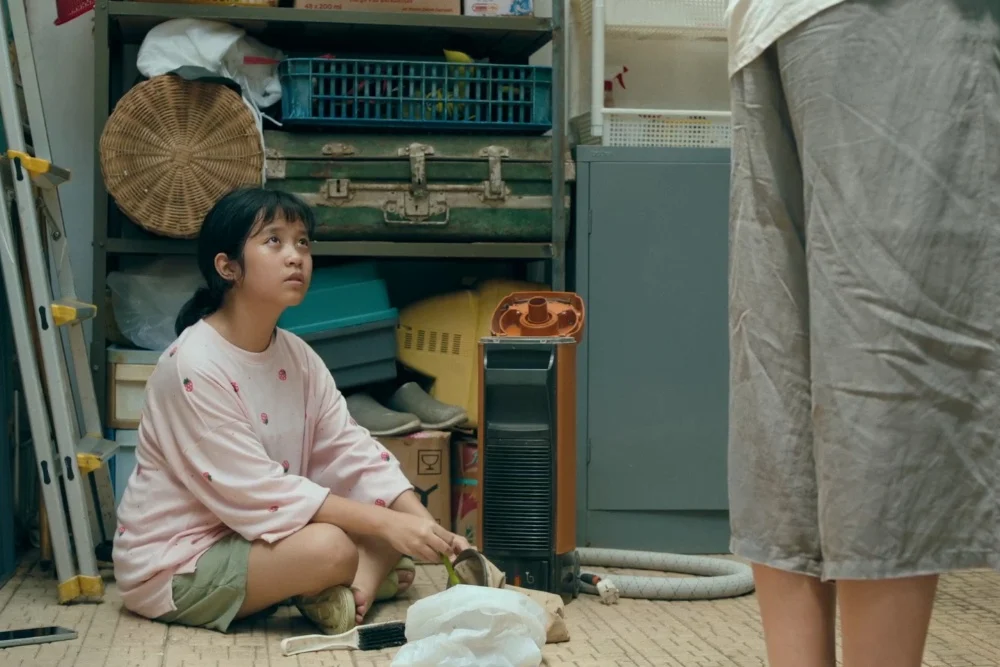
The landscape of Southeast Asian cinema is experiencing a profound shift toward deeply intimate domestic narratives, a trend underscored by the return of acclaimed Indonesian director Ariani Darmawan. After a hiatus spanning more than a decade dedicated to raising a family, Darmawan has made her feature-length directorial debut with Jani Be Good. The film premiered in the prestigious Asian Future competition at the Tokyo International Film Festival, marking a significant milestone not only for the filmmaker herself but also for the Jakarta-based production powerhouse Palari Films.
The project translates Darmawan’s personal evolution as a mother into a multi-layered cinematic portrait of four women navigating the intricate dynamics of a Chinese-Catholic household in Indonesia. As the film prepares for its commercial theatrical release in Indonesia on December 10, it arrives at a critical juncture for the country’s film industry, highlighting both the creative vibrancy of contemporary Indonesian auteurs and the systemic distribution hurdles they must overcome.
A Narrative Rooted in Domestic Realities and Generational Friction
Set across four tense December days leading up to Christmas, Jani Be Good chronicles the sudden emotional fracture of an all-female household. The narrative catalyst occurs when 13-year-old Jani overhears a heated argument between her 18-year-old sister, Julia, and their mother, Winnie, prompting Julia to abruptly leave home.
Winnie, a single mother balancing a demanding career as an accountant with side orders of fruit hampers, becomes increasingly short-tempered with the daughter who stayed. Meanwhile, young Jani secretly maintains contact with her exiled sister while seeking emotional refuge with her grandmother, Oma—a resilient matriarch who sells homemade spring rolls to quietly set aside funds for her own cremation.
The film stars an ensemble cast featuring Chempa Puteri as Jani, Sigi Wimala as Winnie, Tutie Kirana as Oma, and Hyori Mika as Julia. The screenplay was co-written by Darmawan and Cyntha Hariadi, capturing the unspoken tensions, protective instincts, and historical grievances that pass quietly from one generation of women to the next.
For Darmawan, the impetus for the film arose directly from her prolonged absence from the director’s chair. Having previously directed notable short films and documentaries—including Sugiharti Halim, which competed at Clermont-Ferrand and screened at Rotterdam and Busan, and Silenced, which also played in Rotterdam—she found herself re-evaluating the complexities of domestic care work after entering motherhood in her late thirties.
“I stopped making films for over 10 years because I was having a kid and looking after my family, so getting back to it was all I really wanted,” Darmawan reflects. She notes that becoming a mother profoundly altered her perception of her own upbringing. “As a kid, I watched her keep the family running, rummaging through things at her desk, making phone calls, cooking dinner, but I never wondered how she felt. It took having my own family, in my late thirties, to understand how exhausting and all-consuming it is.”
Chronology of Production and Creative Collaboration
The journey from concept to screen for Jani Be Good involved a tightly coordinated production timeline that maximized efficiency without sacrificing artistic integrity. The project originated in 2022 when producer Muhammad Zaidy and fellow Palari Films co-founder Meiske Taurisia reached out to Darmawan with an invitation to helm a family drama. Taurisia, a longtime friend who had followed Darmawan’s early short films since the early 2000s, recognized the distinct maturity in Darmawan’s perspective on womanhood.
The creative process required a delicate synthesis of mediums. While Darmawan was accustomed to writing her own material, adapting Hariadi’s prose into a cinematic script presented a unique hurdle. The director, Hariadi, and Taurisia established a foundational agreement early on: none of the characters would be positioned as villains. Drawing from their personal lives as daughters and mothers, they aimed to portray domestic conflict without passing moral judgment.
Production moved with swift precision. The core team—including Darmawan, Hariadi, and the four lead actors—gathered for an initial script read-through in a house in Bandung two months prior to principal photography. Following rehearsals in Jakarta, the production returned to the Bandung location for two weeks of intensive pre-production alongside veteran cinematographer Teoh Gay Hian and production designer Suherina. Notably, none of the four lead actresses were acquainted prior to casting, necessitating a meticulous chemistry-testing process anchored around young lead Chempa Puteri. Ultimately, principal photography was completed in just 13 days—a record turnaround for a feature film under the Palari banner.
Palari Films and the Industrial Landscape of Indonesian Cinema
The release of Jani Be Good highlights the broader commercial and structural realities facing independent cinema in Indonesia. Founded in 2016, Palari Films has cemented its status as a premier Southeast Asian production house, famously winning the Golden Leopard at the 74th Locarno Film Festival with Yuni director Kamila Andini’s contemporaries, and securing critical and commercial acclaim for titles such as Vengeance Is Mine, All Others Pay Cash, Posesif, Aruna and Her Palate, and Netflix originals including Borderless Fog and Dear David.
Despite this pedigree, securing financing for intimate arthouse dramas remains a formidable challenge. Taurisia notes that while international festival recognition elevates a studio’s portfolio and enhances cultural diversity, it can inadvertently stigmatize projects locally. Domestic investors frequently perceive festival-bound films as overly artistic or commercially inaccessible, driving up perceived financial risk.
Distribution represents an even more acute structural bottleneck within the Indonesian film value chain. Although the country boasts a growing number of cinema exhibitors, it lacks a robust network of independent distributors capable of reaching audiences across the sprawling archipelago. Consequently, independent filmmakers face intense pressure from commercial theater chains, where films are routinely evaluated over a narrow Thursday-to-Sunday box office window to determine their theatrical lifespan.
To combat this vulnerability and foster sustainable careers for emerging filmmakers, Palari Films launched the Kelas Komunitas Palari (Palari Community Class) initiative. This workshop series instructs regional film communities across the country on how to independently organize screenings and paid watch parties. Jani Be Good serves as the inaugural test case for this decentralized distribution model.
“Many directors struggle to make a second film after their first, and this gap in the film value chain doesn’t help,” Taurisia observes. “How can we build film careers, let alone sustainable ones?”
Broader Implications and Future Horizons
The theatrical rollout of Jani Be Good on December 10 comes at a time when Palari Films is actively expanding its diverse slate. The studio’s upcoming projects include Edwin’s coming-of-age feature Menari dengan Bayangan (Dancing With My Shadows) in collaboration with singer-songwriter Baskara Putra (Hindustan), Aditya Ahmad’s debut feature Goldfish—which collected three awards at the Busan Asian Project Market—and Khozy Rizal’s forthcoming debut feature, I Wanna Dance With Myself.
For Darmawan, who outside of filmmaking co-founded the independent Bandung-based bookstore and library Kineruku, the transition back to cinematic storytelling is expected to be enduring rather than episodic. While future projects will likely develop organically around her domestic life and literary endeavors, her thematic focus remains fixed on the quiet complexities of interpersonal bonds.
“As for themes, I’m open to anything, as long as it has sad and sweet relationships between people,” Darmawan concludes. “That’s where things get complicated and interesting.”
As Jani Be Good transitions from its international festival debut in Tokyo to local audiences across the Indonesian archipelago, it stands as a testament to the resilience of independent storytelling, offering a nuanced exploration of the care work, silent wounds, and enduring resilience that define the female experience within the modern Asian household.