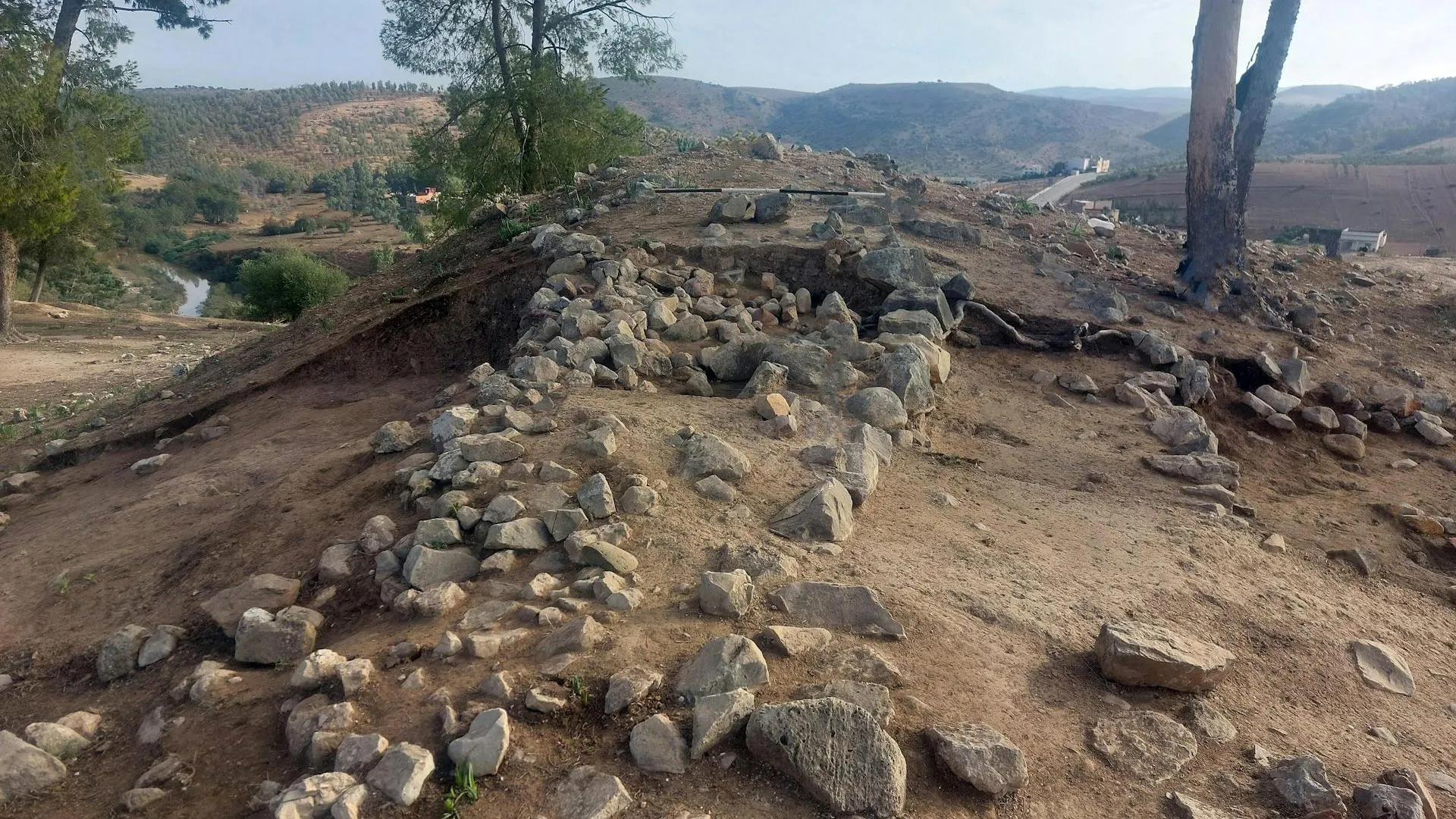
In the rugged hills of north-west Morocco, overlooking the river that gives the site its name, a series of remarkable archaeological discoveries is fundamentally altering our understanding of human history in the Maghreb. Recent excavations at Oued Beht have unveiled evidence of a highly organized, sophisticated community that thrived during the second millennium BC, effectively dismantling the long-held notion that North Africa was a peripheral or isolated region during this transformative epoch of human civilization.
The site, which first gained international attention as a massive agricultural complex dating back some 5,400 to 4,900 years, has now yielded a discovery of even greater architectural significance. Archaeologists have identified the earliest known large-scale defensive construction in North Africa outside of the Nile Valley, a discovery that pushes back the timeline for organized, complex social structures in the region by centuries.
A Chronology of Human Occupation
The historical timeline of Oued Beht is characterized by intermittent yet intense phases of occupation, reflecting its status as a strategic focal point across millennia.
- The Final Neolithic Phase (c. 3400–2900 BC): This initial period of high activity saw the establishment of a sprawling farming community covering at least ten hectares. Evidence suggests a population engaged in advanced agricultural practices, including the cultivation of wheat and barley, alongside livestock management and the production of polished stone tools and intricate, painted pottery.
- The Bronze Age Transition (c. 2000–1500 BC): This era marked a significant shift in settlement patterns. The population moved away from the open, expansive northern fields to the narrower, more defensible southern ridge. It was during this period that the major defensive embankment—the "barred spur"—was constructed.
- The Medieval Reoccupation (11th–13th Centuries AD): Centuries after the prehistoric site was abandoned, the ridge regained its strategic importance. Medieval settlers repurposed the ancient defensive structures, established a farmstead on the hilltop, and utilized the area as a burial ground, signaling a continuity of landscape usage that spans the vast gulf between prehistory and the medieval world.
Architectural Sophistication and Labor Coordination
The defensive system at Oued Beht represents more than mere survival; it is a testament to the organizational capacity of the community. The system consists of a multi-phase ditch, a rampart, and a wall that cut across the narrowest point of the ridge, effectively fortifying the southern tip of the site against the surrounding terrain.
For archaeologists, the existence of such a structure carries profound implications. The construction of an earthwork of this magnitude required a level of labor mobilization, resource management, and long-term planning that was previously not attributed to societies in this region during the second millennium BC. This confirms that the builders were not merely nomadic groups but a sedentary society with formalized hierarchies and the ability to command collective action.
While the exact nature of the threats necessitating these defenses remains a subject of ongoing investigation, scholars posit that the walls were likely a response to shifting regional dynamics. As competition for arable land and control over vital trade routes increased, the construction served as a physical assertion of power, protecting resources and controlling movement across the landscape.
Mediterranean Integration: Beyond Isolation
The discoveries at Oued Beht are particularly significant when contextualized within the broader history of the Mediterranean. The second millennium BC was a period of intense cultural and economic exchange. In southern Iberia, the Argaric culture (c. 2200–1550 BC) was developing complex, fortified hilltop settlements characterized by bronze metallurgy and stratified social structures.
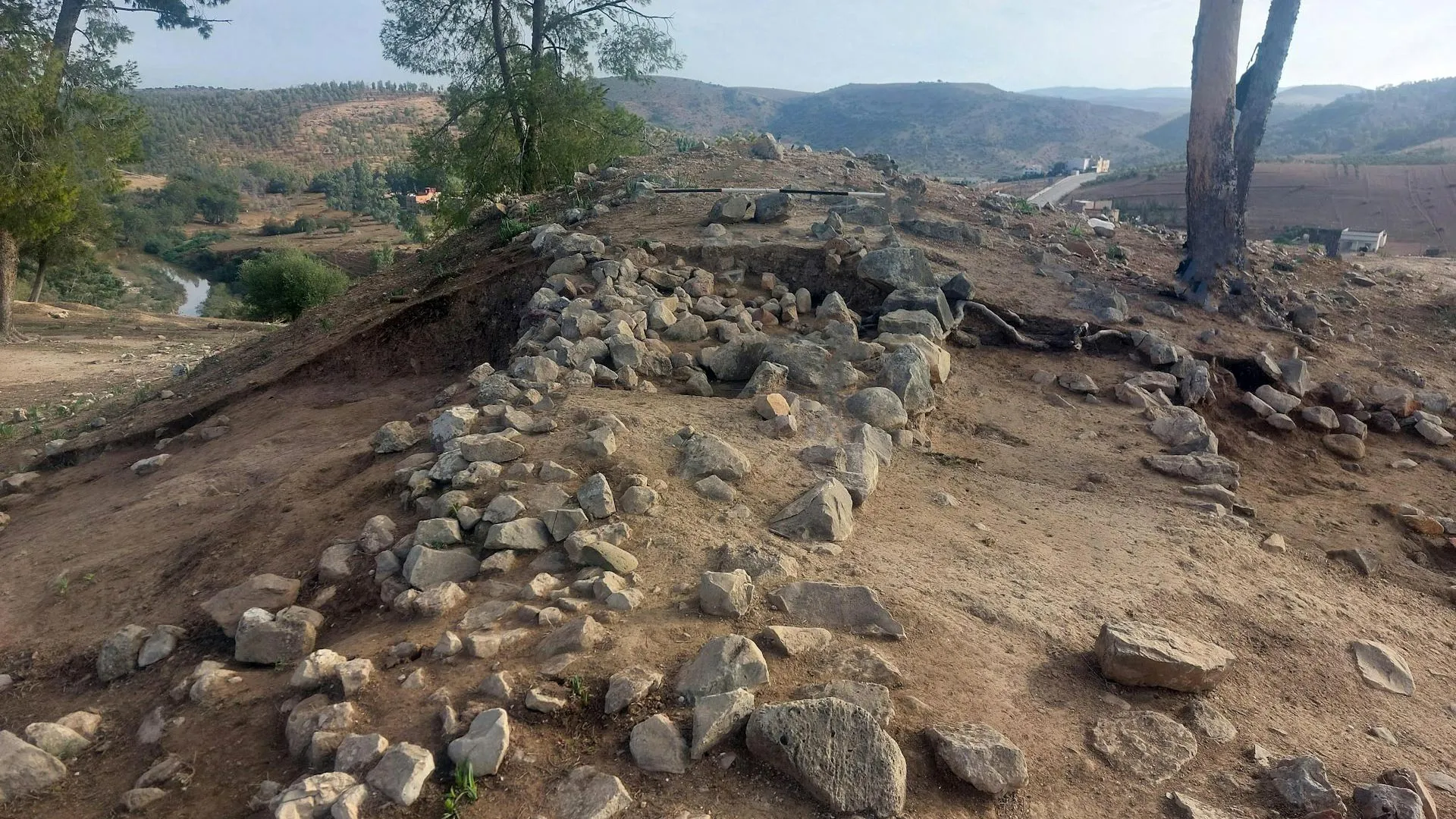
The evidence from Oued Beht suggests that the Maghreb was not an isolated frontier but rather a vibrant participant in these broader Mediterranean processes. The presence of sophisticated pottery and the layout of the settlement point to cross-continental influences and interactions. By aligning the development of North African societies with their European and Eastern Mediterranean counterparts, researchers are beginning to build a more holistic view of the interconnected ancient world. The Maghreb emerges not as a void in the historical record, but as a dynamic engine of culture and trade that helped shape the western Mediterranean identity.
Archaeological Impact and Scientific Consensus
The findings have been met with enthusiasm by the academic community, particularly within the Oued Beht Archaeological Project, which has spearheaded the recent, rigorous scientific analysis of the site. By employing carbon-14 dating on deposits directly associated with the defensive walls, the team has successfully anchored the site within the regional chronology, providing the scientific community with a reliable, peer-reviewed timeline.
"The discovery of this defensive architecture," a lead researcher noted, "forces us to re-evaluate the social complexity of North African populations. We are seeing a level of engineering and social structure that mirrors the most advanced contemporary societies of the Bronze Age."
The implications of these findings extend to the very way we write history. For decades, the archaeological record of the Maghreb has been overshadowed by the well-documented civilizations of the Nile Valley and the Classical Mediterranean. Oued Beht serves as a corrective, filling a critical gap in the history of human development. It provides a rare, tangible window into the lives of rural communities whose contributions to history were previously relegated to the margins.
Broader Implications for Future Research
The research at Oued Beht is far from complete. As excavators continue to probe the site, the focus is shifting toward understanding the social dynamics that supported such an ambitious construction project. Researchers are now looking for further evidence of social stratification, such as differences in burial goods or the presence of luxury items that would indicate trade with external Mediterranean cultures.
Furthermore, the site acts as a case study for "landscape persistence." The fact that the same ridge was chosen for settlement and fortification in both the prehistoric and medieval periods suggests that the geographical advantages of the site—its elevation, proximity to the river, and command of the surrounding plains—have been recognized and exploited by human populations for thousands of years.
The Oued Beht excavations serve as a reminder that the history of North Africa is deep, layered, and complex. As new technologies in soil analysis, geophysical surveying, and isotopic research are applied to the site, it is highly probable that even more profound secrets will emerge from the hills of north-west Morocco.
Ultimately, the transformation of Oued Beht from an enigmatic series of earthworks into a central pillar of North African prehistoric study underscores the necessity of continued investment in regional archaeology. The site is now recognized as a key to understanding the transition from early farming societies to the more complex, organized, and interconnected worlds of the later Bronze Age and beyond. By documenting these developments, archaeologists are not just uncovering walls and tools; they are restoring a lost chapter of the human story to its rightful place in history.