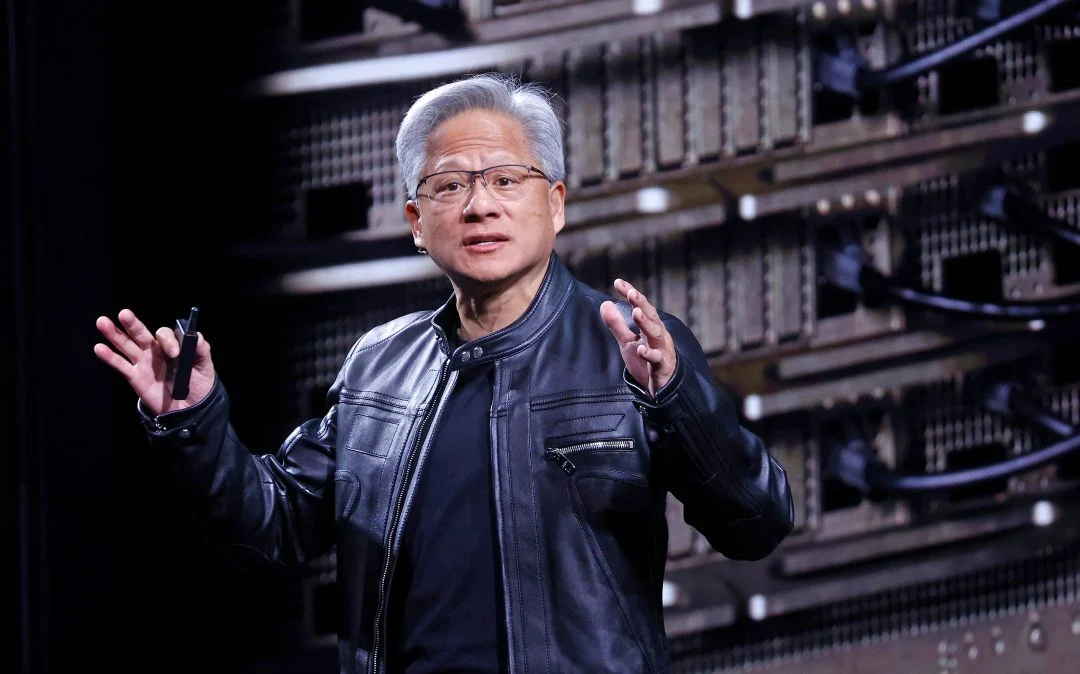
In a turn of events that has sent shockwaves through the global technology sector and Washington, D.C., Jensen Huang officially resumed his role as CEO of Nvidia on Monday, November 23, 2026. His return to the company’s headquarters was marked by a boisterous reception from hundreds of employees, captured in widely circulated footage showing staff chanting his name. The reinstatement follows a turbulent period that saw the semiconductor giant’s leadership thrown into disarray, triggered by a convergence of personal scandal, national security concerns, and an unprecedented level of grassroots and political pressure.
Huang’s departure earlier this month was precipitated by a series of revelations that threatened to destabilize one of the world’s most valuable technology companies. Among the allegations were reports of an intimate relationship between Huang and an individual alleged to be a Chinese intelligence operative. This specific claim drew immediate, intense scrutiny from federal investigators and triggered a cascade of Congressional hearings focused on the potential compromise of sensitive artificial intelligence intellectual property and national security interests. Furthermore, internal reports of two additional affairs involving Nvidia subordinates exacerbated the crisis, leading the company’s board of directors to demand his resignation to protect the firm’s reputation and regulatory standing.
A Rapid Chronology of the Crisis
The sequence of events leading to Monday’s reinstatement began in mid-November. By November 19, a detailed timeline of Huang’s personal conduct was published, outlining the scope of his alleged indiscretions. The revelation regarding the suspected foreign intelligence asset proved the most damaging, as it directly implicated Nvidia in a geopolitical risk scenario during a time of heightened U.S.-China trade tensions.
Following the initial outcry, the Nvidia board moved swiftly to terminate his contract, citing a violation of the corporate code of conduct. However, the vacuum created by his departure was immediately met with a massive mobilization of support. An open letter, hosted on the site "StandWithJensen.com," garnered over 200,000 signatures, including approximately 10,000 current Nvidia employees who argued that the company’s current growth trajectory was inseparable from Huang’s leadership.
The political dimension of the story reached its zenith on November 23, when reports emerged that President Donald Trump had intervened directly by calling into a board meeting. The President reportedly advocated for the stability of the company, framing the leadership crisis as a threat to American technological dominance. This intervention is widely viewed as the deciding factor that forced the board to reconsider its decision.
The Debate Over Corporate Culture
While the public and political support for Huang’s return has been overwhelming, the narrative surrounding his leadership is increasingly polarized. A November 20 report by The New York Times, based on extensive interviews with current and former employees, painted a starkly different portrait of the executive. The investigation alleged that Huang fostered a culture characterized by "humiliation as a tool," citing decades of internal accounts of verbal abuse and bullying.
This revelation has sparked a broader debate about the nature of leadership in Silicon Valley. Supporters, including high-profile tech figures like Elon Musk, have argued that the intensity of Huang’s management style is a necessary component of the "winner-take-all" environment in the AI semiconductor race. Musk, speaking at the DealBook Summit last week, compared ousting Huang to "kicking Michael Jordan off your team when you’re on a winning streak," emphasizing that the competitive demands of the industry often require uncompromising leadership.
Conversely, labor advocates and corporate governance experts contend that the "cult of personality" surrounding tech founders often masks toxic workplace environments. The allegations of bullying, combined with the personal scandals, raise questions about whether the board of directors exercised sufficient oversight in the years preceding the current collapse.

Data-Driven Implications for Nvidia
Nvidia’s market position remains the focal point of this instability. As the primary provider of the hardware driving the global AI revolution, Nvidia’s stock performance has been the bedrock of the broader semiconductor index. During the week of Huang’s absence, the company experienced heightened volatility, with institutional investors expressing concern over the continuity of the company’s roadmap for next-generation GPU architectures.
Current data suggests that Nvidia holds an estimated 80% to 90% share of the market for AI training chips. The disruption in the C-suite threatened to jeopardize key supply chain contracts and long-term research and development milestones. Financial analysts noted that the speed of Huang’s return—less than two weeks after his ouster—was likely driven by a fear of "brain drain," as the company’s top engineering talent signaled their loyalty to the founder rather than the corporate entity.
Official Responses and the Road Ahead
In his brief address to employees upon his return, Huang struck a tone of contrition mixed with a commitment to reform. "Thank you all for the second chance," Huang stated. "I’m going to be a better CEO the second time around."
The Nvidia board of directors has yet to issue a comprehensive statement regarding the conditions of his return or the specific mechanisms they will implement to ensure better governance moving forward. However, industry insiders suggest that the board will likely impose stricter oversight measures, possibly including an independent ombudsman to monitor internal culture and human resources complaints.
From a regulatory standpoint, the Congressional hearings are expected to continue. The investigation into the alleged ties with foreign intelligence will likely evolve into a broader probe of how Nvidia secures its intellectual property. Lawmakers from both sides of the aisle have expressed a desire to ensure that the company’s internal leadership issues do not facilitate the leakage of trade secrets to foreign adversaries.
Broader Impact and Future Outlook
The reinstatement of Jensen Huang serves as a case study for the influence of "founder-led" companies in the modern era. When a CEO becomes synonymous with the product and the company’s market dominance, the board’s ability to enforce traditional ethical standards is significantly complicated. The intervention of a sitting U.S. President in the internal personnel decisions of a private corporation represents a significant deviation from historical corporate-state relations, signaling that Nvidia is now viewed as a critical piece of national infrastructure.
As Nvidia moves past this immediate crisis, the company faces the dual challenge of maintaining its technical lead while addressing the systemic cultural concerns raised by its employees. The "second chance" promised by Huang will be tested by his ability to pivot from a culture of fear to one of sustainable management, all while navigating the intense regulatory scrutiny of the federal government.
Investors, employees, and regulators alike will be watching the coming quarters closely. If Huang succeeds in reforming the internal culture while maintaining the company’s output, this episode may be remembered as a mere hiccup in the company’s growth. If the scandals continue or if the allegations of toxic leadership persist, the company may face a secondary wave of scrutiny that even the strongest political alliances may not be able to mitigate. For now, the "Michael Jordan of tech" remains in his position, but the landscape in which he operates has been fundamentally and perhaps permanently altered.