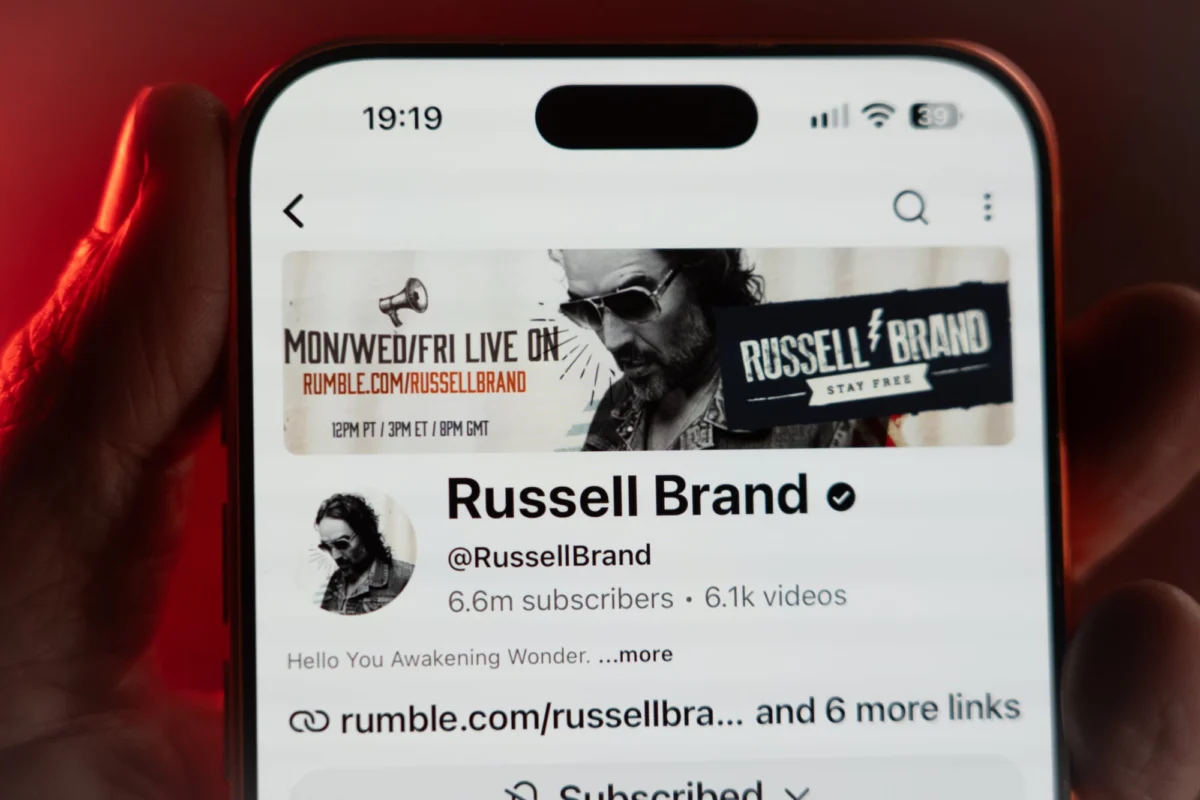
The intersection of digital media monetization, platform accountability, and the legal constraints imposed on incarcerated individuals has sparked an international debate following recent events surrounding comedian and commentator Russell Brand. More than a year after facing severe public allegations and subsequent corporate penalties, Brand’s digital footprint continues to reach millions despite his imprisonment. The central controversy involves a video posted to his YouTube channel—which boasts a subscriber base exceeding six million—featuring a message from Brand in which he maintains his innocence following a lengthy prison sentence for sexual offenses. This development has triggered formal investigations by the Prison Service of England and Wales, intense scrutiny from British government officials, and a polarized debate over the boundaries of free expression and platform governance.
Chronology of Legal Proceedings and Digital Publication
The sequence of events leading to the current diplomatic and corporate standoff began to accelerate in late 2023. In September of that year, public allegations of rape and sexual assault against Brand emerged through investigative reporting and subsequent police inquiries. In response to the gravity of these claims, YouTube took administrative action against his channel, removing it from the YouTube Partner Program under the platform’s creator responsibility policy. This penalty stripped the channel of its ad revenue generation capabilities, though it did not remove the channel or its content library from the platform. Consequently, Brand’s existing subscriber base and prospective viewers retained full access to his library of current events commentary and faith-based programming, which he hosted alongside his wife, Laura Gallacher.
The legal process culminated in November 2026. On November 9, 2026, a UK court formally sentenced Brand to 10 years and six months in prison following his conviction on one count of rape and three counts of sexual assault. Just six days later, on November 15, 2026, a new video titled "The Good Work Continues" was published on Brand’s channel by Gallacher. In the hour-long broadcast, Gallacher read a statement dictated by Brand from prison. Within days, the video accumulated over one million views, amplifying a direct message from an incarcerated felon maintaining his innocence directly to a mass audience.
Content of the Message and Immediate Institutional Reaction
In the disputed video, Gallacher delivered words attributed directly to her husband. "So Russell has asked me to read something to you today," she stated in the recording. "Beloved brothers and sisters in Christ, God bless you for your support. As you know, I am not guilty for the offenses I have been jailed for, so something strange is happening." The statement continued with commentary regarding other inmates, adding, "I don’t know which other men here are not guilty, and the ones that are, they are people that Christ died to save, like you and me."
The publication of this statement immediately alarmed British penal authorities. The Prison Service of England and Wales formally requested that Google remove the video, arguing that the broadcast violated domestic penal regulations and possessed the potential to cause acute psychological distress to Brand’s victims. Mia Latter, a survivor who has publicly accused Brand of historical abuse when she was a minor, voiced her distress to media outlets, noting that the ongoing public platforming of the convicted offender reopened deep emotional wounds for those who participated in the legal proceedings.
Google’s Response and Platform Policy Dilemma
Google initially resisted the takedown request. On November 18, reports surfaced indicating that the technology giant had declined to remove the content because the video did not technically violate YouTube’s existing terms of service or community guidelines. Google emphasized that the channel had already been penalized via expulsion from the Partner Program, meaning no monetization could be derived from the controversial upload or any future views generated by the channel.
However, as political pressure mounted from Whitehall, Google adjusted its stance. By November 19, a corporate spokesperson confirmed that the company was actively reviewing the video. "We’re aware of the new content and our teams are investigating," the spokesperson stated. Despite this internal review, the video remained accessible on the platform days later, underscoring the complex challenges multinational technology corporations face when adjudicating content generated by incarcerated individuals that may comply with digital platform rules yet clash with sovereign legal frameworks.

Ministry of Justice Inquiry into Prison Rules
Beyond the platform governance issue, the UK Ministry of Justice initiated a parallel investigation to determine whether Brand violated prison communication guidelines. Under the legal framework governing prisons in England and Wales, specifically Prison Service Instruction (PSI) 37/2010 concerning prisoners’ access to the media, inmates are broadly prohibited from discussing the details of their offenses in correspondence or communications intended for publication or broadcast. Limited exemptions exist for formal legal appeals or "serious representations about conviction or sentence," but these pathways are strictly regulated and typically require prior authorization.
Justice Secretary Alex Norris publicly characterized the broadcast as "completely unacceptable," signaling that authorities expected institutional accountability if the inquiry concluded that Brand bypassed established channels to disseminate his statement. The official review is tasked with weighing competing principles: a prisoner’s fundamental right to dispute a conviction against the statutory requirement to prevent communications that inflict severe psychological harm upon victims.
Political Fallout and Legislative Implications
The controversy has rapidly evolved into a significant political debate across the United Kingdom, drawing reactions from across the political spectrum. Prime Minister Andy Burnham publicly appealed to technology executives to exercise corporate responsibility, urging social media platforms to remove the material voluntarily "to show some decency" rather than waiting for state mandates. Concurrently, housing minister Matthew Pennycook reiterated that while the government strongly favored the removal of the content, the ultimate enforcement decision rested with Google.
Lawmakers have seized upon the incident to highlight perceived regulatory gaps in existing legislation. Labour MP Jess Phillips argued for potential amendments or additions to the Online Safety Act, pointing out that current statutory frameworks were not designed to accommodate prisoners who retain massive, pre-existing digital audiences capable of broadcasting statements globally via proxies. Phillips noted that while the current law robustly addresses illegal content and child protection online, it fails to anticipate the dissemination of unauthorized commentary originating from behind prison walls.
Conversely, some political figures have cautioned against hasty regulatory interventions. Conservative leader Kemi Badenoch suggested that any policy response should first ascertain whether existing laws were genuinely broken before pressuring private entities to censor speech. International commentators also weighed in; U.S. broadcaster Megyn Kelly criticized the coordinated governmental push for removal, framing the pressure on Google as an overreach against free expression principles.
Broader Analytical Implications for Digital Governance
The case of Russell Brand’s post-sentencing YouTube presence highlights a profound systemic challenge in modern media ecosystems. As prominent public figures with established digital empires transition from free citizens to incarcerated offenders, traditional boundaries separating penal isolation from public discourse blur.
Platform operators like Google find themselves arbitrating between local sovereign sensibilities and global free-expression standards. If the United Kingdom chooses to pursue legislative remedies in the wake of this incident, lawmakers will be forced to carefully balance the psychological protection of victims and the integrity of the penal system against the preservation of open discourse and the avoidance of state-mandated censorship. Until a definitive legal or policy consensus emerges, the persistence of such content underscores the enduring difficulty of regulating decentralized digital distribution in an era where an audience can be reached independently of traditional broadcast gatekeepers and corporate monetization channels.