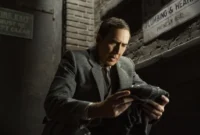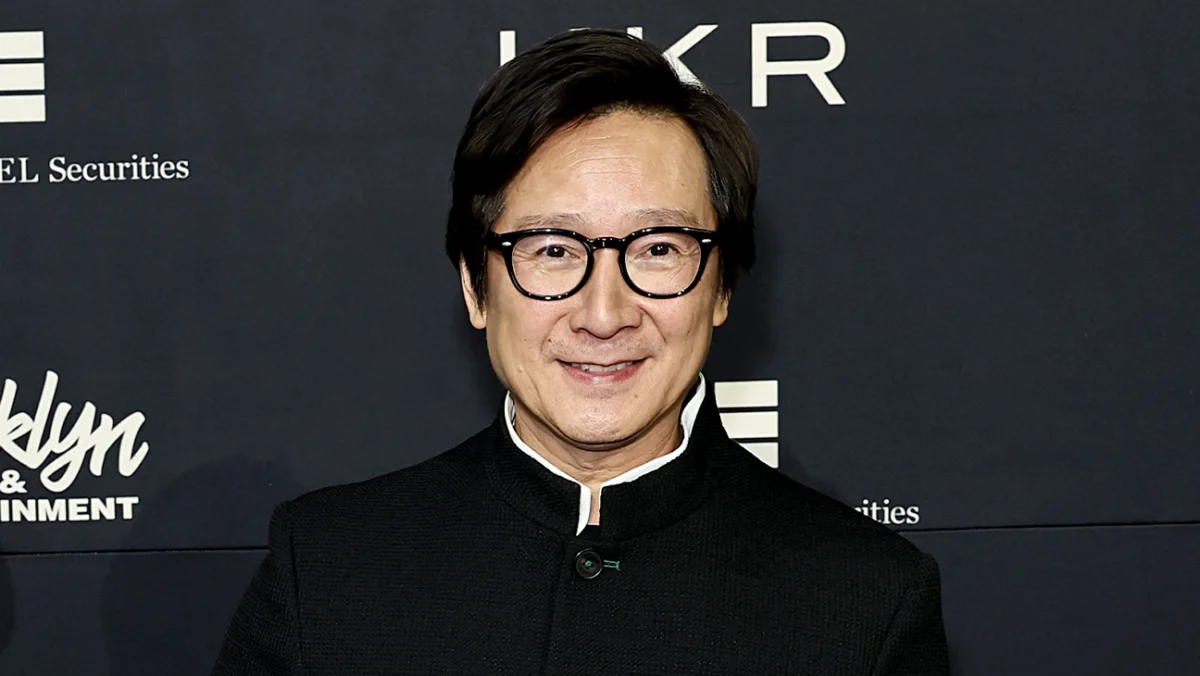
The narrative of Ke Huy Quan’s career is a compelling study in resilience, talent, and the enduring influence of industry mentorship. Recently, the Academy Award-winning actor offered a new window into his formative years in Hollywood through his newly released memoir, Never Say Die. Among the most poignant revelations in the book is the account of an unexpected financial windfall he received as a 12-year-old child actor following his breakthrough performance as Short Round in the 1984 blockbuster, Indiana Jones and the Temple of Doom. The check, which totaled nearly $100,000, represented not only a significant financial milestone for his immigrant family but also a rare and generous professional gesture from filmmakers Steven Spielberg and George Lucas.
A Childhood Discovery in the Kitchen
In the memoir, Quan recounts the exact moment he became aware of the payment, a memory that remains etched in his mind decades later. He describes walking into his family’s kitchen to find his parents gathered around the table, holding an envelope from Lucasfilm. The reaction of his parents—a blend of astonishment, disbelief, and relief—marked a pivot point in their lives. Having already been compensated for his primary performance contract, the young actor was unaware that the structure of his agreement included residual payments based on the film’s financial performance.
For a child actor navigating the complexities of the industry for the first time, the concept of residuals was entirely foreign. Quan notes that he could not fathom how additional capital could emerge after his initial work on the project had concluded. It was only upon later reflection that he realized the check was the result of a deliberate, behind-the-scenes decision by Spielberg and Lucas to ensure that the young star shared in the success of the high-grossing sequel.
The Rarity of Profit Participation in 1984
To understand the magnitude of this gesture, it is necessary to examine the industrial landscape of Hollywood in the mid-1980s. During that era, profit participation—or "points"—was almost exclusively reserved for top-tier stars, A-list directors, and high-level producers. For a child actor, particularly one making his debut in a major franchise, receiving a residual check of this scale was an anomaly that defied standard contractual norms.
The financial success of Indiana Jones and the Temple of Doom was significant; the film grossed approximately $333 million worldwide on a production budget of roughly $28 million. By granting a young, unproven actor a piece of the revenue, Spielberg and Lucas were operating outside the rigid, often exploitative conventions of the studio system of the time. Quan characterizes this act as a "quiet gesture," suggesting that the filmmakers recognized the value of his contribution and, perhaps, the precarious nature of a child actor’s future in the industry. For the Quan family, this influx of capital provided a level of stability that was deeply impactful, serving as a buffer during their early years of establishing a life in the United States.
Chronology of a Career Trajectory
The journey of Ke Huy Quan is marked by distinct phases, each defined by his relationship with the film industry:
- 1984: Quan makes his acting debut as Short Round in Indiana Jones and the Temple of Doom, earning critical acclaim and global recognition.
- 1985: He secures another iconic role as Data in the adventure classic The Goonies.
- Late 1980s–1990s: Despite early success, Quan finds that roles for Asian actors in Hollywood are increasingly limited. He begins to transition behind the camera, working as an assistant director and stunt coordinator.
- 2020: Quan makes the decision to return to acting, subsequently landing the role of Waymond Wang in the A24 production Everything Everywhere All at Once.
- 2023: After a decades-long hiatus from center stage, he secures the Academy Award for Best Supporting Actor, marking a historic career resurgence.
Throughout this timeline, the influence of his early mentors remained a constant. Even during his years of obscurity, when he feared that his childhood successes were merely a stroke of luck that could not be replicated, the foundation provided by his early experiences—both professional and financial—remained a touchstone for his identity as an artist.
The Spielberg-Quan Connection
The bond between Ke Huy Quan and Steven Spielberg is a well-documented aspect of the actor’s history. During his 2023 Golden Globes acceptance speech, Quan explicitly acknowledged Spielberg for giving him his start. This relationship transcends the typical director-actor dynamic; it reflects a long-term mentorship that has spanned nearly forty years.
Analysts often point to this relationship as a quintessential example of how industry leaders can foster longevity in young talent. While many child stars of the 1980s struggled to find footing as they aged, the supportive environment fostered by Spielberg and Lucas provided a level of security that allowed Quan to navigate the industry with a sense of perspective. Even when he stepped away from acting to pursue stunt coordination and assistant directing, the confidence instilled by his early years never fully dissipated.
Economic and Ethical Implications in Hollywood
The disclosure of the $100,000 residual check sheds light on the broader discussion surrounding equitable compensation in film production. Historically, the "residual" model has been a point of contention between labor unions, such as the Screen Actors Guild (SAG-AFTRA), and major studios. The fact that a child actor received such a benefit in 1984 remains an outlier, but it raises questions about the ethical responsibilities of production houses toward those who contribute to the massive profitability of blockbuster franchises.
From an economic standpoint, the "trickle-down" of profits to supporting cast members is a practice that arguably incentivizes loyalty and professional excellence. When actors feel valued—not just in terms of base salary, but through a stake in the project’s success—it creates a healthier collaborative environment. For the producers, the cost of this bonus was negligible compared to the total earnings of the film, yet for the recipient, the impact was profound.
Legacy and Future Outlook
As Never Say Die hits bookshelves, the conversation surrounding Ke Huy Quan has shifted from his miraculous comeback to the substance of his character and the history of his ascent. The memoir provides more than just anecdotes; it serves as a historical record of the personal and financial hurdles faced by an immigrant child entering the American entertainment machine.
The implications of his story extend beyond his own life. By documenting the generosity he received, Quan highlights the importance of institutional mentorship. In an industry often criticized for its transient nature and focus on short-term gains, the enduring support of figures like Spielberg serves as a model for how talent can be nurtured over a lifetime.
Today, as Quan stands at the pinnacle of his profession, the $100,000 check from 1984 stands as a symbol of more than just money. It represents the start of a journey that would eventually lead to an Oscar, a career revival that has inspired millions, and a legacy that continues to evolve. His story is a testament to the idea that, in an industry as unpredictable as film, a singular act of kindness can echo through decades, providing the stability necessary for an artist to eventually realize their full potential.
In summary, the revelation in Never Say Die does more than satisfy the curiosity of film buffs regarding the compensation of 1980s child stars. It reinforces the narrative of Ke Huy Quan as an artist who, despite a lengthy period away from the limelight, remained deeply connected to the people and the moments that shaped his early trajectory. As he continues to move forward in his career, the lessons learned from his early years—both the artistic training and the lessons in professional integrity—remain the bedrock of his success.