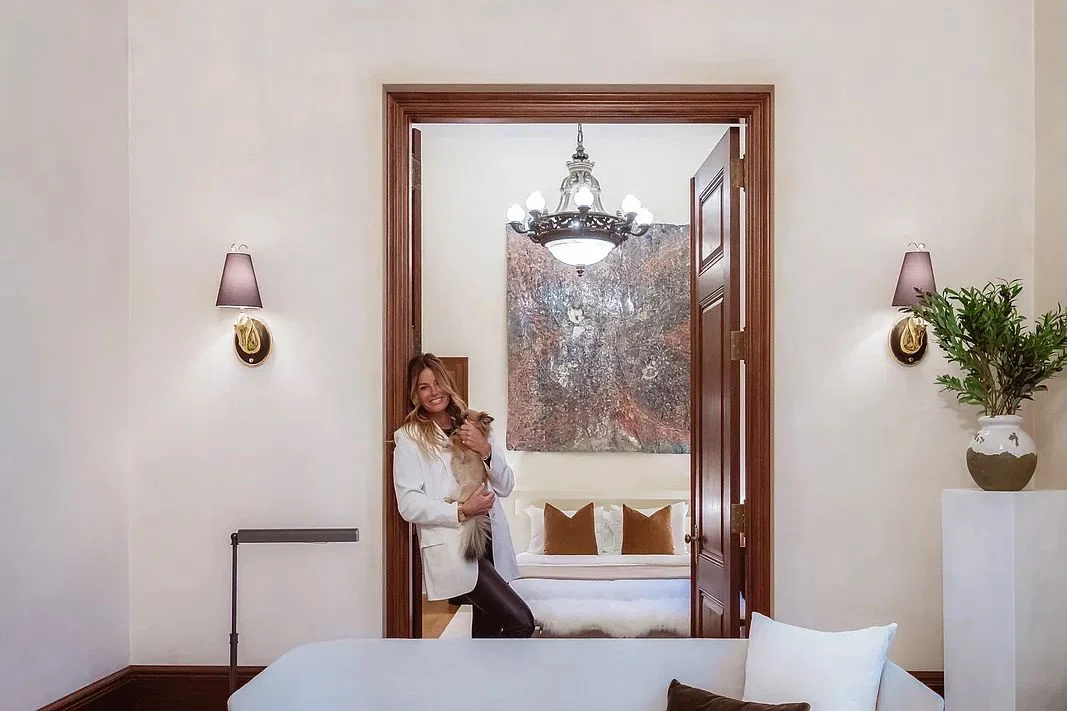
The traditional real estate listing photograph has long relied on a specific formula: sunlit hardwood floors, impeccably staged mid-century modern furniture, neutral wall colors, and carefully framed views of the surrounding neighborhood designed to present a blank canvas for prospective buyers. However, a growing trend across competitive urban housing markets, particularly in New York City, has introduced a decidedly human element into these promotional carousels. Real estate agents are increasingly inserting themselves into property photographs, posing on windowsills, lounging on couches, or strolling through gardens alongside their listings. While proponents argue that this strategy injects personality and demonstrates scale, critics view it as an unorthodox intrusion of influencer culture into serious financial transactions.
The phenomenon is reshaping how properties are marketed on platforms like StreetEasy and the Multiple Listing Service (MLS). Rather than relying solely on inanimate staging or virtual enhancements, brokers are leveraging their own presence to capture user attention in oversaturated housing inventories. This shift has ignited a debate within the real estate industry regarding the boundaries of professional marketing, consumer transparency, and the psychology of home-buying.
The Evolution of Listing Photography and the Rise of Agent-Inclusive Visuals
For decades, standard real estate protocol dictated that personal effects, family portraits, and distinguishing human markers be entirely removed from properties before a listing photographer arrived. The underlying psychological principle was straightforward: prospective buyers needed to visualize their own lives, belongings, and future within the space. Introducing an unfamiliar person into the frame theoretically disrupted that mental projection, substituting the seller’s or agent’s identity for the buyer’s aspirations.
Yet, as social media marketing has come to dominate consumer engagement, traditional rules have rapidly evolved. Video walk-throughs featuring charismatic agents pointing out pre-war moldings and park views have become standard practice on platforms like Instagram and TikTok. Transitioning this dynamic from short-form video content into static listing photographs was a logical, if jarring, next step for tech-savvy brokers aiming to stand out in high-stakes markets.
In Park Slope, Brooklyn, a fourth-floor one-bedroom apartment at 130 Eighth Avenue recently drew significant web traffic not merely for its chocolate-hued parquet floors and ample workspace, but because Compass agent Michaela Morton was captured reclining peacefully on the living room windowsill in a flowing lavender dress. Morton, who maintains a background in acting, defends the practice as an antidote to sterile listing presentations. In her view, empty or purely clinical spaces represent a missed opportunity to evoke an emotional response.
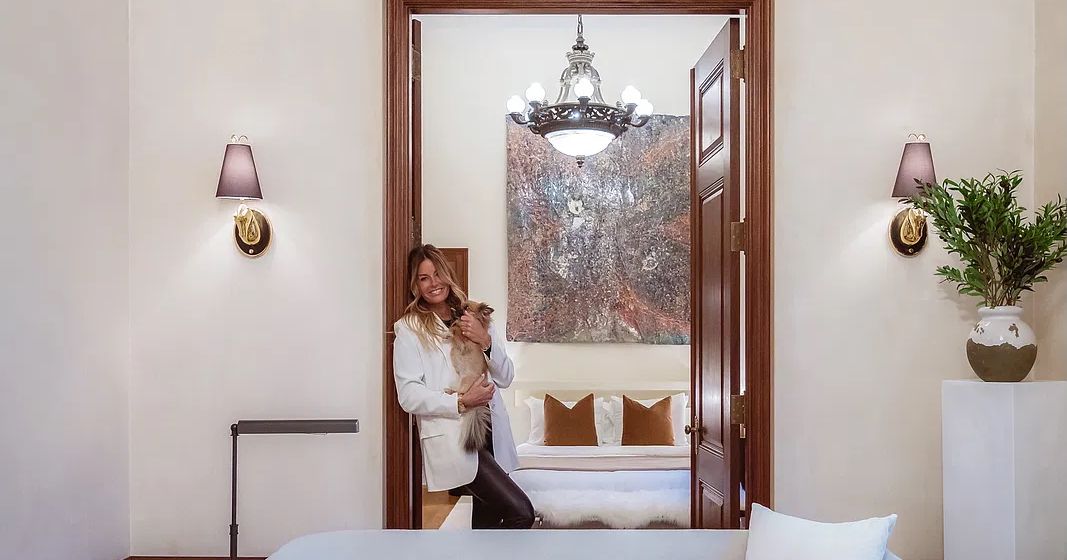
Similarly, other prominent figures in the brokerage community have adopted the tactic. Matt Kirby-Smith, also with Compass, was featured in listing photos for a two-bedroom property in South Slope, seated casually in jeans on a couch against an exposed-brick accent wall. Christie’s International agent Becki Danchik chose to incorporate her dog, Bijou, into photographs for a studio listing at 5 Tudor City Place, posing at an outdoor café table outside the building’s entrance to communicate the neighborhood lifestyle to prospective purchasers.
Rationales from the Field: Scale, Lifestyle, and Engagement
Brokers who embrace this trend offer several practical justifications for stepping in front of the camera. Beyond mere self-promotion, agents argue that human subjects provide vital spatial context that inanimate objects fail to convey.
Morton points out that architectural features—such as the unusually deep windowsills at the Eighth Avenue property—are notoriously difficult to communicate through empty photographs alone. Without a human figure for scale, a viewer cannot accurately gauge depth, height, or spatial utility. Furthermore, her team has previously utilized human subjects to illustrate functional possibilities within listings, such as individuals playing doubles ping-pong in a Central Park West four-bedroom or interacting with a backyard-garden sculpture in Prospect Heights.
Proponents also emphasize the importance of lifestyle branding in high-end real estate. Selling a multi-million-dollar urban apartment involves marketing an aesthetic and a social standing, rather than just square footage and a kitchen layout. By anchoring themselves within the visual narrative, agents attempt to bridge the gap between architectural potential and lived experience.
This strategy appears to yield tangible results in terms of market engagement. Morton reported that the Eighth Avenue listing drew 17 distinct touring groups over a single weekend, culminating in a competitive best-and-final offer round. In an environment where properties must capture a buyer’s attention within seconds of scrolling, any measure that halts the swipe can translate directly into foot traffic and offers.
Industry Skepticism and the Skepticism of AI
Despite these marketing successes, the practice has met with considerable pushback from traditionalists within the brokerage community who view the trend as a distraction or a violation of professional decorum.

Peter Zaitzeff, an agent with Serhant who regularly produces video apartment tours for social media and stars in the reality series Owning Manhattan, draws a strict line between entertainment and commerce. While acknowledging that social media-driven video marketing serves a valuable purpose, Zaitzeff maintains that primary listing photographs must remain objective records of the property itself.
The core function of a listing photo is to sell a home, not the agent representing it, Zaitzeff notes, succinctly summarizing the opposition’s stance: the broker does not convey with the deed. Critics argue that inserting agents into listing carousels shifts the focus away from the asset’s intrinsic value and places an undue emphasis on personal branding, which can come across as self-serving or narcissistic to serious buyers.
Additionally, the trend intersects awkwardly with contemporary consumer anxieties regarding digital deception. With the rapid proliferation of artificial intelligence tools capable of generating hyper-realistic virtual staging, buyers and brokers are on high alert for altered or fabricated listing images. Paradoxically, the presence of an actual human agent in a photograph has occasionally triggered false alarms among prospective buyers who mistake the living subject for an AI-generated artifact. Friends and colleagues reviewing Morton’s Park Slope listing initially voiced skepticism, questioning whether the imagery was the product of generative AI rather than a genuine photograph.
Broader Implications for the Real Estate Market
The emergence of agent-inclusive photography highlights a broader cultural shift within the real estate sector toward personal branding and influencer-driven economics. As brokerages increasingly encourage agents to act as independent media entities, the traditional boundaries separating professional advertising from personal promotion continue to dissolve.
While high-end luxury markets in New York and other major metropolitan areas have historically fostered creative and aggressive marketing strategies, the widespread adoption of this trend may depend on shifting consumer preferences. If buyers view the practice as an amusing and informative nod to lifestyle potential, the inclusion of agents in listing photos may become an accepted subset of modern real estate marketing. Conversely, if pushback regarding transparency and professionalism grows, agencies may establish stricter guidelines to ensure that property listings remain focused squarely on the homes for sale rather than the personalities selling them.
For now, as competition remains fierce and inventory fluctuates across urban centers, brokers will likely continue experimenting with visual techniques designed to stop the scroll—even if it means occasionally sharing the frame with the furniture.