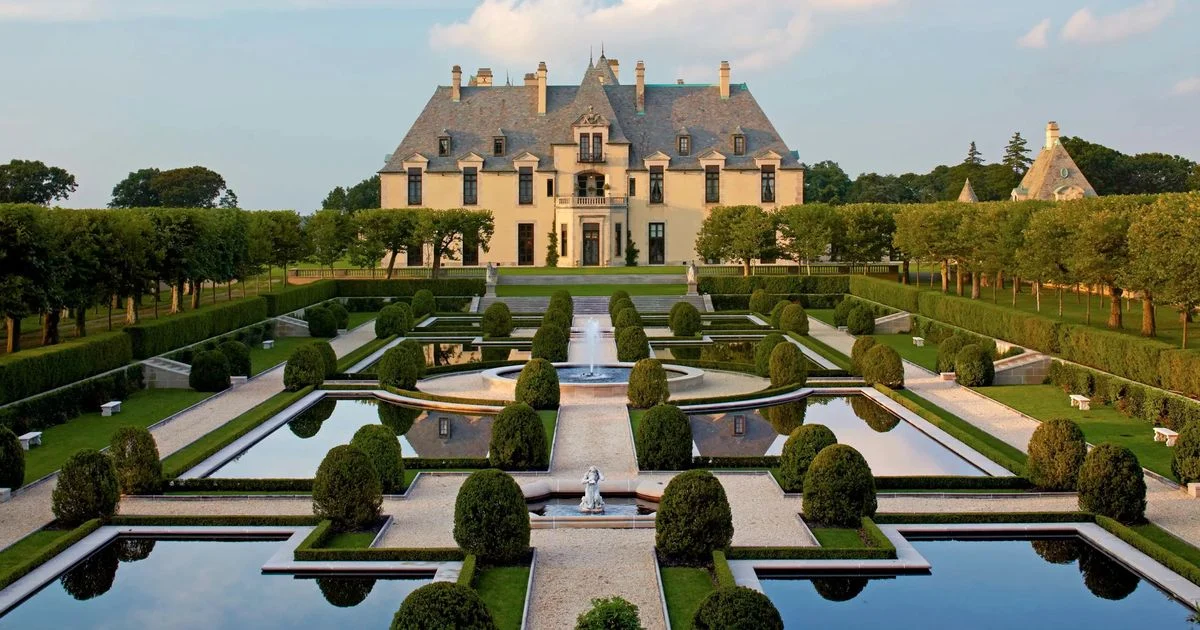
Oheka Castle, the sprawling 110,000-square-foot Gilded Age estate nestled in Huntington, New York, is officially headed to a no-reserve auction on October 27, following bankruptcy proceedings involving its longtime restorer and operator, developer Gary Melius. Marketed by Adam Modlin of The Modlin Group in partnership with Concierge Auctions, the historic property represents one of the most ambitious and complex private real estate offerings in the United States. Featuring 127 rooms, including 34 hotel guest suites, a 72-foot-long ballroom, nine reflecting pools, and 23 acres of formal gardens originally landscaped by the renowned Olmsted brothers, the estate stands as a monumental relic of American aristocracy. With no minimum bid required for the upcoming auction, the sale marks a dramatic new chapter for a landmark that has transitioned from a private millionaire’s sanctuary to a public hotel, television backdrop, and cultural touchstone.
A Gilded Age Origin Story
The history of Oheka Castle is deeply rooted in the opulence and social ambition of the early 20th century. Commissioned on the eve of the Jazz Age, the estate was built for Otto Hermann Kahn, a German-born financier and partner at Kuhn, Loeb & Co. Kahn, a prominent patron of the arts who famously served as the inspiration for the Monopoly Man character created by Parker Brothers, encountered social barriers within elite American circles, notably being blocked from traditional country clubs due to antisemitism.
Refusing to be marginalized, Kahn determined to construct his own equivalent of an aristocratic European domain. Between 1914 and 1919, he assembled a massive 443-acre parcel on the highest point of Long Island’s North Shore in Cold Spring Harbor, engaging the architectural firm Delano & Aldrich to design a French-style château. The resulting structure was built to king-size proportions, rivaling the Vanderbilt family’s Biltmore estate in Asheville, North Carolina, for the title of the largest private home in America.
The estate’s existence almost faced a premature end during the public works era spearheaded by master builder Robert Moses. When Moses sought to route the Northern State Parkway directly through the estate’s pristine grounds, Kahn reportedly negotiated directly with the powerful official to remap the highway. The resulting sharp curve in the parkway remained a visible testament to the encounter for decades, long before historian Robert Caro detailed the episode in his definitive biography of Moses.
Decades of Decline and Adaptive Reuse
Following Otto Kahn’s death in 1934 and the subsequent sale of the property by his heirs in 1939, Oheka Castle embarked on a tumultuous multi-decade journey of institutional repurposing. Over the subsequent half-century, the estate was carved up and utilized in various capacities, serving as a retreat and retirement housing facility for municipal sanitation workers, a military training academy during World War II, and a boarding school.
During these decades of institutional neglect, the property suffered extensive vandalism, architectural degradation, and the loss of many of its original interior finishes. By the early 1980s, the once-glorious château was largely dilapidated, its grandeur obscured by overgrown vegetation and structural decay.
The turning point arrived in 1984 when developer Gary Melius acquired the property and launched what is widely regarded as one of the most expensive and extensive historic restorations of a private building in United States history. Backed by an estimated $40 million investment, Melius embarked on a meticulous, multi-year campaign to return the château to its Jazz Age splendor. Artisans were brought in to recreate hand-painted faux bois library walls, restore the grand staircase, and replant the formal gardens according to the original Olmsted blueprints.
Transformation into a Modern Luxury Enterprise
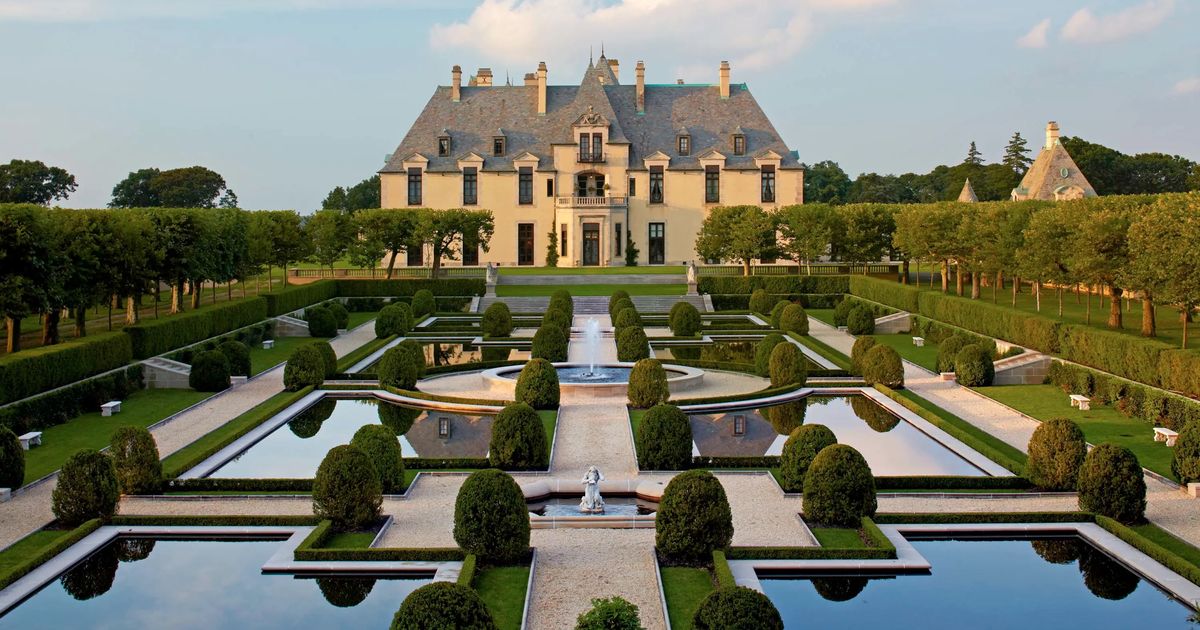
Upon completing the primary restoration phases, Melius converted Oheka Castle into a multi-use commercial enterprise, operating it as a luxury boutique hotel, a high-end wedding and event venue, and a cultural landmark. The 34 hotel guest suites and the expansive 72-foot-long ballroom established the estate as a premier destination for society galas, elite corporate retreats, and celebrity events.
The property’s distinctive architectural profile has made it a favorite location for media productions. It famously stood in as Xanadu in Orson Welles’s cinematic masterpiece Citizen Kane, served as the backdrop for Taylor Swift’s music video for "Blank Space," and hosted numerous high-profile political and social gatherings, including the wedding of Huma Abedin and Anthony Weiner. Most recently, the castle gained renewed pop-culture prominence when it was featured as the setting for a tense corporate retreat scene in the critically acclaimed HBO series Succession.
Despite its high-profile status and steady stream of high-end events—where weekend wedding bookings can command upwards of $150,000—the immense operational and maintenance costs associated with a 110,000-square-foot historic structure ultimately led to financial distress. Following financial challenges and a subsequent bankruptcy filing, Melius is now compelled to part with the historic asset.
Auction Details and Development Potential
The upcoming October 27 auction organized by Concierge Auctions and Adam Modlin presents a unique proposition for prospective buyers. Modlin, whose high-profile transaction history includes brokering the sale of Jeffrey Epstein’s Upper East Side townhouse and managing the $47 million sale of Ronald Perelman’s New York property, has positioned Oheka Castle as a "real-life Gatsby estate" with significant commercial and residential upside.
Crucially, the sale package extends beyond the historic château and its immediate 23 acres of gardens. According to listing disclosures, the offering includes municipal approvals granted by the Town of Huntington to subdivide five acres of the surrounding property for the construction of up to 95 condominium units. This development potential offers a prospective buyer an avenue for generating substantial residential revenue to offset the ongoing operational and maintenance expenses of the historic core.
Market Analysis and Broader Implications
Real estate analysts note that the auction of Oheka Castle highlights the unique economic realities facing ultra-luxury historic estates in the modern era. While properties of this scale carry immense historical prestige and cultural value, their long-term viability almost entirely depends on diversified revenue streams, such as hospitality operations, event hosting, or integrated residential development.
The decision to proceed with a no-reserve auction format introduces an element of high-stakes price discovery for an asset class that rarely trades on the open market. Potential bidders range from hospitality conglomerates and institutional developers looking to capitalize on the condo entitlements to ultra-high-net-worth individuals seeking a private residential compound akin to the Gilded Age titans who originally shaped the Long Island shoreline.
Regardless of who secures the winning bid on October 27, the transition of Oheka Castle marks the end of Gary Melius’s decades-long stewardship and initiates a new era for one of America’s most recognizable architectural monuments. The future owner will inherit not only a sprawling monument to Jazz Age ambition, but also the significant stewardship responsibilities required to preserve a vital piece of American history for generations to come.