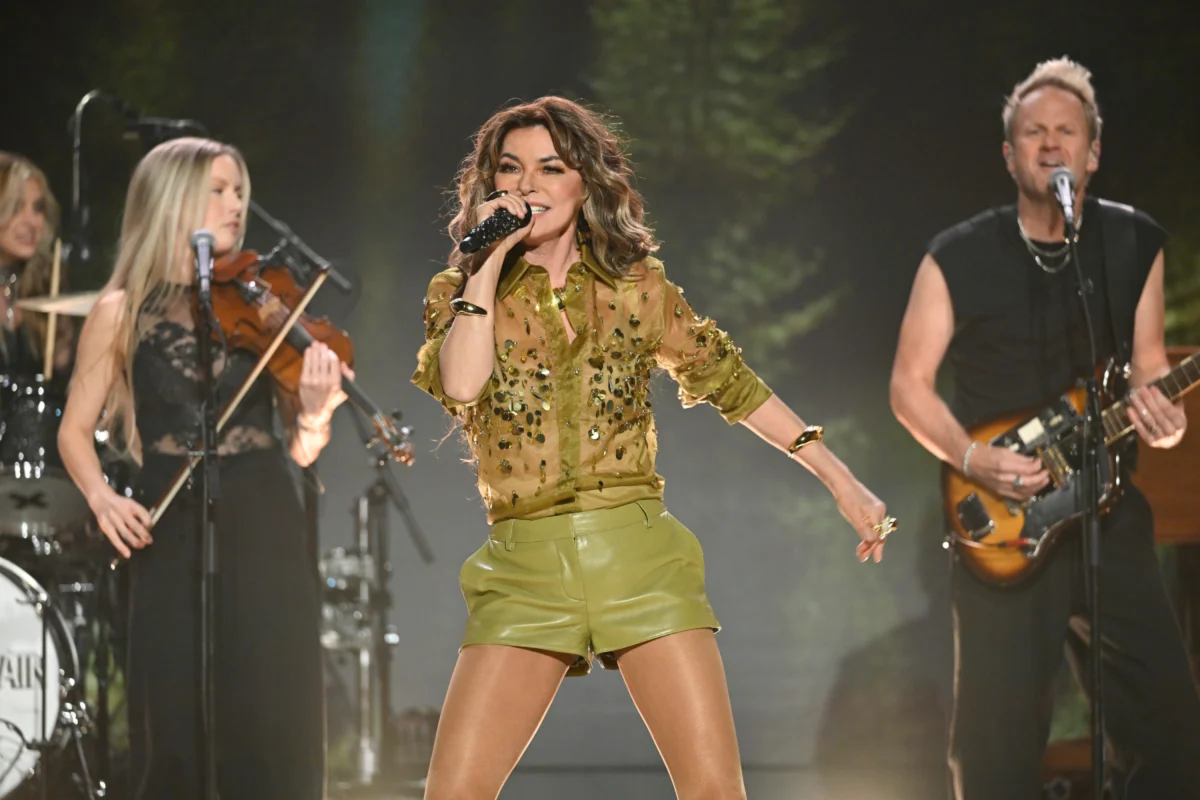
The multi-platinum global superstar Shania Twain made a high-profile appearance on The Tonight Show Starring Jimmy Fallon this week, delivering a spirited live performance and engaging in an expansive interview that touched upon her latest musical endeavors and her recent interactions with some of the biggest names in the pop and rock industries. The visit served as a primary promotional stop for her seventh studio album, Little Miss Twain, which is scheduled for global release tomorrow. During the broadcast, Twain took to the late-night stage alongside her full touring band to showcase "Dirty Rosie," a high-energy track that has already begun to resonate with fans for its nostalgic themes and signature country-pop production.
The performance of "Dirty Rosie" was a centerpiece of the evening, characterized by the rousing, anthem-like quality that has defined Twain’s career since the 1990s. Backed by a robust arrangement of guitars and percussion, Twain delivered a vocal performance that emphasized the storytelling roots of the song. The track is an autobiographical reflection on the singer’s formative years in Canada, specifically focusing on her first vehicle and the humble beginnings of her driving life. The lyrics paint a vivid picture of rural utility and the sentimental value of well-worn machinery, a theme that Twain has frequently revisited throughout her discography to connect with her core audience.
A Nostalgic Return: The Inspiration Behind Dirty Rosie
In a recent interview with Hits Radio Breakfast, which provided further context for the song’s inclusion on Little Miss Twain, the singer elaborated on the specific memories that fueled the writing process. Twain noted that in her youth, the concept of a pristine, showroom-quality vehicle was entirely foreign. "Dirty trucks were the only kind of trucks we had," she explained. "They were always old and rickety and we could not afford new ones and nobody shines their truck." This grounded perspective serves as the emotional anchor for "Dirty Rosie," transforming a simple song about a vehicle into a broader commentary on resilience and the beauty found in imperfection.
The "Rosie" of the title refers to a specific red truck owned by her father. Twain recalled how the original vibrant red paint had succumbed to the elements over years of use in the harsh Canadian climate, eventually fading to a distinct, weathered rose color. This imagery of the "faded rosy truck" serves as a metaphor for the passage of time and the enduring nature of family memories. By bringing this narrative to The Tonight Show, Twain effectively bridged the gap between her status as a global icon and her origins as a small-town girl from Timmins, Ontario.
The Wembley Phenomenon: Twelve Nights with Harry Styles
Beyond the musical performance, Twain sat down with host Jimmy Fallon for a comprehensive discussion that spanned her recent professional milestones. A significant portion of the conversation was dedicated to her historic residency at London’s Wembley Stadium, where she joined pop sensation Harry Styles for a record-breaking run of 12 shows. The collaboration represented a massive cross-generational moment in music, pairing the "Queen of Country Pop" with one of the most influential male artists of the current era.
Twain described the invitation to perform at Wembley as "special," noting the unique energy of Styles’ home-city crowd. Each night saw an attendance of approximately 90,000 fans, creating a monumental atmosphere that Twain described as one of the highlights of her recent touring cycle. The scale of the event—over a million tickets sold across the residency—underscores the massive cultural footprint of both artists.
The relationship between Twain and Styles, however, predates the Wembley stage. Twain shared a charming anecdote about their initial meeting, which occurred backstage at one of Styles’ smaller performances early in his solo career. "He wasn’t the Harry he is now," she recalled, noting that even then, his charisma and talent were evident. The two exchanged contact information, and Styles later reached out with a personal request. He asked Twain to record a birthday message for his mother, explaining that Twain’s music had been the "soundtrack of his youth" and that his mother was the one who had introduced him to her work. This personal connection eventually paved the way for their professional collaboration, which famously began with a surprise appearance by Twain during Styles’ Coachella headlining set in 2022.
A Missed Celebration: The Swift-Kelce Wedding Conflict
The interview also addressed a topic that has dominated social media discourse: Twain’s absence from the high-profile wedding of Taylor Swift and NFL star Travis Kelce. Given Twain’s role as a mentor and pioneer for female artists crossing over from country to pop—a path Swift famously followed—many expected to see her in attendance at the nuptials. However, Twain revealed to Fallon that the timing of the ceremony conflicted directly with her scheduled performances at Wembley Stadium.
"This was such a special invitation," Twain said of the wedding, expressing her sincere regret at being unable to attend. She was quick to praise Swift, emphasizing her deep respect for the younger artist’s craft and career trajectory. "She’s just wonderful," Twain told Fallon. "I admire her musicianship and her commitment to telling her stories." Twain promised that a "big congratulations hug" would be in order the next time their paths crossed, reinforcing the supportive bond that exists between the two generations of superstars.
The conflict highlights the grueling schedules maintained by top-tier entertainers, where professional obligations involving tens of thousands of ticket-holders often necessitate missing significant personal milestones. For Twain, the commitment to the 90,000 fans per night in London took precedence, a decision that reflects the "the show must go on" ethos that has characterized her decades-long career.
Little Miss Twain: A Collaborative Milestone in Country-Pop
The release of Little Miss Twain marks a significant chapter in the singer’s career, as it is her seventh studio effort and her first full-length project since her highly successful residency in Las Vegas. The album was produced by Zach Dawes, a collaborator known for his work with Lana Del Rey and The Last Shadow Puppets. Dawes’ involvement suggests a slight shift in sonic texture for Twain, blending her classic pop sensibilities with a more contemporary, perhaps slightly grittier, indie-leaning production style.
One of the most notable aspects of the new album is the eclectic list of guest contributors. Twain has assembled a diverse group of artists that span genres and generations, including:
- Tanya Tucker: A fellow country legend whose presence adds a layer of traditional authenticity to the record.
- The War and Treaty: The acclaimed husband-and-wife duo known for their powerhouse vocals and fusion of soul, gospel, and country.
- Ronnie Wood: The legendary guitarist for The Rolling Stones, whose participation brings a classic rock edge to the project.
- Josh Homme: The frontman of Queens of the Stone Age, whose involvement is perhaps the most surprising, indicating Twain’s willingness to experiment with alternative rock influences.
The inclusion of artists like Josh Homme and Ronnie Wood suggests that Little Miss Twain is an album designed to defy easy categorization. By working with musicians from the rock and soul spheres, Twain continues to challenge the boundaries of the country-pop genre she helped define in the mid-1990s with The Woman in Me and Come On Over.
Broader Impact and Industry Implications
Shania Twain’s current resurgence comes at a time when country music is experiencing a massive global expansion. Artists like Beyoncé, Post Malone, and Lana Del Rey have recently explored country themes, bringing renewed attention to the genre’s tropes and traditions. As the pioneer of the modern country-pop crossover, Twain’s return with Little Miss Twain serves as a reminder of her foundational influence.
Her appearance on The Tonight Show also included a lighter moment where she participated in the "Box of Lies" segment with Jimmy Fallon. This game, a staple of the show, involves guests attempting to deceive each other about the contents of hidden boxes. Twain’s participation in such segments is a testament to her enduring relatability and media savvy, qualities that have allowed her to remain a relevant cultural figure long after her initial chart-topping peak.
From a business perspective, the strategy surrounding Little Miss Twain appears to be one of maximum visibility. By aligning herself with current icons like Harry Styles and maintaining a public friendship with Taylor Swift, Twain has successfully positioned herself as both a "legacy" artist and a contemporary peer. The 12-night Wembley run, in particular, provided a platform to reach younger demographics who may have first discovered her through Styles or social media trends.
As the album hits streaming services and physical retailers tomorrow, the industry will be watching closely to see how Twain’s new material performs in a landscape dominated by streaming-native younger artists. However, if the reception to "Dirty Rosie" and the enthusiasm of the Tonight Show audience are any indication, Twain remains a formidable force in the music industry. Her ability to blend nostalgic storytelling with high-gloss production and high-profile collaborations ensures that Little Miss Twain will be one of the most discussed releases of the year.
The interview concluded with Twain expressing her excitement for the future and her gratitude for the longevity of her career. Whether performing for 90,000 people in London or sharing stories about a faded red truck in rural Canada, Shania Twain continues to demonstrate why she remains the top-selling female country artist of all time. With Little Miss Twain, she is not just revisiting her past, but actively shaping the future of her storied legacy.