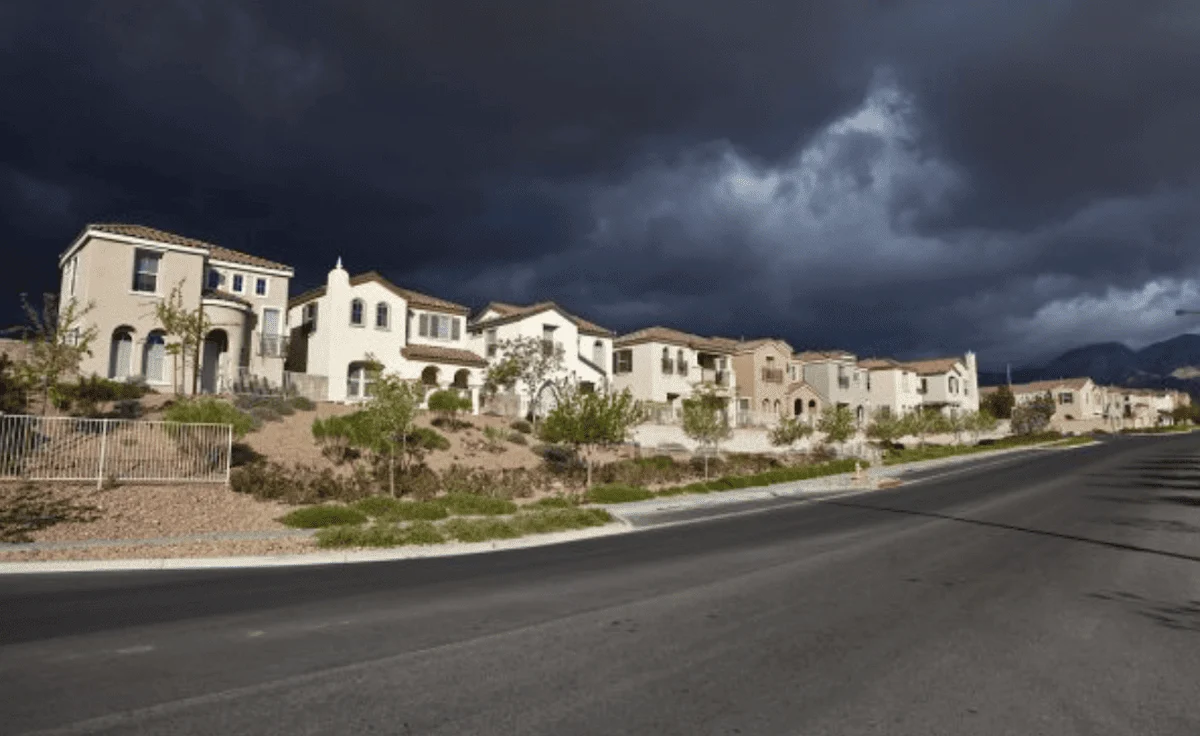
The United States housing market has demonstrated unexpected resilience throughout the first half of 2026, maintaining its stability despite a gauntlet of economic headwinds including persistent inflation, surging energy costs, and elevated mortgage rates. This durability has persisted even as national headlines remain dominated by the transformative impact of artificial intelligence on the labor market and the resulting shifts in consumer confidence. However, the sector now faces a critical juncture as mortgage rates hover at a psychological and technical resistance level, coinciding with a significant escalation in the Middle East. The transition of the Iran conflict into what analysts are terming "Stage 2.0"—characterized by increased maritime tensions and direct strikes—has introduced a fresh layer of volatility that threatens to disrupt the delicate balance of the domestic property market.
Recent tracking data indicates a marginal deceleration in market momentum, a trend closely correlated with mortgage rates remaining stubbornly above the 6.64% mark for the majority of the past week. Market analysts caution that the remainder of the year will present more difficult year-over-year comparisons, as the data will be measured against the mid-June 2025 period when the housing market experienced a notable shift in demand and inventory flow. As the Federal Reserve weighs the dual pressures of geopolitical instability and domestic price stability, the housing sector serves as a primary barometer for the broader economy’s health.
Geopolitical Volatility and the Federal Reserve
The "Stage 2.0" escalation of the Iran conflict has fundamentally altered the risk assessment for global markets. With oil prices trending upward in response to regional instability, the Federal Reserve finds itself in a precarious position. Historically, the Fed has shown high sensitivity to energy-driven inflationary pressures. While central bank officials often remain reserved when energy prices decline, the recent rhetoric from Fed "hawks" suggests a growing concern that sustained high oil prices could necessitate a more aggressive monetary stance to prevent second-round inflationary effects.
Throughout 2026, the 10-year Treasury yield and mortgage rates have largely remained within the forecasted channels established at the beginning of the year. However, the introduction of the Iran conflict as a major variable has pushed these figures toward the upper boundaries of those projections. If the conflict continues to escalate, market observers expect the more vocal members of the Federal Open Market Committee (FOMC) to advocate for maintaining higher interest rates for a longer duration, a scenario that would place further upward pressure on mortgage costs. Despite the gravity of the international news, mortgage rates showed relative stability over the last seven days, though they remain near the peak of the 2026 forecast.
The Critical 6.64 Percent Threshold
The 6.64% level has emerged as a definitive line in the sand for the 2026 housing market. Data from the past several years suggests that whenever mortgage rates exceed this threshold, housing demand experiences a measurable contraction. The market’s ability to "hold its own" is contingent upon rates staying below or near this figure. Last week’s performance saw rates lingering just above this mark, which contributed to the slight cooling observed in pending sales and application data.
The current environment is further complicated by the divergence between bond market signals and Federal Reserve communication. While the 10-year yield serves as the primary anchor for mortgage pricing, the "spread"—the difference between the 10-year yield and the 30-year fixed mortgage rate—has played a decisive role in keeping the market viable. In 2023 and 2024, wider spreads would have pushed today’s rates well above 7% or even toward 8%. The relative narrowing of these spreads in 2026 has provided a much-needed buffer for homebuyers, preventing a total freeze in transaction volume.
Mortgage Spreads and Yield Forecasts
The technical health of the mortgage market is currently being sustained by improved mortgage spreads. Historically, these spreads have fluctuated between 1.60% and 1.80%. While the current spread of 1.97% (up from 1.95% the previous week) remains high by historical standards, it represents a significant improvement over the volatility seen in the preceding three years.
To put the current rate environment into perspective, if the market were operating under the spread conditions of 2023, homebuyers would currently be facing rates near 8%. Under 2024 and 2025 conditions, rates would likely have remained above 7% for the duration of the year. The current stabilization near the mid-6% range is a direct result of these tightening spreads, which reflect a more settled outlook among mortgage-backed security (MBS) investors, despite the geopolitical noise.
Weekly Pending Sales and Demand Indicators
Pending home sales, which provide a real-time look at contract signings, have shown signs of a seasonal and rate-induced slowdown. The data from the past week reflects the traditional dip associated with the Fourth of July holiday, followed by a standard rebound. However, when adjusted for year-over-year comparisons, the demand figures have turned slightly negative.
This shift is particularly significant because the market is now entering a phase of "harder comps." In mid-June 2025, the housing market saw a resurgence in activity, meaning that 2026 data must exceed those robust numbers to show growth. With rates staying above the 6.64% threshold, achieving year-over-year growth in pending sales is becoming increasingly difficult. Because pending sales typically take 30 to 60 days to close, this current slowdown suggests that the "existing home sales" reports for late August and September may reflect a quieter late-summer period.
Mortgage Purchase Application Data
The mortgage purchase application index, a leading indicator of future home sales, fell 7% on a week-to-week basis. While a decline is typical for this specific calendar week, the 2% year-over-year decrease marks a notable shift. This represents only the third negative year-over-year print of 2026, suggesting that the cumulative effect of high rates and geopolitical uncertainty is beginning to weigh on prospective buyers.
As the summer progresses, the comparison period from 2025 will involve a timeframe where mortgage rates were trending lower than they are currently. This inversion—where current rates are higher than the previous year’s rates—is expected to make purchase application data appear weaker in the coming months. Analysts are monitoring whether this is a temporary dip or the beginning of a more sustained retreat in buyer appetite.
Inventory Levels and the New Listing Landscape
Housing inventory continues to be a focal point for economists. Since mid-June 2025, the pace of inventory growth has slowed considerably, with many weeks in the last two months showing slight year-over-year declines. The most recent data showed a traditional post-holiday rebound in active listings, but the overall volume remains constrained.
A positive development in 2025 and 2026 has been the behavior of new listings. While the seasonal peak usually sees 80,000 to 100,000 new listings per week, the market has struggled to consistently exceed the 80,000 mark this year. However, current listing activity is still superior to the "locked-in" years of 2023 and 2024. This improvement is attributed to the fact that many of today’s sellers are also buyers, moving out of necessity or lifestyle changes rather than purely interest-rate arbitrage.
It is important to distinguish the current listing environment from the housing bubble era of 2006-2008. During that period, new listings surged to between 250,000 and 400,000 per week, creating a massive oversupply that crashed prices. The current market remains characterized by a lack of supply rather than a glut, which continues to provide a floor for home values.
Price Adjustments and National Forecasts
Price-cut percentages serve as a vital indicator of the balance between buyer and seller expectations. Currently, approximately one-third of listed homes undergo a price reduction before selling, which is considered a standard feature of a functioning market. Interestingly, the percentage of price cuts in 2026 has been lower than in 2025, a phenomenon driven by the slowing growth of total inventory.
National home-price forecasts for 2026 remain varied. While some aggressive forecasts predicted a slight national decline of 0.62%, current data from major home price indexes show modest growth of 1% to 2%. This discrepancy highlights the impact of low inventory; even with higher mortgage rates dampening demand, the scarcity of available homes prevents significant price erosion. For the 0.62% negative forecast to materialize, a substantial increase in inventory or a further spike in mortgage rates would likely be required.
Broader Impact and Implications: The Week Ahead
As the market moves into the next week, all eyes remain on the Persian Gulf and the potential for further disruptions in the energy sector. Unlike previous geopolitical events that occurred primarily during weekend closures, the current Iran conflict is seeing significant developments during active market hours, leading to immediate fluctuations in bond yields and oil futures.
In addition to the geopolitical situation, the market will process new home sales data and the results of several major Treasury bond auctions. These auctions will be a critical test of investor appetite for U.S. debt in an era of heightened global risk. If the auctions see weak demand, the 10-year yield could push higher, dragging mortgage rates further above the 6.64% danger zone.
The 2026 housing market has proven its ability to withstand internal economic pressures, but the introduction of a major external conflict "2.0" represents its most significant challenge to date. Whether the market can maintain its current equilibrium will depend on the Federal Reserve’s reaction to energy prices and the ability of mortgage spreads to remain narrow enough to keep homeownership within reach for the American public. In the interim, the sector remains in a "wait and see" mode, anchored by low inventory but tethered to the volatility of global events.