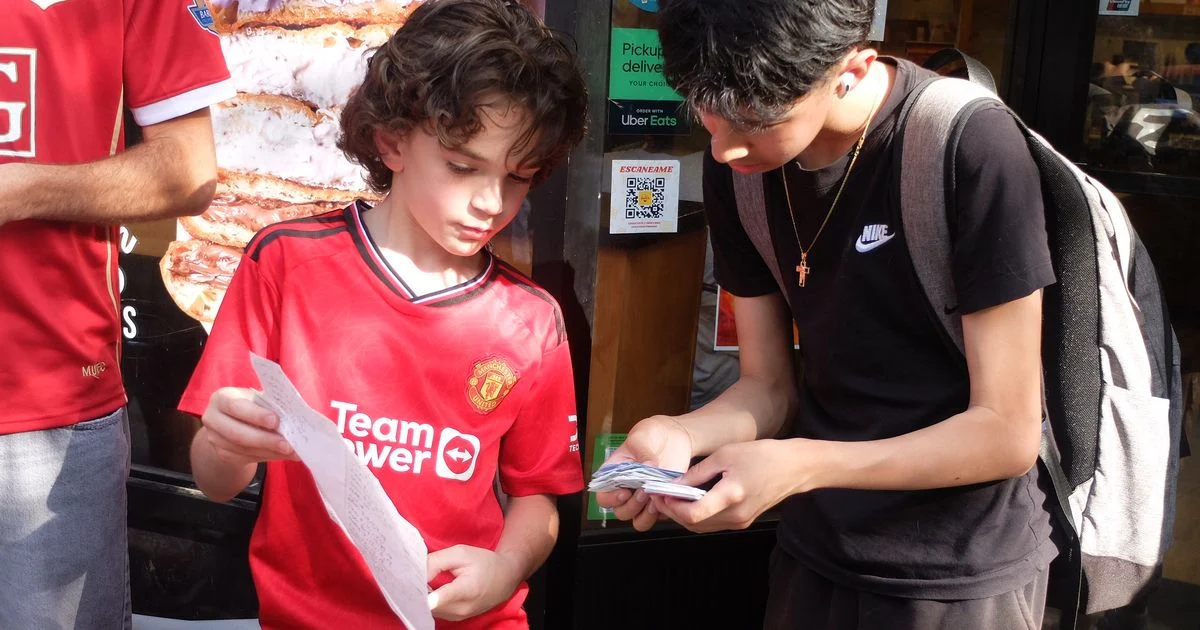
This informal marketplace, nestled within the vibrant enclave known as "Little Colombia," has become the unofficial headquarters for World Cup enthusiasts in the tri-state area. As the 2026 tournament—the largest in history, featuring 48 teams across the United States, Canada, and Mexico—takes center stage, this street corner serves as a microcosm of the global passion for soccer. The goal for those gathered is deceptively simple yet mathematically daunting: to fill every one of the 980 slots in the official Panini FIFA World Cup sticker album.
The Mechanics of a Global Obsession
The Panini Group, an Italian company founded in Modena in 1961, has published World Cup sticker albums for every tournament since the 1970 edition in Mexico. Over the last five decades, what began as a children’s hobby has evolved into a multi-generational cultural phenomenon. For the 2026 tournament, the stakes and the scale have increased significantly. The current album requires nearly 1,000 unique stickers, encompassing every player on the 48 qualifying squads, as well as special "shiny" foils representing national federation logos, team photos, and the architectural marvels of the participating stadiums.
The stickers are primarily distributed through "blind packs"—foil pouches containing five random stickers, sold for approximately $2.00 at major retailers like Target, Walgreens, and CVS. However, the probability of completing an album through retail purchases alone is statistically infinitesimal. Due to the "coupon collector’s problem"—a mathematical theorem describing the difficulty of collecting a complete set of items when duplicates are inevitable—collectors quickly find themselves with hundreds of "repeats." This necessity for exchange is what fuels the crowd in Jackson Heights.
In the 2026 edition, the rarity of certain stickers, particularly those featuring global icons like Lionel Messi or emerging superstars, has created a secondary market. While many collectors trade on a one-for-one basis, the street corner also hosts "professional" traders who have set up ad-hoc stands. These vendors source stickers directly from Panini in bulk, providing a reliable, albeit more expensive, way for collectors to find the specific "missing" numbers that stand between them and a completed book.
A Chronology of the Jackson Heights Meetup
The gathering at 84th Street and 37th Avenue is not a spontaneous event but a tradition with deep roots in the neighborhood’s immigrant history.
- 1970–2006: Panini trading remains a largely private or schoolyard activity in the United States, primarily localized within immigrant households who brought the tradition from Latin America and Europe.
- 2010 (South Africa World Cup): The first significant public gatherings begin outside El Chivito D’Oro. Local soccer fans, seeking a way to find rare stickers from the first-ever African-hosted tournament, began meeting informally.
- 2014 (Brazil World Cup): The meetup expands. The proximity of the tournament to South America spikes interest in Queens, and the number of regular traders grows from a handful to dozens.
- 2018–2022: Despite the challenges of the COVID-19 pandemic and the shift to a winter tournament in Qatar, the Jackson Heights corner maintains its status. Digital apps and online forums begin to supplement the physical meetups, but the "analog" experience remains preferred by the local community.
- 2026 (North America World Cup): With the tournament being hosted on home soil, the meetup reaches an unprecedented scale. Stands are now found on nearly every block of 37th Avenue, with the corner of 84th Street remaining the "prestige" location for serious collectors.
The Human Element: Intergenerational Bonding and Identity
For the participants, the stickers are more than just collectibles; they are a bridge between their ancestral homelands and their lives in New York. Sophia Ballinas, a 23-year-old Spanish teacher from Forest Hills, views the album as a completion of a childhood journey. Growing up in a Mexican-immigrant household, she traded stickers at school but lacked the financial resources to finish an album. Now, as an adult, she returns to the corner to secure the final stickers for her book, including the elusive Lionel Messi. "Even now, I joke with my dad and ask him to buy me some packs," Ballinas said, highlighting the enduring nature of the hobby.
The social dynamics of the corner are egalitarian. It is not uncommon to see a nine-year-old like Mason Gonzalez negotiating a trade with a man in his sixties. Mason’s older brother, 16-year-old Marco, notes that the hobby has become a primary form of bonding for them during the summer months. Their father, Gary, observes from the sidelines, noting that the activity has fostered a sense of responsibility and negotiation skills in his younger son.
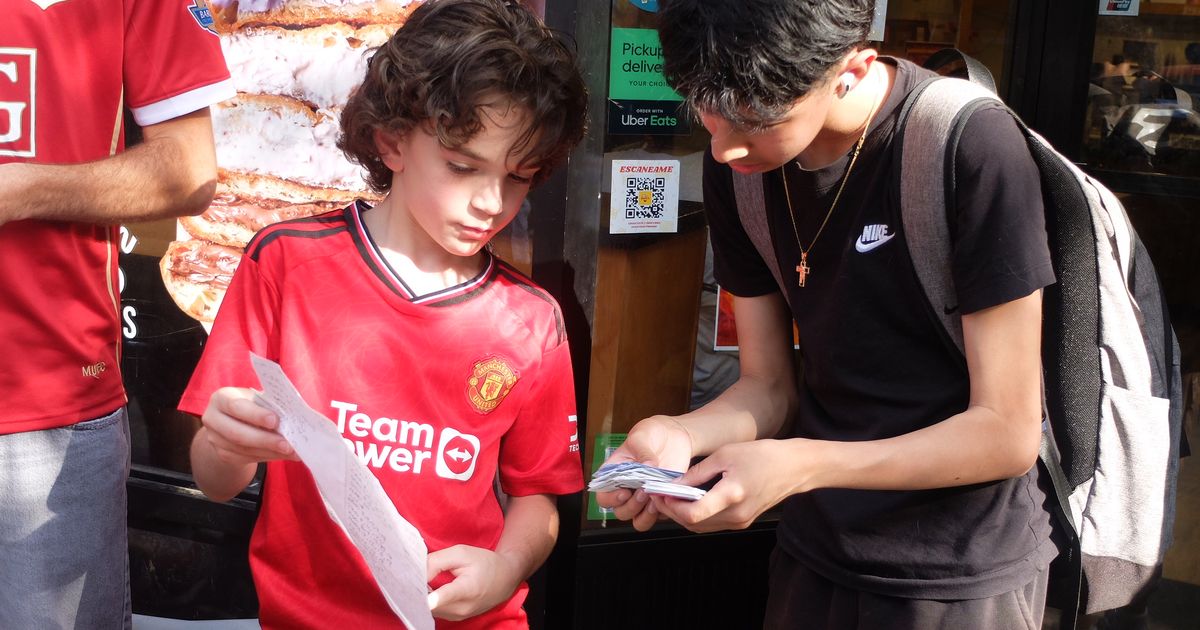
This sentiment is echoed by Kevin Julia, 32, who brought his entire family to the corner. Julia, who grew up preferring baseball, was "roped into" soccer culture by his Latino friends in high school. The 2026 tournament, being hosted in the U.S., provided the final impetus for him to commit to completing an album. "I think these are certainly memories that I’m gonna have, opening these packs with my father," he said.
Economic and Cultural Analysis
The "Panini Economy" in Jackson Heights reflects a broader shift in the American sporting landscape. While baseball cards have historically dominated the U.S. collectibles market, the rise of soccer—fueled by demographic shifts and the increasing visibility of Major League Soccer (MLS)—has carved out a significant niche. Unlike baseball cards, which are often collected for their speculative investment value, Panini stickers are functional. Their value is derived from their placement in the album; once a sticker is stuck, its individual market value effectively drops to zero, emphasizing the "completionist" aspect of the hobby over financial gain.
The local business impact is also notable. Restaurants like El Chivito D’Oro benefit from the foot traffic, as families spend hours on the sidewalk and eventually move inside for meals. The "professional" traders, while operating on thin margins, provide a service that stabilizes the local trading ecosystem. Julian Cruhigger, a 20-year-old veteran trader who has been coming to the corner for four World Cups, notes that the density of the crowd has tripled since 2014. For Cruhigger, the activity is a way to stay connected to his Colombian roots while living in Long Island.
Broader Implications and the Future of the Tradition
The 2026 World Cup of Stickers highlights a tension between the digital and physical worlds. In an era of NFT sports highlights and digital trading cards, the physical act of peeling a sticker and placing it into a paper album remains remarkably resilient. The "analog" nature of the Jackson Heights meetup—using handwritten lists of missing numbers and face-to-face negotiation—offers a form of social cohesion that digital platforms struggle to replicate.
However, the tradition faces challenges. The rising cost of stickers and the commercialization of "limited edition" parallels have drawn criticism from some long-time collectors who feel the hobby is becoming less accessible to children. Furthermore, as Jackson Heights continues to undergo economic shifts, the future of such large-scale street gatherings depends on the continued tolerance of local authorities and the hospitality of neighborhood businesses.
As the 2026 tournament progresses toward its final matches, the crowd at 84th Street and 37th Avenue shows no signs of thinning. For the residents of Queens, the World Cup is not just a series of games played in distant stadiums; it is a tactile, shared experience that can be held in the palm of a hand. Whether or not every collector finishes their album, the true "win" of the season is the reinforcement of a community bound together by a love for fútbol and the simple joy of the trade.
The phenomenon serves as a reminder that in the world’s most diverse borough, the most powerful social currencies are often those that require no translation. On this corner, "Qué te falta?" (What are you missing?) is not just a question about a sticker—it is an invitation to connect with a neighbor in the shared language of a global game.