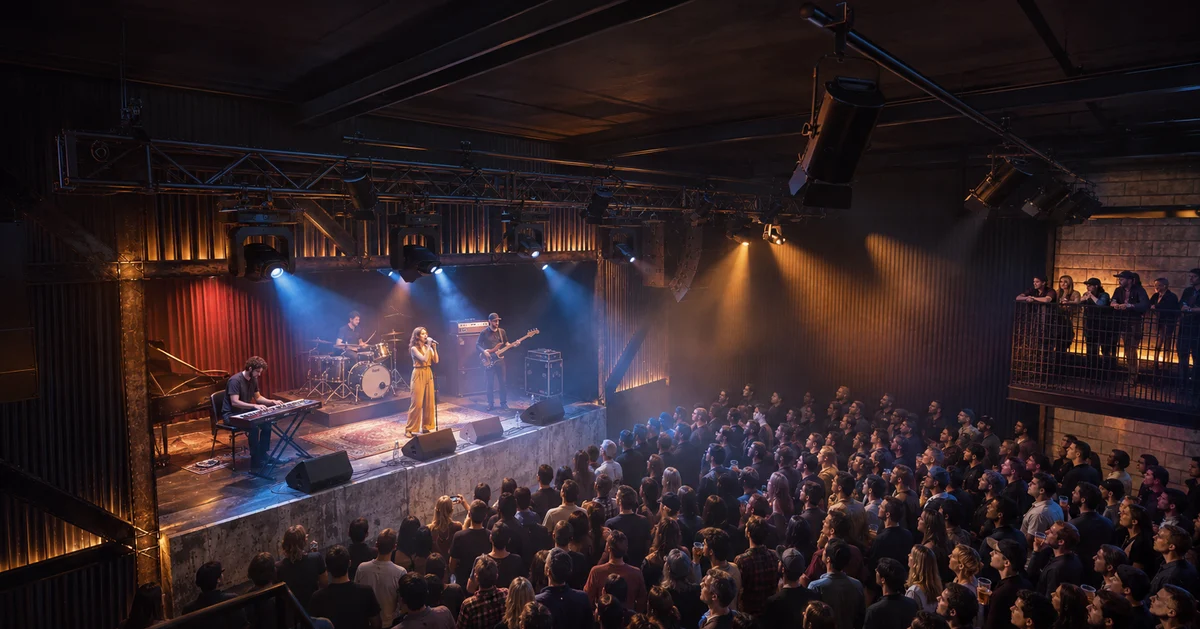
The historic Domino Sugar Refinery along the Williamsburg waterfront in Brooklyn is preparing to add a major cultural anchor to its newly redeveloped landscape. Set to open its doors in April, a brand-new 750-capacity concert and performance venue named Domino will occupy a prime riverside position within the transformed industrial complex. Operated by TVG Hospitality—the experienced venue management group led by Ben Lovett of the band Mumford & Sons—the project signals a fresh chapter for live entertainment in a neighborhood that has watched many of its legendary underground music spaces disappear over the last decade.
Positioned immediately adjacent to the Refinery building’s newly opened Equinox gym with a dedicated entrance facing the East River, the space aims to blend corporate backing with artistic curation. TVG Hospitality brings a proven track record to Brooklyn, having successfully launched and managed prominent venues across distinct markets, including Mitsi in Los Angeles alongside the Orion and the Saturn in Alabama. As Williamsburg continues to grapple with the shifting dynamics of real estate development and commercial viability, the arrival of Domino introduces a unique model for mid-sized concert spaces in a hyper-gentrified waterfront district.
A Ghostly Echo of Williamsburg’s Underground Past
For longtime residents and veterans of New York City’s independent music scene, the location of the Domino venue evokes a complex mixture of nostalgia and irony. Just a block away from the refinery complex, a golden era of Brooklyn counterculture once thrived through legendary, subterranean DIY spaces like Glasslands, 285 Kent, and Death by Audio. Operating with raw energy and lax commercial oversight, these venues served as the crucible for the indie rock, noise, and punk revivals of the late 2000s and early 2010s before municipal pressure, rising rents, and neighborhood development forced them all to shutter by 2015.
The corporate-backed, glossier wave of music venues that followed those gritty DIY spaces has also faced severe attrition. The neighborhood Knitting Factory closed its doors in 2022, and the historic Music Hall of Williamsburg is scheduled to shutter this December. Industry analysts and real estate brokers note that the math of running a traditional, independent rock club in modern North Brooklyn has become nearly impossible. With commercial retail spaces demanding astronomical figures—frequently cited by brokers as hitting upwards of $400 per square foot—the economics of live music have struggled to compete with luxury retail, fitness chains, and corporate offices.
By stepping into a landscape with significantly diminished direct competition, Domino may encounter an uncrowded market for ticketed entertainment, though it must navigate a very different cultural and economic ecosystem than its DIY predecessors.
The Two Trees Philosophy and the Art of the Subsidized District
Unlike many standard commercial landlords in contemporary New York City, the masterminds behind the Domino site’s transformation approach urban development through a lens deeply intertwined with the arts. Two Trees Management, the family-run real estate firm headed by David and Jed Walentas, has a decades-long history of utilizing cultural programming and subsidized spaces to enhance the marketability and appeal of its commercial portfolio. Long before tech companies and financial firms began leasing office space inside the repurposed Domino Refinery, Two Trees famously handed over the cavernous industrial shell to artist Kara Walker, whose monumental, sugar-coated sphinx installation briefly turned the decaying ruin into a global destination for contemporary art.
This historical willingness to absorb short-term commercial opportunities for long-term cultural capital forms the backbone of the new venue’s operating structure. According to public disclosures, Two Trees will maintain a hands-off approach regarding day-to-day programming. Instead, the curation of events will be steered by an independent cultural board composed of New Yorkers representing diverse industries and creative backgrounds. The explicit mandate of the board is to ensure that Domino functions as a multi-disciplinary community hub rather than a generic corporate event space.
Programming Scope, Acoustic Constraints, and Amenities
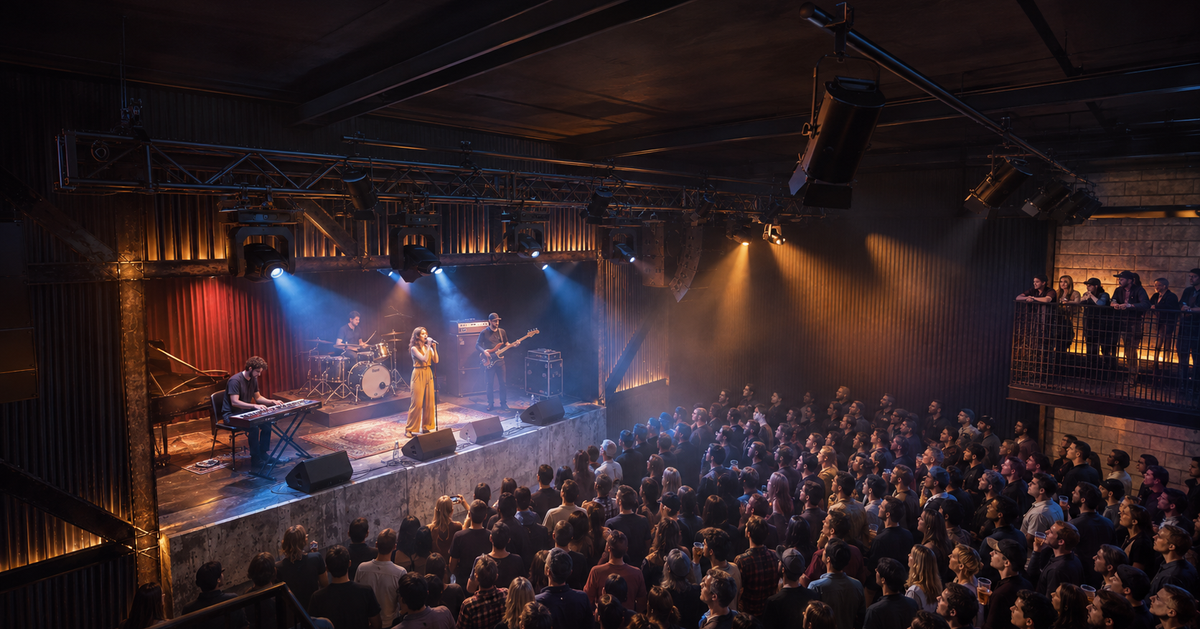
While the venue will primarily cater to live music, its operational blueprint envisions a broad spectrum of cultural and social events. Press announcements indicate that the calendar will encompass everything from intimate club nights, comedy shows, and film screenings to live podcast tapings, fashion presentations, and art exhibitions. Furthermore, the space will be available for private rentals, including weddings and corporate gatherings, reflecting the multi-use strategies required for modern venues to maintain financial stability.
Architecturally, renderings of the venue reveal an industrial aesthetic that honors the heritage of the nineteenth-century sugar refinery. Exposed steel I-beams, soaring ceilings, and raw structural elements frame a standing-room-only general admission floor directly in front of the stage, complemented by tiered seating areas positioned toward the rear to optimize sightlines for diverse audiences.
However, the reality of operating a mid-sized venue inside a mixed-use development—which houses both high-end office workers and luxury wellness facilities—comes with strict operational boundaries. Unlike the blown-out speakers and deafening acoustics of the neighborhood’s historical warehouse parties, Domino will operate under strict noise mitigation protocols. Official documentation confirms that volume levels inside the performance space will be capped at a maximum of 100 decibels, ensuring that the surrounding offices and residences remain undisturbed.
Economic Implications and the Shifting Waterfront
The launch of Domino arrives at a critical juncture for New York City’s live entertainment sector. As rising operational costs, post-pandemic economic pressures, and relentless real estate development continue to squeeze out independent venues across Manhattan and Brooklyn, the survival of mid-sized performance spaces depends increasingly on institutional partnerships and creative funding models.
By embedding a cultural venue directly into a premier mixed-use waterfront development, Two Trees and TVG Hospitality are testing a new paradigm for urban amenity planning. Whether a 750-capacity room operating under strict acoustic caps and corporate-adjacent oversight can capture the authentic cultural spirit of Williamsburg remains a central question for local music fans. Yet, as the neighborhood bids farewell to foundational institutions like the Music Hall of Williamsburg, the opening of Domino guarantees that the North Brooklyn waterfront will remain a focal point for live performance, bridging the gap between industrial history and the corporate-dominated future of New York real estate.