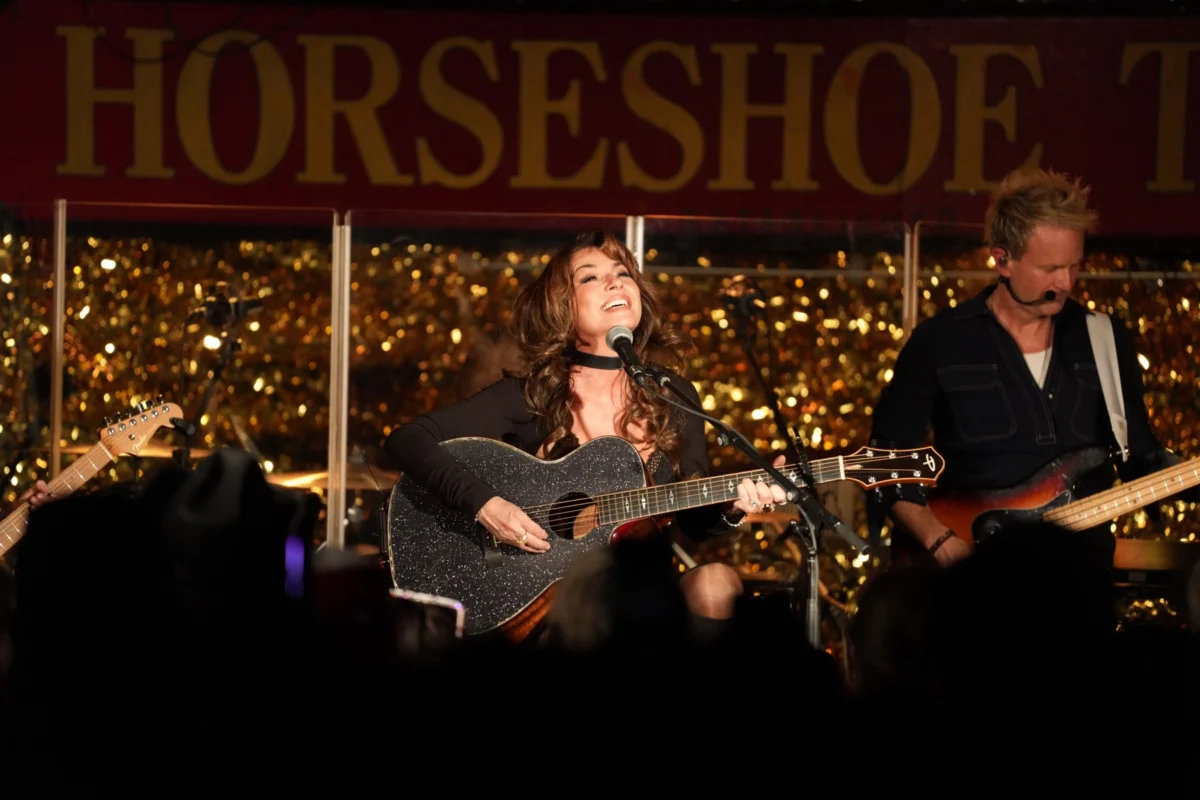
The global icon and five-time Grammy Award winner Shania Twain returned to her Canadian roots on Friday night, delivering a rare and deeply personal performance at Toronto’s historic Horseshoe Tavern. The event, characterized by the music industry as an "underplay," saw the artist transition from headlining international stadiums to a venue with a maximum capacity of approximately 500 people. This intimate showcase served as both a career retrospective and a live testing ground for her upcoming studio album, Little Miss Twain, which is scheduled for release on July 24. For Twain, the evening represented the fulfillment of a long-held professional ambition to play a stage that served as a cornerstone for her musical predecessors, despite her own trajectory taking her to the pinnacle of global pop and country stardom.
A Historic Venue for a Global Superstar
The Horseshoe Tavern, located at the corner of Queen Street West and Spadina Avenue, has stood as a bastion of the Canadian music scene since its founding in 1947. Originally established by Jack Starr, the venue earned the moniker "The Grand Ole Opry of the North" due to its early focus on country and rockabilly acts. Over the decades, its stage has been graced by a diverse array of legends, including Waylon Jennings, Loretta Lynn, Willie Nelson, and Conway Twitty, as well as rock icons like The Rolling Stones, The Ramones, and Foo Fighters.
For Twain, who grew up in the Northern Ontario city of Timmins, the Horseshoe Tavern was a symbol of professional arrival that eluded her during her formative years. During the performance, she reflected on her time fronting local bar bands in her youth and twenties, noting that her ensembles were never "established enough" to secure a booking at the legendary venue. Standing before the venue’s signature glittery backdrop, the 60-year-old singer described the evening as a "full circle moment," emphasizing the historical weight of the stage and the privilege of finally performing there after selling more than 100 million albums worldwide.
Setlist Dynamics and New Material
The 75-minute set was a carefully curated blend of chart-topping hits and autobiographical new tracks. Twain opened the night with "Come On Over" and "Any Man of Mine," immediately establishing a high-energy rapport with the audience. Backed by a six-piece band—which notably included four female musicians and her longtime music director Brent Barcus—Twain remained center stage with a sparkly, silver acoustic guitar for the majority of the night.
The performance of new material from Little Miss Twain offered a glimpse into the artist’s current creative direction, which leans heavily into roots-rock and soul influences. The lead single, "Dirty Rosie," was introduced with a narrative about Twain’s childhood in the Ontario "bush." She recounted learning to drive at the age of 10 in her father’s pickup truck, an experience that inspired the song’s themes of utility and ruggedness over aesthetic perfection.
In a departure from her signature country-pop sound, Twain performed "I’d Be Loving Me," a track she described as emerging from a jam session with veteran Motown musicians. This "soul side" of her artistry was followed by "Stranger Things," a harmony-rich ballad that serves as a thematic anchor for the new album. Twain explained that the song reflects her upbringing in Northern Ontario, referencing the region’s geography—its lakes, rivers, and gold mines—as foundational elements of her identity.
Biographical Storytelling and the Timmins Connection
The evening was as much a storytelling session as it was a concert. Twain utilized the intimate setting to share deeply personal anecdotes that inform her new lyrics. She spoke extensively about her parents, particularly her mother, whom she credited as her primary driver, manager, and agent during her early years. Twain revealed that her mother’s ultimate dream was for her to become a childhood country star in the vein of Tanya Tucker. In a poignant tribute, Twain noted that while her mother did not live to see her global success, the new album features a collaboration with Tucker on the title track.
The artist also touched upon the "fantasy man" of her youth—a lumberjack figure capable of matching her own practical skills, such as chopping wood, trapping, and changing tires. This childhood ideal served as the inspiration for one of the new tracks performed during the set. The inclusion of "Faded Blue Jeans," a collaboration with Queens of the Stone Age frontman Josh Homme, further highlighted the album’s diverse influences. Twain clarified that the song is a literal homage to her favorite denim, tracking the various life milestones she experienced while wearing them as they moved in and out of fashion.
Logistics of a High-Demand Underplay
The logistics of the event underscored Twain’s enduring massive popularity. Tickets were priced at a modest $40 CAD ($30 USD), a stark contrast to the premium pricing typical of her arena and stadium tours. To ensure the tickets reached genuine fans, the venue and organizers implemented a strict non-transferable policy, with tickets selling out within minutes of their release. A small allocation was reserved for contest winners, industry representatives, and media, while many "diehard" fans who were unable to secure entry gathered on the sidewalk outside the Queen Street landmark, hoping to hear the performance through the walls.
The production itself maintained a "go with the flow" atmosphere, with Twain occasionally requesting minor technical adjustments and admitting to the crowd that she was still internalizing the lyrics to her newest songs. This transparency added to the evening’s authenticity, differentiating it from the highly choreographed nature of her 12-show stadium run opening for Harry Styles in London or her recent residency performances.
Analysis of the Little Miss Twain Era
The transition to the Little Miss Twain era suggests a strategic shift toward a more reflective and legacy-focused phase of her career. By choosing to preview the album at a venue like the Horseshoe Tavern, Twain is effectively "re-earning" her stripes in the roots music community while simultaneously celebrating her Canadian heritage. The album’s title itself points to a reconciliation between her global "Shania" persona and her origins as Eilleen Edwards in Timmins.
Industry analysts suggest that such underplays are becoming a vital tool for legacy artists to generate organic social media buzz and re-establish a sense of "cool" and accessibility. For Twain, whose career has been defined by breaking boundaries between genres, the inclusion of collaborators like Josh Homme and Motown veterans indicates a desire to remain sonically adventurous while grounding her narratives in the specificities of her biography.
Impact and Conclusion
The night concluded with a high-energy rendition of "Man! I Feel Like A Woman!", which Twain noted has evolved into a global karaoke staple. For the encore, she performed "Giddy Up!" from her 2023 album Queen of Me, encouraging the audience to participate in a "lasso" dance. Despite the star’s global stature, the physical realities of the Horseshoe Tavern remained unchanged; Twain joked that the venue’s modest green room was perhaps the only element not quite "fit for a superstar," leading to the presence of a large production trailer in the tavern’s parking lot.
As the music industry prepares for the July 24 release of Little Miss Twain, the Horseshoe Tavern performance stands as a significant marker in the artist’s timeline. It was a night that prioritized history over spectacle and storytelling over production value. By returning to the "Grand Ole Opry of the North," Shania Twain not only fulfilled a childhood dream but also reinforced her status as a singular figure in music history—one who can command a stadium of 80,000 and a backroom of 500 with equal authority and emotional resonance. The event served as a reminder that despite the hundreds of millions of albums sold and the international accolades, the "Queen of Country Pop" remains deeply connected to the gravel roads and barroom stages of her Ontario beginnings.