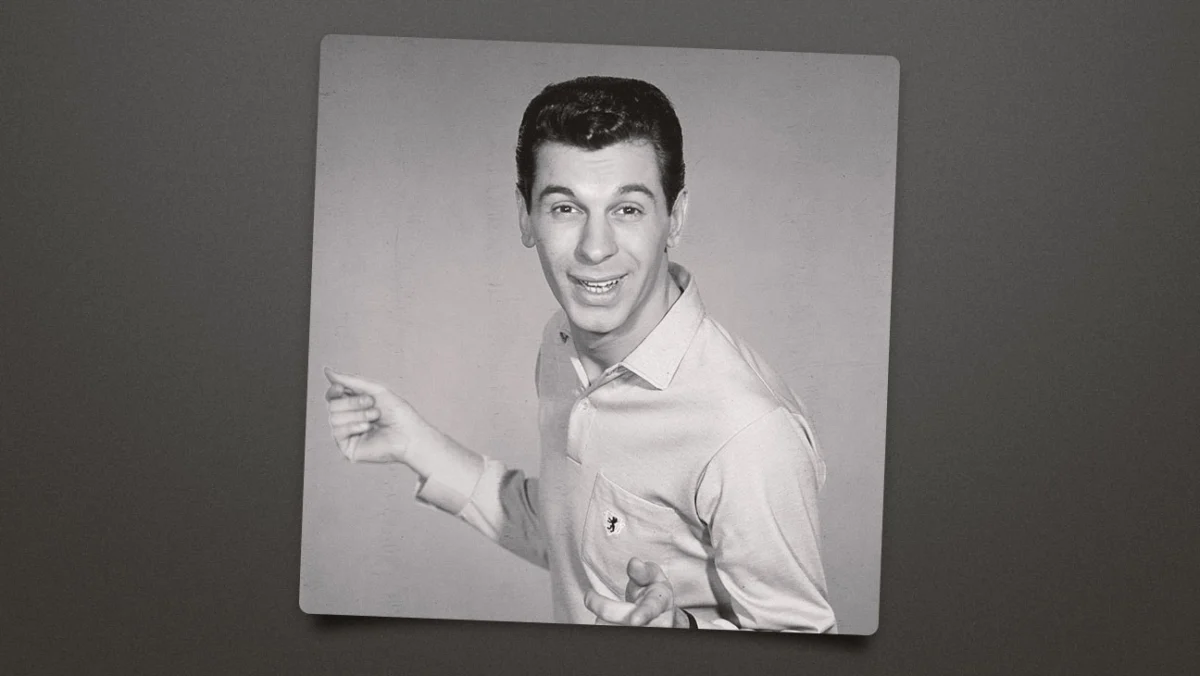
Freddy Cannon, the high-energy rock and roll vocalist whose exuberant performance style and string of hits helped define the sound of the late 1950s and early 1960s, has passed away at the age of 89. Cannon, affectionately known to generations of fans as Freddy "Boom Boom" Cannon, died on Friday at a hospice facility in California. The news of his passing was confirmed by his longtime friend and iHeart Radio personality Tom Cuddy, who noted that the singer had been hospitalized just one day before a scheduled interview with legendary DJ Cousin Brucie Morrow. Cannon’s death marks the end of an era for the early rock and roll movement, leaving behind a legacy defined by infectious enthusiasm, a record-breaking relationship with television’s most influential music programs, and a catalog of songs that remain staples of the American pop lexicon.
Born Frederick Anthony Picariello Jr. on December 4, 1936, in Lynn, Massachusetts, Cannon grew up in a household steeped in musical tradition. His father, a truck driver by trade, was also a musician who played trumpet and sang in local bands. This early exposure to the rhythm and structure of big band music, combined with the burgeoning sounds of rhythm and blues emerging in the early 1950s, shaped Cannon’s unique vocal delivery. He began his career in the mid-1950s as a member of a group called The Spindrifts, and later played guitar for a local band known as The G-Clefs. However, it was his solo aspirations and a demo recording of a song written by his mother that would eventually catapult him to international stardom.
The Rise of the Boom Boom Sound and Tallahassee Lassie
The trajectory of Freddy Cannon’s career changed forever when a demo of a song titled "Rock-a-Conga" reached the ears of Bob Crewe and Frank Slay. Crewe and Slay, who would become legendary producers and songwriters, recognized the raw energy in Cannon’s voice but felt the song needed refinement. With lyrics reworked by Cannon’s mother and a new title, "Tallahassee Lassie" was born. The track was characterized by a heavy, driving drum beat and Cannon’s signature "Whoo!" vocalizations, which would become his trademark.
The song eventually found its way to Dick Clark, the host of "American Bandstand" and a powerful figure in the music industry. Clark was immediately struck by the record’s potential and suggested that Cannon move to Philadelphia to be closer to the heart of the recording industry and the "Bandstand" studios. Following Clark’s advice, Cannon and his wife, Jeanette, relocated to the Philadelphia area in the late 1950s. Released on Swan Records—a label in which Dick Clark held a financial interest—"Tallahassee Lassie" became a massive hit in 1959. It peaked at No. 6 on the Billboard Hot 100 and established Cannon as a major new force in rock and roll.
The nickname "Boom Boom" was bestowed upon him during this period, referring to the explosive power of his voice and the prominent use of the bass drum in his recordings. Unlike many of the more polished "teen idols" of the era, Cannon maintained a gritty, high-octane energy that bridged the gap between the raw rockabilly of the 1950s and the more produced pop-rock of the early 1960s.
The American Bandstand Legend and Record-Breaking Appearances
One of the most significant aspects of Freddy Cannon’s career was his unprecedented relationship with "American Bandstand." He made his first appearance on the show in 1960, and his clean-cut yet energetic persona made him a favorite of both Dick Clark and the show’s teenage audience. Over the ensuing decades, Cannon would return to the show time and again, eventually clocking in a record-setting 110 appearances. This feat remains a testament to his enduring popularity and his ability to adapt to the changing tastes of the music-buying public.
His frequent presence on television helped solidify his status as a household name. While other artists saw their careers flicker out as the "British Invasion" took hold in the mid-1960s, Cannon’s visibility on "American Bandstand" and its spin-off programs kept him relevant. He became a symbol of the "Philly Sound," a period when Philadelphia served as the epicenter of the American music scene, producing hits that were catchy, danceable, and universally appealing.
Palisades Park and the Height of Global Success
In 1962, Cannon released what would become his most enduring and successful single: "Palisades Park." Written by Chuck Barris—who would later gain fame as the creator and host of "The Gong Show"—the track was originally the B-side to the single "June, July and August." However, a radio DJ in Michigan reportedly played the B-side by mistake, and the listener response was instantaneous.
"Palisades Park" was an anthem dedicated to the famous amusement park in New Jersey. The recording was notable for its innovative use of sound effects, including the roar of a roller coaster and the ambient noise of a carnival midway, which added an immersive quality to the song. The track surged up the charts, peaking at No. 3 on the Billboard Hot 100. It became a global phenomenon, further cementing Cannon’s reputation as the "King of the Vacation Song."
Throughout the early to mid-1960s, Cannon continued to churn out hits. His discography from this period includes "Jump Over" (1960), "Chattanooga Shoe Shine Boy" (1960), "Muskrat Ramble" (1961), and "Abigail Beecher" (1964). In 1965, he recorded "Action," the theme song for the popular afternoon music variety show "Where the Action Is!" The song reached No. 13 on the charts and became another signature track for the artist, synonymous with the vibrant youth culture of the mid-60s.
Transition to Television, Film, and Literary Works
As the musical landscape shifted toward psychedelic rock and social consciousness in the late 1960s, Cannon’s chart success began to wane, but his career in entertainment continued to thrive through other avenues. He parlayed his charismatic stage presence into a series of television and film roles. His screen credits included appearances in the 1964 film "No Time for Sergeants" and the 1965 cult classic "Village of the Giants." He also appeared in the television series "Never Too Young" and, in later years, became a frequent guest on the horror-themed variety show "Svengoolie," where he often performed and engaged in comedic skits.
In 2011, Cannon published his memoir, "Where the Action Is!", which provided an inside look at his life in the music industry, his relationships with figures like Dick Clark and Bob Crewe, and the challenges of navigating a rapidly changing cultural landscape. The book served as a valuable historical document of the early rock and roll era, offering firsthand accounts of the "payola" scandals, the rigors of touring during the 1950s, and the mechanics of the Philadelphia music machine.
Despite the passage of time, Cannon remained a popular fixture on the "oldies" circuit, performing at nostalgic concerts and cruises where he continued to deliver high-energy versions of his classic hits. His voice remained remarkably intact, and his ability to engage an audience never faltered, proving that the "Boom Boom" spirit was as much about personality as it was about vocal power.
Personal Life and a Year of Profound Loss
The final year of Freddy Cannon’s life was marked by significant personal tragedy. In early 2024, his wife of several decades, Jeanette, passed away. The couple had moved to Philadelphia together as teenagers at the start of his career and remained a steadfast unit throughout the highs and lows of the entertainment industry. Adding to the family’s grief, Cannon’s son, John, passed away in April 2024, just months before the singer’s own death.
Cannon is survived by his children, Conny Weber and Billy Cannon; his sister, Mary Lou; his son-in-law, Jim; his daughter-in-law, Beth; and a large extended family that includes five grandchildren and seven great-grandchildren. The singer’s commitment to his family was often cited by those who knew him as his most defining characteristic, even above his professional achievements.
Analysis of Impact and Musical Legacy
The death of Freddy Cannon offers a moment to reflect on the pivotal role he played in the evolution of American pop music. Cannon was part of a generation of artists who helped transition rock and roll from a rebellious, fringe movement into a mainstream commercial powerhouse. While he was never as controversial as Elvis Presley or as musically experimental as Buddy Holly, Cannon provided a vital service to the industry: he made rock and roll accessible, joyous, and consistently entertaining.
His technical contribution to music should not be overlooked. The "Freddy Cannon sound"—characterized by heavy percussion and a vocal style that favored enthusiasm over technical perfection—influenced the garage rock movement of the 1960s and the power pop genre that followed. His records were built for the radio, designed to cut through the static with sheer sonic force.
Furthermore, his 110 appearances on "American Bandstand" highlight the symbiotic relationship between the music industry and television during the 20th century. Cannon was the "reliable" rock star; he was an artist who could be counted on to deliver a professional, high-energy performance that appealed to teenagers without alienating their parents. This reliability allowed him to sustain a career for over six decades, a rarity in an industry known for its volatility.
As the news of his passing spreads, tributes from fellow musicians and fans have begun to pour in. Tom Cuddy of iHeart Radio described him as a "genuine legend" whose energy was "contagious." DJ Cousin Brucie, who had hoped to interview Cannon just days ago, noted that Cannon’s music represented a "happier, simpler time" in American history.
Freddy Cannon’s journey from the working-class streets of Lynn, Massachusetts, to the top of the Billboard charts and the soundstages of Hollywood is a classic American success story. His music, characterized by its unrelenting "Whoos" and "Boom Booms," will continue to serve as a soundtrack for the nostalgia of the 1960s, ensuring that his place in the annals of rock and roll history is securely preserved. The "Tallahassee Lassie" may have found her way home, but the echoes of Freddy Cannon’s voice will continue to ring out in the amusement parks and on the airwaves for years to come.