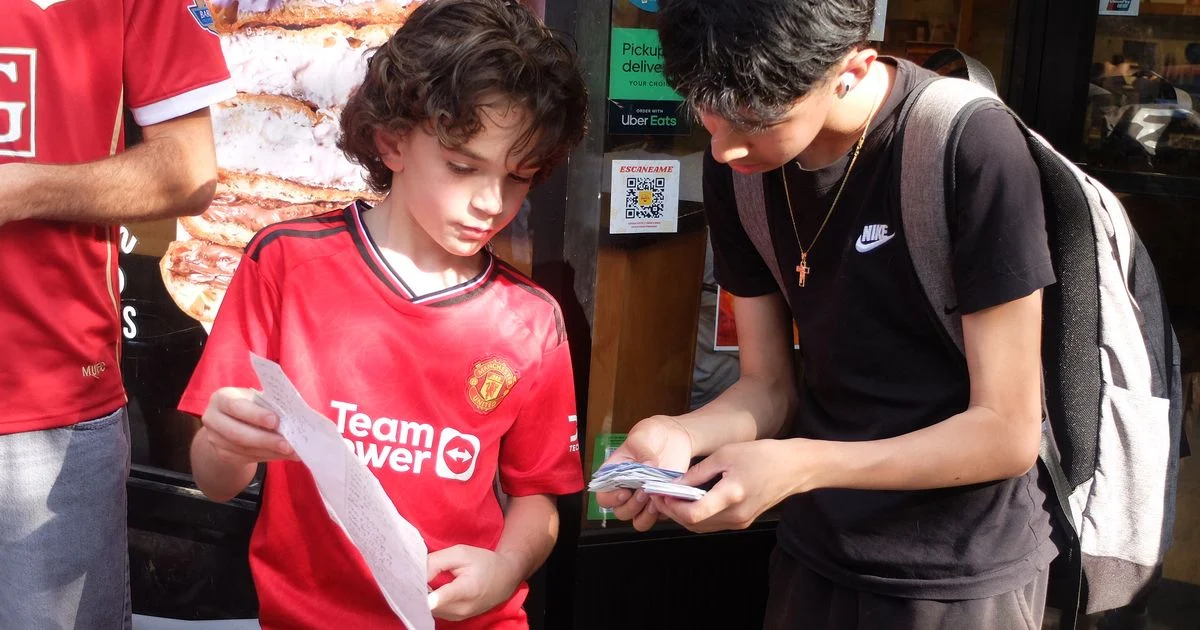
On the sidewalk outside El Chivito D’Oro, a storied Uruguayan restaurant in the heart of Jackson Heights, Queens, the usual rhythm of urban life has been replaced by a singular, obsessive pursuit. For the duration of the 2026 World Cup, this specific corner at 84th Street and 37th Avenue has transformed into an unofficial stock exchange for Panini stickers. Dozens of collectors, ranging from primary school children to retirees, gather daily to engage in the tactile, high-stakes ritual of "swapping." Amidst the humid New York summer, the air is filled with a bilingual chorus of "Qué te falta?" and "Whatchu got?" as enthusiasts attempt to fill the empty grids of their 2026 FIFA World Cup albums.
What appears to be a simple hobby is, in reality, a deeply rooted cultural phenomenon that bridges the gap between the immigrant traditions of South America and the evolving sports landscape of the United States. While baseball cards have long dominated the American collectibles market, the Panini sticker craze—a staple of World Cup culture in Europe and Latin America since 1970—is finding a permanent and vibrant home in the diverse neighborhoods of Queens.
The Evolution of a Global Tradition
The Panini Group, an Italian company founded in 1961 by the Panini brothers in Modena, released its first FIFA World Cup sticker album for the 1970 tournament in Mexico. In the five decades since, the ritual has become a global precursor to the tournament itself. Completing the album is considered a rite of passage for soccer fans, requiring a combination of financial investment, social networking, and mathematical persistence.
The 2026 edition of the album is the most ambitious to date. Reflecting the expanded format of the tournament, which features 48 teams competing across the United States, Canada, and Mexico, the current album requires 980 unique stickers to complete. These include individual player portraits, team logos (often printed on holographic "shiny" foil), and depictions of the various host stadiums.
In the United States, Panini stickers are sold at major retailers such as Target, Walmart, and CVS, typically priced at approximately $2 for a pack of five stickers. However, the "blind pack" nature of the product ensures that collectors inevitably accumulate duplicates. Statistical models, often referred to by mathematicians as the "Coupon Collector’s Problem," suggest that completing a 980-sticker album through pack purchases alone would require buying thousands of stickers, costing upwards of $1,000. This economic reality necessitates the trading culture seen in Jackson Heights, where "swaps" allow collectors to offload duplicates and acquire missing players for free or for a nominal fee.
The Epicenter: 84th Street and 37th Avenue
While sticker trading occurs in school lunchrooms and offices across the city, the corner outside El Chivito D’Oro has become the premier destination for serious collectors. The location is not accidental; Jackson Heights, often referred to as "Little Colombia" and a hub for Ecuadorian, Mexican, and Uruguayan communities, is the geographic heart of New York City’s soccer fandom.
The meetup is anchored by "professional" traders—devoted enthusiasts who source stickers in bulk directly from distributors or the Panini Group itself. These individuals set up folding tables or simply stand with thick binders of organized duplicates, serving as the "market makers" for the crowd. Many of these traders have been fixtures at this corner since the 2010 World Cup in South Africa. They report that while the financial gain from selling individual stickers (often for 25 to 50 cents) is minimal, their presence is driven by a desire to foster community and maintain a tradition they brought with them from their home countries.
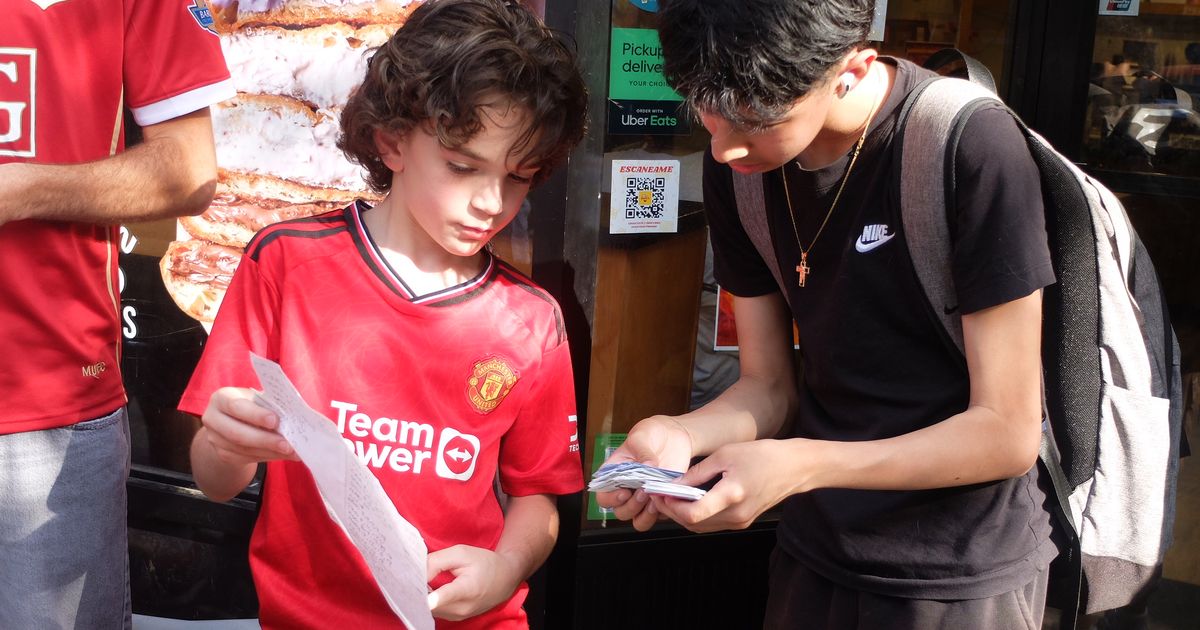
On weekends, the crowd can swell to over 60 people at any given time. The peak hours occur between 10:00 a.m. and 5:00 p.m., as families travel from as far as Long Island and New Jersey to participate. The demographic makeup of the crowd is a testament to the sport’s universal appeal: young children clutching handwritten lists of numbers trade with elderly men who have been collecting since the Pelé era.
Personal Narratives of the 2026 Campaign
For many participants, the sticker album is a vessel for family history and personal milestones. Sophia Ballinas, a 23-year-old Spanish teacher from Forest Hills, represents a new generation of American-born collectors. Ballinas began her journey as a child, encouraged by her father, a Mexican immigrant.
"I grew up trading at my school, which was predominantly Latino, but I never had the resources to actually finish an album back then," Ballinas said. Now, as an adult with her own income, she is on the verge of completing the 2026 book. Her primary objective during a recent visit was securing a sticker of Lionel Messi, the Argentine icon whose move to Inter Miami has further fueled soccer interest in the U.S. "Even now, I joke with my dad and ask him to buy me packs. It keeps that connection alive."
The social fabric of the meetup is also defined by those who use the hobby to navigate the immigrant experience. Diana Peralta, 42, and her son David Orellana, 24, moved to Jackson Heights from Quito, Ecuador, six years ago. In Ecuador, sticker trading was a ubiquitous public activity. After missing out on completing the 2022 album due to a lack of known trading hubs, the discovery of the Jackson Heights corner has been transformative. In their family dynamic, David and his cousin Richard handle the negotiations and trades, while Diana carefully peels and places each sticker into the album, ensuring perfect alignment—a task that requires a steady hand and a degree of reverence.
The Shift in American Sports Culture
The intensity of the 2026 trading season highlights a broader shift in the American sports landscape. For decades, soccer was viewed as a secondary sport in the United States, struggling to compete with the cultural dominance of the NFL, MLB, and NBA. However, the 2026 World Cup, hosted on North American soil, has served as a catalyst for mainstreaming soccer traditions.
Kevin Julia, 32, who attended the meetup with his family, noted that he was historically a "baseball guy." He began collecting Panini stickers in high school primarily as a way to integrate with his Latino peers. "I did it to fit in back then," Julia admitted. "But with the World Cup being here in the U.S. this year, it feels different. It’s more exciting. It’s not just a niche hobby anymore; it’s part of the city’s energy."
Julia’s experience is reflective of a growing trend where traditional "American" sports fans are adopting the rituals of global football culture. He even convinced his father to join the effort, noting that the "blind box" element of the packs appeals to the same sensibilities as traditional card collecting. "These are memories I’m going to have—opening these packs with my father on Father’s Day. That’s worth more than the stickers themselves."
The Role of Youth and the "Analog" Appeal
In an era dominated by digital gaming and virtual collectibles (NFTs), the enduring popularity of physical Panini stickers is notable. The hobby requires physical presence, face-to-face negotiation, and manual record-keeping. Many collectors carry "cheat sheets"—slips of paper with numbers 1 through 980, where they cross off the stickers they possess or circle the ones they need.
This analog nature provides a unique educational environment for children. Marco Gonzalez, 16, has been mentoring his 9-year-old brother, Mason, in the art of the trade. Mason, who was an infant during the 2018 World Cup, is now a primary negotiator on the sidewalk. "He’s ready. He knows how to do it," Marco said, watching his brother approach another child to compare duplicates. Their father, Gary, views the activity as a vital "bonding moment" that encourages social skills and patience—traits often lost in the world of instant digital gratification.
Julian Cruhigger, a 20-year-old veteran of the scene, has witnessed the evolution of the Jackson Heights hub over the last decade. "In 2014, I remember maybe two stands here. Now, every block has multiple stands," he observed. For Cruhigger, who now lives in Long Island, the commute to Queens is a way to reconnect with his Colombian heritage. "Usually, I’d be out in Long Island playing baseball or whatever. But during the World Cup, I want to be here. It ties me to my roots."
Broader Implications and Economic Impact
The "World Cup of Stickers" is more than a neighborhood gathering; it is a micro-economy that supports local businesses and street vendors. Restaurants like El Chivito D’Oro see increased foot traffic as traders take breaks to eat, and nearby street vendors selling snacks and beverages benefit from the hours-long presence of the crowd.
Furthermore, the phenomenon provides a "third place"—a social environment separate from the home and the workplace—that is increasingly rare in modern urban settings. In Jackson Heights, the sticker trade creates a temporary, informal plaza where social hierarchies are flattened. A corporate lawyer and a delivery driver may find themselves in deep negotiation over a backup goalkeeper for the South Korean national team, united by the shared goal of completion.
As the 2026 World Cup progresses toward its final matches, the crowds in Jackson Heights are expected to grow. For many, the completion of the album will be a bittersweet moment, marking the end of a four-year cycle. However, the infrastructure of the meetup remains. The 84th Street and 37th Avenue corner has cemented its status as a landmark of New York City’s sports culture, proving that in the "World Borough" of Queens, the world’s game is best celebrated one sticker at a time.
Conclusion: A Legacy in Adhesive
The 2026 Panini sticker season will eventually conclude, and the albums will be tucked away into bookshelves and closets, serving as historical records of a specific moment in time. Yet, the impact of these gatherings extends beyond the physical books. They reinforce the identity of Jackson Heights as a gateway for global culture and a bastion of community spirit.
In a city that is constantly changing, the sight of dozens of people huddled on a street corner, debating the merits of various midfielders and checking numbers against a list, is a reminder of the power of shared passion. Whether the United States national team wins or loses on the pitch, the residents of Jackson Heights have already secured a victory in the "World Cup of Stickers," preserving a global tradition and adapting it for a new American century.