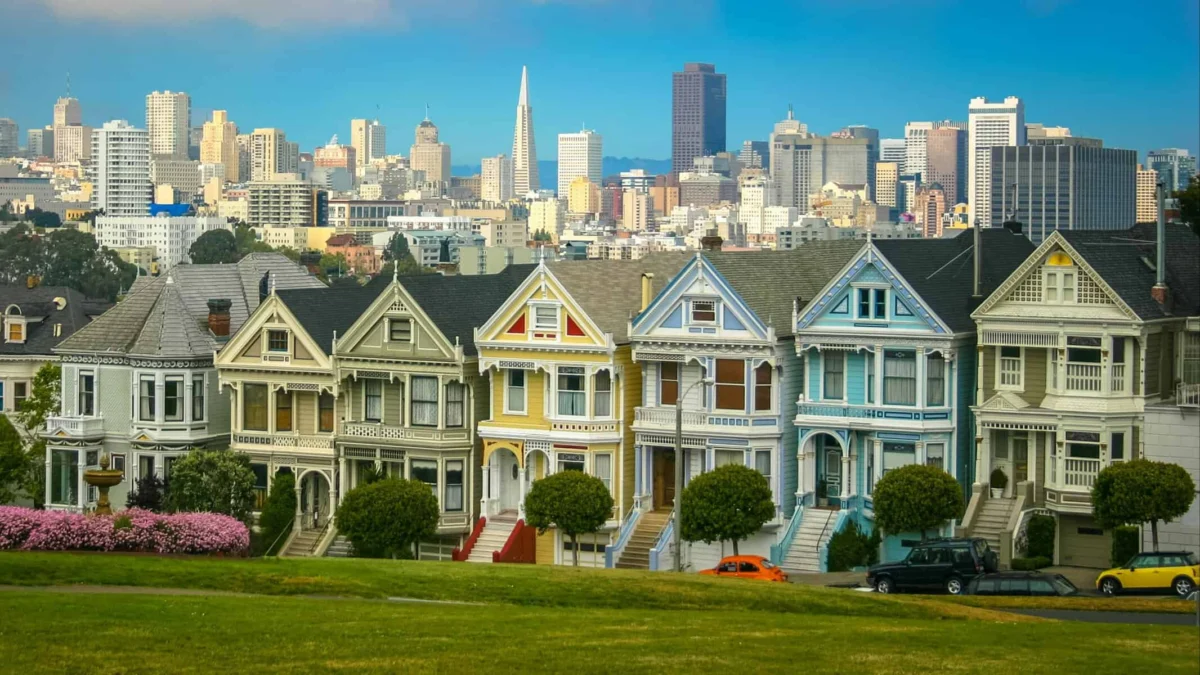
The San Francisco real estate market has reached a staggering new milestone, with the typical home now selling for over $1 million more than it did during the market’s lowest point following the Great Financial Crisis. This massive appreciation highlights the extraordinary resilience of the Bay Area housing sector, which has weathered global economic shifts, a pandemic, and fluctuating interest rates to remain the most expensive metropolitan area in the United States. According to a comprehensive analysis of Multiple Listing Service (MLS) data by Redfin, this price surge is largely attributed to the region’s dominant technology sector and its more recent emergence as the global epicenter for artificial intelligence development.
The trajectory of San Francisco’s housing costs provides a vivid illustration of the city’s economic transformation over the last 14 years. In March 2012, as the region struggled to recover from the subprime mortgage crisis and the ensuing Great Recession, the median sale price for a home in the San Francisco metro area bottomed out at $625,000. By March 2026, that figure had climbed to $1.7 million, marking the first time in history that the gap between the post-crash low and current prices exceeded the $1 million threshold. The upward trend has shown little sign of slowing; by June 2026, the median sale price reached $1.725 million, representing a $1.01 million increase over the June 2012 median of $718,000.
A Decadal Overview of Market Resilience and Growth
To understand the magnitude of this $1 million price gap, it is essential to look at the broader historical context of the San Francisco market. Since hitting its post-recession floor, the median home price in the city has surged by approximately 140%. This growth significantly outpaces other major American metropolitan areas during the same period. For comparison, home prices nationwide rose by 128%, while New York City—often considered San Francisco’s primary rival for real estate costs—saw a 122% increase.
The recovery began in earnest during the early 2010s, fueled by a combination of constrained housing supply and a massive influx of high-earning workers during the "Web 2.0" era. Companies like Uber, Airbnb, and Salesforce expanded their footprints in the city, bringing thousands of employees with high salaries and lucrative stock options into the buyer pool. By 2019, well before the current AI surge or the disruptions of the COVID-19 pandemic, the median sale price had already climbed to $1.5 million. While the pandemic introduced a period of volatility and a temporary "exodus" narrative, the underlying lack of inventory and the continued concentration of high-paying industries ensured that prices remained elevated compared to the rest of the country.
The AI Catalyst: Redefining the Luxury Real Estate Landscape
While the foundations of San Francisco’s high prices were laid over a decade ago, the recent acceleration is inextricably linked to the explosion of the artificial intelligence industry. Since the public launch of generative AI tools in late 2022, San Francisco has solidified its status as "AI Ground Zero." This has created a new class of wealthy buyers, many of whom are concentrated in specific neighborhoods and price tiers.
Data indicates that the influx of AI-related wealth has had a disproportionate impact on the luxury segment of the market. In the two years following the mainstreaming of AI technology, home prices in the Bay Area’s luxury ZIP codes rose by 13.4%, a rate that far exceeded every other price tier in the region. This trend was further evidenced in May 2026, when pending sales of luxury homes in San Francisco skyrocketed by 46% year over year—the largest increase recorded anywhere in the nation.
Market analysts point to the impending initial public offerings (IPOs) of major AI firms, such as OpenAI and Anthropic, as a significant psychological and financial driver for the market. Estimates suggest that once these companies go public, the combined liquid wealth of their employees could theoretically allow them to purchase nearly one-third of all available housing stock in San Francisco. This anticipation of future wealth has created a "buy now" mentality among affluent tech workers, further tightening a market that already suffers from a chronic lack of new listings.
Supply and Demand Imbalance in the Post-Pandemic Era
The current price surge is not merely a result of increased demand but also a consequence of a dramatic contraction in supply. In June 2026, San Francisco home prices rose 9.2% year over year, a jump driven by a 23% increase in home sales occurring simultaneously with a 16% decline in new listings. This supply-demand mismatch is a hallmark of the San Francisco market, where geographic constraints—surrounded by water on three sides—and stringent zoning regulations make significant new residential development difficult.
Furthermore, many homeowners who purchased or refinanced during the period of record-low interest rates (2020–2021) are currently "locked in" to their mortgages. With current mortgage rates remaining elevated compared to pandemic-era lows, these homeowners are reluctant to sell, as doing so would mean trading a 3% interest rate for one significantly higher. This phenomenon has effectively frozen the inventory of mid-tier homes, forcing buyers to compete aggressively for the few properties that do hit the market.
The Luxury Buyer Advantage
A notable feature of the current market is the dominance of affluent buyers who are largely insulated from the macroeconomic pressures affecting the average American household. While high mortgage rates have sidelined many first-time and middle-income buyers across the U.S., San Francisco’s luxury market continues to thrive.
Wealthy buyers in the Bay Area often have access to significant cash reserves or can leverage stock-based compensation to make all-cash offers, bypassing the need for traditional financing. This "insulation" allows the high-end market to remain active even when borrowing costs are high. The concentration of AI startups and venture capital firms in the city ensures a steady stream of individuals with the financial means to absorb $2 million-plus price tags for standard single-family homes.
Implications for Local Affordability and the "Two-Track" Economy
The widening gap between home prices and local incomes has sparked significant concern regarding the long-term social and economic health of the city. While the surge in home values has been a massive windfall for longtime property owners—many of whom have seen their net worth increase by seven figures—it has exacerbated an ongoing affordability crisis for those outside the tech and AI sectors.
Since 2012, overall wages in San Francisco have risen by approximately 90%. While this is a substantial increase, it lags far behind the 140% growth in home prices. The result is a "two-track" economy where the barrier to entry for homeownership has become nearly insurmountable for service workers, educators, healthcare professionals, and even many white-collar workers in non-tech industries. Current data suggests that a household would need to earn nearly $300,000 per year to comfortably afford a typical home in the San Francisco metro area.
Social advocates and urban planners warn that this disparity threatens to hollow out the city’s middle class. When essential workers can no longer afford to live within a reasonable distance of their jobs, the city’s infrastructure and quality of life can suffer. This has led to increased calls for housing policy reform, including denser zoning near transit hubs and more aggressive incentives for middle-income housing developments, though such measures often face significant local opposition.
Future Outlook: The IPO Horizon and Market Stability
As San Francisco looks toward the remainder of 2026 and into 2027, the market remains in a state of high-stakes anticipation. The primary variable remains the timing and success of AI-related IPOs. Should these companies debut with the valuations currently expected by venture capitalists, the resulting "liquidity event" could trigger an even more intense wave of buying activity, potentially pushing the median price toward the $2 million mark.
However, some analysts urge caution, noting that the market is increasingly sensitive to the health of a single industry. While the AI boom currently appears robust, any significant correction in the tech sector or a broader national economic downturn could test the limits of San Francisco’s resilience. For now, the city remains a global outlier—a market where the "new normal" is a million-dollar premium over its previous historical highs.
In summary, the San Francisco housing market of 2026 is a reflection of a city that has successfully pivoted from the traditional software era into the age of artificial intelligence. While this transition has secured the city’s status as a global financial powerhouse, it has also created a real estate environment characterized by extreme luxury demand, chronic under-supply, and a widening divide between the tech-wealthy and the rest of the population. The $1 million price gap since 2012 is not just a statistic; it is a symbol of the city’s radical economic evolution.