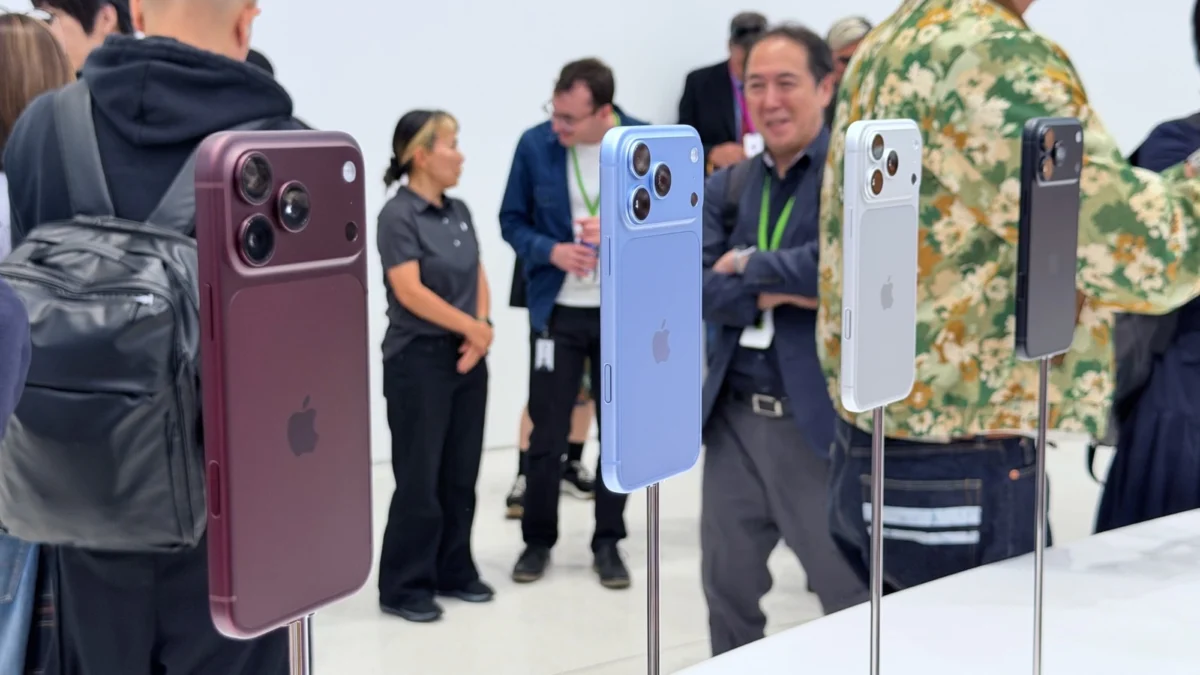
Apple’s annual September hardware showcase, colloquially dubbed the "Surprise and Shine" event, took place at Apple Park, bringing with it the much-anticipated unveiling of the tech giant’s premier mobile hardware line: the iPhone 18 series. Among the standout announcements was the flagship iPhone 18 Pro Max, a device that arrives with the heavy responsibility of succeeding one of the most commercially successful iterations in recent memory, the iPhone 17 Pro Max. At first glance, a side-by-side visual comparison between the two models reveals an uncanny resemblance. Apple has largely retained the familiar 6.9-inch form factor, the robust titanium-infused aluminum body structure, and the overall exterior footprint established by its predecessor. However, industry analysts and consumers alike have quickly learned that judging this generation by its cover would be a mistake.
While the physical dimensions remain virtually identical, the engineering overhaul resides internally. Navigating a challenging global memory crisis, Apple has adjusted its pricing strategy for the high-end tier while packing the chassis with substantial thermal, computational, and optical upgrades. As early adopters and tech enthusiasts weigh their options ahead of the official pre-order window, a comprehensive head-to-head analysis reveals the nuanced, yet critical, departures Apple has engineered between its 2025 and 2026 flagship powerhouses.

Pricing Realities and Market Pressures
The most immediate friction point for consumers evaluating the new hardware generation lies in the retail pricing structure. The iPhone 18 Pro and iPhone 18 Pro Max debut at starting price points of $1,199 and $1,299, respectively. This pricing strategy reflects a direct $100 price increase across the board compared to the previous year’s iPhone 17 Pro models.
Market observers note that this upward adjustment was widely anticipated within the consumer electronics sector, primarily driven by persistent supply chain bottlenecks and a global memory crisis that has inflated the baseline cost of high-density RAM and flash storage components. Consequently, the iPhone 17 Pro models retain a distinct historical advantage in terms of sheer cost-to-performance value at their original retail baselines. Nevertheless, Apple appears confident that the internal hardware leaps embedded within the iPhone 18 Pro Max justify the capital outlay for professional creators and power users who demand cutting-edge mobile processing.
Aesthetic Shifts and Color Palettes
External differentiation between consecutive iPhone generations often hinges on colorways, and Apple has utilized this design lever to set the iPhone 18 Pro Max apart from its precursor. The iPhone 17 Pro Max famously captured the public imagination—and dominated social media feeds—with its vibrant, Halloween-esque "cosmic orange" finish, complemented by traditional silver and deep blue options.

For the iPhone 18 Pro Max, Apple has pivoted toward a more sophisticated, subdued palette while acknowledging past consumer feedback. The new flagship is offered in four distinct finishes: a sleek silver, a refreshing glacier blue, a striking new burgundy, and the triumphant return of a classic black model. The black option was conspicuously and controversially absent from the iPhone 17 Pro Max lineup, leaving business professionals and minimalists eager for its reintegration. Alongside these hues, the physical dimensions of the chassis remain anchored at a 6.9-inch Super Retina XDR display footprint. The only tactile physical difference outside of color is weight: the iPhone 18 Pro Max tips the scales slightly heavier at 8.78 ounces compared to the iPhone 17 Pro Max at 8.22 ounces—a minor variance directly attributable to a larger internal battery and advanced camera mechanics.
Optical Engineering and the Variable Aperture Breakthrough
Without question, the most transformative upgrade found in the iPhone 18 Pro Max centers on its imaging system. On paper, both the iPhone 17 Pro Max and the iPhone 18 Pro Max deploy a formidable 48MP Pro Fusion camera architecture, comprising a 48MP Fusion Main lens, a 48MP Fusion Ultra Wide lens, and a 48MP Fusion Telephoto lens. Yet, structural capabilities within those lenses tell entirely different stories.
The iPhone 18 Pro Max introduces a groundbreaking physical variable aperture on its primary camera lens. This mechanical inclusion grants mobile photographers and videographers unprecedented control over exposure, lighting dynamics, and depth of field, bridging the operational gap between smartphone sensors and traditional DSLR or mirrorless cameras. This physical shift is augmented by advanced software integration, including smart focus tracking, enhanced cinematic mode video rendering, and superior low-light algorithmic processing.

Furthermore, in an era increasingly saturated by synthetic media, Apple has introduced "Apple Reference Image"—a cryptographic image authentication feature designed to verify that a photograph was genuinely captured natively via the physical iPhone sensor rather than generated by artificial intelligence tools. Coupled with new Pro Controls allowing manual adjustments for shutter speed, white balance, and lens aperture, the iPhone 18 Pro Max establishes a new professional benchmark for computational mobile media production.
Thermal Architecture and the A20 Pro Chipset
Beneath the glass and titanium exterior lies the core engine driving the iPhone 18 Pro Max: the newly designed A20 Pro chip. Apple has completely re-architected its proprietary silicon to maximize power efficiency and raw computational output. While the iPhone 17 Pro Max’s A19 Pro chipset remains an exceptionally capable processor, the A20 Pro was engineered specifically to handle resource-heavy neural processing demands.
This computational leap is intrinsically tied to Apple’s broader rollout of advanced Apple Intelligence features, most notably the completely reimagined, context-aware Siri AI assistant. Running complex, on-device machine learning models requires immense thermal management. To address this, Apple completely redesigned the vapor chamber cooling system inside the iPhone 18 Pro Max. This upgraded thermal architecture prevents performance throttling during extended gaming sessions, high-resolution video exporting, and intensive AI processing tasks, ensuring the device maintains peak operational efficiency.

Power Management and Longevity
Battery performance has historically been a critical battleground for flagship smartphones, and Apple has leveraged its enhanced silicon efficiency to deliver what the company describes as the largest single-generation battery life increase in iPhone history.
While the iPhone 17 Pro Max offered commendable endurance for all-day heavy usage, the iPhone 18 Pro Max pushes endurance benchmarks significantly higher. Rated for up to 45 hours of continuous video playback on a single charge, the new flagship delivers an additional six hours of runtime compared to its predecessor. This longevity is achieved through a combination of the power-efficient A20 Pro chip architecture, advanced display refresh management, and the physically expanded battery cell housed within the slightly heavier chassis.
The Evolving Dynamic Island
User interface navigation also receives a subtle yet functionally significant hardware refinement. While the pill-shaped notification hub known as the Dynamic Island remains a central fixture of the iOS experience, the physical sensor cutout housing the TrueDepth camera system on the iPhone 18 Pro Max has been noticeably reduced.

Shrinking the physical sensor region from 20.76mm on the iPhone 17 Pro Max down to approximately 16.57mm on the iPhone 18 Pro Max freed up critical screen real estate. Apple capitalized on this reclaimed space by engineering a new 3-in-1 multi-activity display mode within the Dynamic Island. This allows users to track up to three concurrent background activities simultaneously—a feature exclusive to the iPhone 18 Pro and Pro Max hardware tiers.
Implications and Industry Outlook
The transition from the iPhone 17 Pro Max to the iPhone 18 Pro Max illustrates a maturing smartphone market where yearly exterior redigns are giving way to profound internal engineering milestones. Rather than attempting to reinvent the physical form factor, Apple has focused its development capital on solving long-standing mobile photography limitations through mechanical variable apertures, mitigating thermal constraints with advanced vapor chambers, and future-proofing the device for heavy artificial intelligence integration via the A20 Pro chip.
For current owners of the iPhone 17 Pro Max, the decision to upgrade will largely depend on professional workflow requirements. Casual users may find the incremental visual and performance gains secondary to the $100 price increase. However, for mobile content creators, professional photographers, and tech enthusiasts heavily invested in the Apple ecosystem, the optical control, extended thermal headroom, and monumental battery improvements position the iPhone 18 Pro Max as a compelling, highly evolved evolution of Apple’s flagship philosophy.