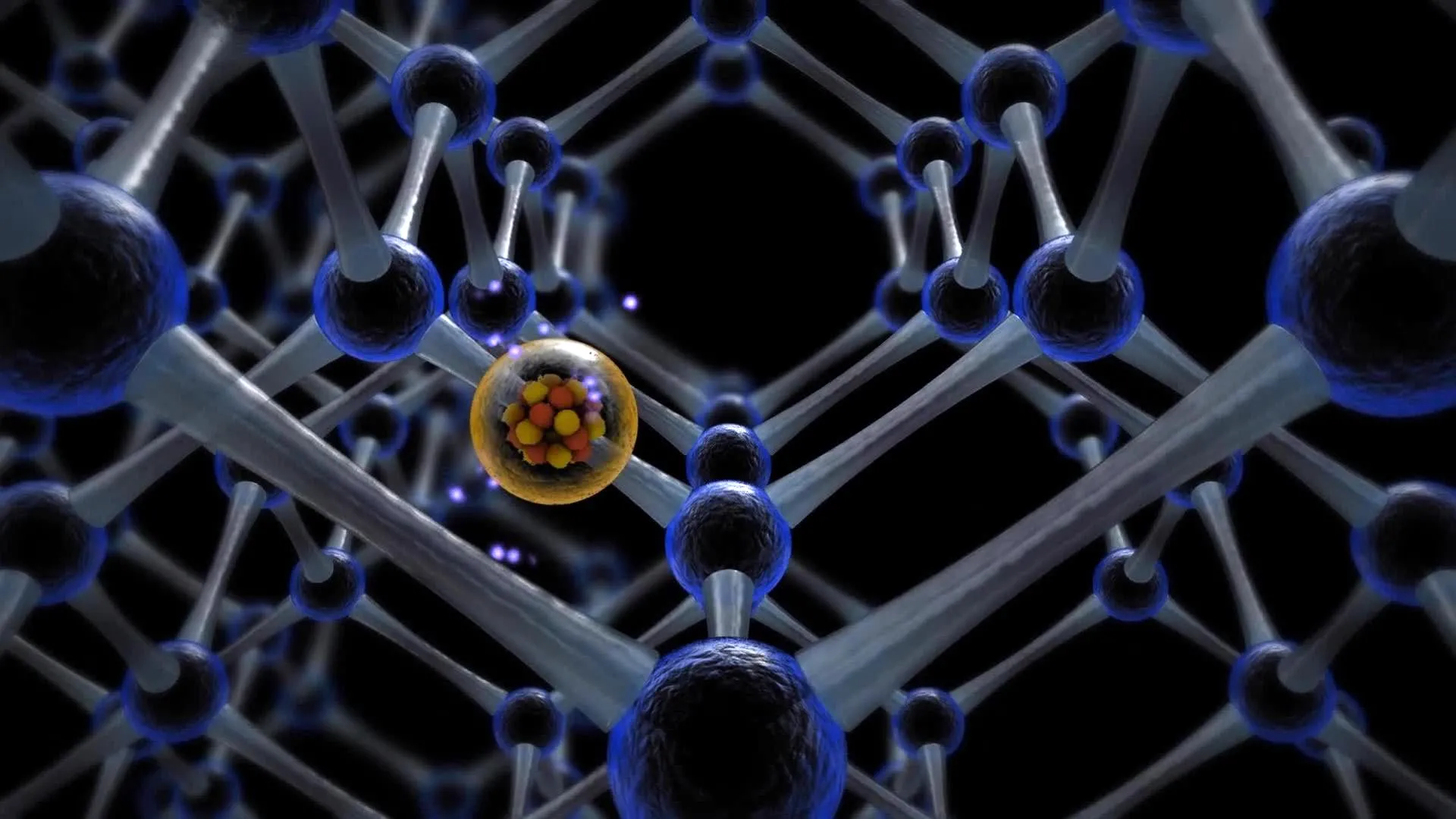
Researchers at the Harvard John A. Paulson School of Engineering and Applied Sciences (SEAS) have successfully pioneered a novel method to safeguard fragile quantum information by utilizing mechanical vibrations, essentially leveraging microscopic sound waves as a protective shield. This advancement, spearheaded by the laboratory of Marko Lončar, the Tiantsai Lin Professor of Electrical Engineering, marks a significant departure from traditional electromagnetic manipulation of quantum states. By employing phonons—quantized packets of mechanical energy—to "dress" quantum bits (qubits), the team has effectively tripled the coherence time of silicon-vacancy spins in diamond, a discovery that could prove instrumental in the race to build scalable, chip-integrated quantum networks.
The findings, published in the journal Nature Physics, represent the culmination of years of experimental work led by Eliza Cornell, a former Ph.D. student in the Lončar lab and current postdoctoral researcher at Boston University, and Zhujing Xu, formerly a postdoctoral scholar at Harvard. This development addresses one of the most persistent hurdles in quantum information science: the tendency of qubits to decohere, or lose their stored information, when exposed to environmental noise.
The Physics of Phononic Networks
The architecture of modern quantum computing faces a physical space constraint. While light-based (photonic) systems are the industry standard for transmitting information across long distances, they possess inherent physical limitations when scaled down to the nanometer level. Because light has a relatively long wavelength, the components required to guide it on a silicon chip must be correspondingly large, making it difficult to achieve high-density integration.
Phonons, however, operate at much shorter wavelengths than photons at equivalent frequencies. This characteristic allows engineers to construct significantly smaller, more compact components, enabling the potential for "quantum-on-a-chip" systems that mirror the density of modern classical microprocessors. Furthermore, phonons demonstrate a unique versatility, interacting readily with both solid-state spin systems—such as those found in diamond defects—and electromagnetic fields. This dual-interactivity makes them ideal candidates for hybrid quantum systems, where diverse qubit types must be integrated into a unified architecture.
The Challenge of Coherence
Quantum coherence is the lifeblood of quantum computing. A qubit’s ability to exist in a superposition of states depends entirely on its isolation from external disturbances. Even minor fluctuations in temperature, magnetic fields, or nearby electronic activity can collapse these states, leading to data corruption.
Historically, the scientific community has addressed this by using microwave pulses to decouple the qubit from its environment. However, this method encounters a physical bottleneck when qubits are embedded within phononic cavities—the very structures required to manipulate mechanical vibrations for information transfer. The microwave field can inadvertently interfere with the phononic cavity, or the cavity geometry may prevent the microwave pulse from reaching the qubit effectively. This trade-off has forced researchers to choose between strong interaction with the carrier (phonons) and long-lasting storage (coherence). The Lončar lab’s latest research effectively dissolves this binary choice.
Chronology of the Discovery
The pursuit of this technology began with the Lončar lab’s foundational work on phononic cavities, which were designed to trap and amplify mechanical vibrations to interact with electron spins.
- 2020-2021: The team focused on refining the fabrication of nanophotonic and nanophononic structures, identifying the silicon-vacancy center as a primary candidate for spin-phonon interaction.
- 2022: Experimental trials shifted toward the concept of continuous-wave mechanical driving. Researchers hypothesized that if a qubit could be "dressed" by a continuous acoustic field, the resulting interaction might shield the qubit from low-frequency environmental noise, which is the primary driver of decoherence.
- 2023: Data collection confirmed that the mechanical driving field functioned not only as a control mechanism but as a protective buffer.
- 2024: Final analysis and peer review confirmed that the coherence time was extended by a factor of approximately three compared to unprotected control samples.
All-Mechanical Coherence Protection
The breakthrough lies in the transition from pulse-based control to continuous-wave mechanical driving. By subjecting the silicon-vacancy spin to a constant, controlled acoustic field, the qubit enters a "dressed" state. In this quantum mechanical configuration, the qubit effectively "wears" the mechanical field, rendering it significantly less sensitive to the environmental noise that would otherwise disrupt its state.
"We are solving two problems," noted Eliza Cornell. "We want the spin to have strong interaction with phonons, and we want the spin to have a long coherence time. Our paper demonstrates a method of extending the coherence time that is compatible with the silicon-vacancy center being in a cavity."
By integrating this protection directly into the phononic cavity, the researchers have created a system where the carrier of information is also the guardian of the information. This multi-functional approach is a hallmark of efficient systems engineering, suggesting that future quantum networks could rely on acoustic, rather than purely electronic, management of qubit health.
Broader Implications and Future Trajectories
The implications for this technology extend well beyond laboratory demonstrations. As the global quantum ecosystem moves toward modular, scalable networks, the ability to pack components tightly while maintaining high coherence will be the deciding factor in the commercial viability of quantum computers.
If phonons can serve as the primary bridge between disparate quantum nodes, the Harvard SEAS research suggests that the "quantum internet" could eventually be integrated into existing semiconductor manufacturing pipelines. The compatibility of these phononic devices with silicon-based manufacturing processes is a massive advantage, potentially lowering the barrier to entry for large-scale production.
Furthermore, the versatility of phonons in hybrid systems could facilitate the creation of quantum sensors with unprecedented sensitivity. By combining the strengths of different qubit types—for example, using superconducting qubits for computation and spin-based qubits for memory—researchers could build architectures that leverage the specific advantages of each, linked by a backbone of phononic communication.
Scientific Context and Support
The significance of this work has been recognized by both domestic and international research bodies. The project received substantial support from the National Science Foundation (NSF) under grant number EEC-1941583, as well as the Air Force Office of Scientific Research (AFOSR) under awards FA9550-23-1-0333 and FA9550-23-1-0338. Additionally, the Q-NEXT National Quantum Information Science Research Center, supported by the U.S. Department of Energy, provided essential backing for this research.
The experiments were largely conducted at the Harvard Center for Nanoscale Systems (CNS), a facility that serves as a cornerstone for the National Nanotechnology Infrastructure Network. The collaborative nature of the research is reflected in the extensive list of co-authors, including researchers from Harvard, Yale, and international institutions, underscoring the multidisciplinary effort required to master the intersection of acoustics and quantum mechanics.
As the Harvard Office of Technology Development seeks patent protection and explores commercialization, the research serves as a clear signal to the industry: the path to robust quantum networks may not be paved with light alone, but with the precise, controlled application of sound.
The success of the Lončar lab provides a template for future innovations in the field. By challenging the assumption that microwave control is the only viable path to coherence, the team has opened a new design space in quantum engineering. As the industry looks toward the next generation of quantum devices, the "dressed" qubit—protected by the invisible, rhythmic pulses of microscopic sound—may become a standard component in the infrastructure of the future.