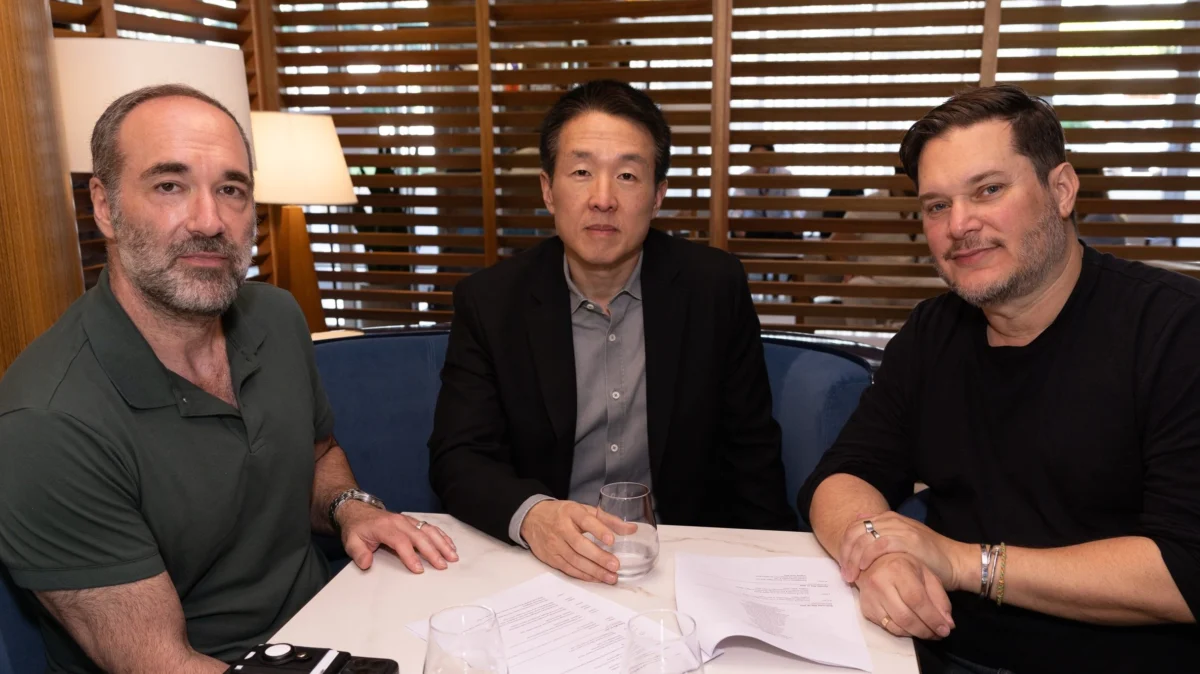
In the high-stakes, hyper-competitive world of Hollywood horror production, the difference between a box-office phenomenon and a project that languishes in development hell often comes down to timing, capital access, and reputation. For the partnership of Spooky Pictures—spearheaded by Roy Lee and Steven Schneider—and their long-term financier, Ben Ross of Image Nation Abu Dhabi, success is not merely a product of chance. It is the result of a deliberate, disciplined strategy centered on securing high-potential scripts before they hit the wider market, all while maintaining a business model that prioritizes the long-term autonomy of the filmmakers they support.
The horror genre has seen a massive valuation shift over the last decade. Once relegated to the fringes of the industry, low-to-mid-budget horror films now frequently yield the highest return on investment (ROI) of any film category. In this climate, the "Spooky Pictures" model serves as a case study for modern independent production, proving that a boutique approach—where relationships are valued over restrictive contractual control—can produce consistent, scalable results.
The Anatomy of an Early Acquisition
The core philosophy guiding Lee and Schneider is best encapsulated by their pursuit of Damien McCarthy’s film Hokum. In an industry where major studios and streamers often wait for consensus or social proof before committing, Spooky Pictures operates on a "first-look" strategy. By leveraging deep-seated industry connections, the partners ensure they are among the first to read high-quality screenplays.
The acquisition of Hokum demonstrates this speed-to-market advantage. By reading the script at the earliest possible stage, the team was able to bypass the bureaucratic gridlock that typically slows down larger entities. When they identified the project’s potential, they were able to pivot immediately. This was facilitated by the financial security provided by Ben Ross and Image Nation Abu Dhabi. With funding secured and a clear creative vision, the partners provided the necessary capital to move from the reading phase to production before competitors could effectively evaluate the project.
The result of this agility was a significant financial success: Hokum, distributed by Neon, grossed approximately $25 million against a production budget of only $5 million. This 5:1 ratio of gross to budget is the hallmark of the company’s portfolio, which emphasizes fiscal responsibility without sacrificing artistic integrity.
A Culture of Fairness in a Transactional Industry
One of the most pervasive criticisms of the horror film industry is the exploitation of burgeoning talent. Young directors, eager for their first break, are often pressured into signing "option" deals that bind them to a specific studio for future projects. While these contracts are framed as career-defining opportunities, they often serve to limit the director’s leverage after they achieve their first commercial success.
Spooky Pictures has deliberately opted out of this predatory practice. According to multiple industry sources, the firm is known for offering terms that favor the filmmaker, ensuring that creators retain their independence and the ability to test the open market once their profile rises.
"The word that we use the most is fair, and we use it all the time," says Ben Ross. "When we started our careers and we were on the other side of the table, people were pretty crappy to us. We vowed to treat people the way we wished we had been treated back then."
This approach has created a competitive advantage: filmmakers want to work with them. Rather than relying on rigid legal structures to ensure repeat business, the team relies on the strength of their reputation. When a director has a positive, transparent experience on their first project with Spooky Pictures, they are significantly more likely to bring their subsequent scripts to the same team. This "soft power" approach has proven to be more effective than the "hard power" of ironclad contracts.
Chronology of Growth and Strategic Collaboration
The foundation of the current iteration of Spooky Pictures dates back to 2020, during the height of the global COVID-19 pandemic. While the broader film industry faced a total production shutdown, the team identified an opportunity to continue working. Because their projects were characterized by smaller crews and controlled environments, they were able to pivot into production when larger, more complex studio films remained stalled.
Their first feature, the Maika Monroe starrer Watcher, became a proof-of-concept for their ability to manage production under adverse conditions. Since then, the firm has accelerated its output, releasing three major projects in the current calendar year alone. These include entries in prestigious festivals such as Venice and Telluride, showcasing the team’s ability to bridge the gap between "elevated" genre filmmaking and mass-market appeal.
Recent and upcoming projects highlight this trajectory:
- The Company (dir. Casey Affleck): Debuted at Venice, signaling the firm’s reach into prestige horror-drama.
- The Liberation (dir. Guy Nattiv): A festival darling that reinforces their brand as a partner for acclaimed auteur filmmakers.
- Anything But Ghosts (dir. Curry Barker): Currently in post-production, this $5 million project represents their commitment to identifying and nurturing rising voices in the digital-native generation.
- 4 X 4: The Event (dir. Alexander Ullom): Scheduled for release next year, this project is designed to act as a breakout vehicle for Ullom, whose previous low-budget effort, It Ends, successfully turned $80,000 into $1.1 million globally.
Operational Efficiency: The "No-Meeting" Rule
A surprising aspect of the trio’s operational success is their rejection of standard corporate meeting culture. In an industry defined by endless Zoom calls and multi-layered development meetings, Lee, Schneider, and Ross maintain a lean communication style.
The three partners rarely spend more than 15 minutes on a collective call. They prioritize "working" over "talking," preferring to coordinate while physically present on sets or in the trenches of production. This operational efficiency is not just a preference; it is a tactical necessity. By minimizing internal friction and administrative overhead, they can dedicate more resources to the films themselves and maintain the speed required to beat larger, more bloated competitors to the punch.
Future Implications and The A24 Factor
As the company looks to the future, they are beginning to experiment with larger-scale productions while maintaining their core identity. A notable shift is their involvement in the upcoming Texas Chainsaw Massacre project for A24, helmed by Curry Barker. This represents a significant scaling of their operations, moving beyond the sub-$10 million budget "sweet spot" that has defined their previous work.
This transition marks a critical juncture for Spooky Pictures. Can they maintain their "filmmaker-first" culture as they transition to larger budgets and higher-profile studio partnerships? The team remains confident that their selection process—which focuses on the script’s innate quality rather than pre-defined genre tropes—will insulate them from the pitfalls of larger-scale commercialization.
When asked how often they encounter scripts that ignite the same level of excitement as Zach Cregger’s Weapons—a script that famously sparked a massive bidding war—the responses varied, reflecting the different roles of the partners. Steven Schneider, who admits to a more voracious appetite for material, claims to find a project that excites him almost weekly. Roy Lee, the more seasoned and pragmatic producer, remains more selective, focusing only on the scripts he knows he can successfully shepherd to market.
Ultimately, the success of Spooky Pictures suggests a shifting tide in Hollywood. As audiences become more sophisticated and independent filmmakers gain more power through digital distribution, the industry is favoring producers who can act as partners rather than gatekeepers. By prioritizing fairness, speed, and genuine creative collaboration, Spooky Pictures has carved out a sustainable, high-impact niche in a genre that shows no signs of slowing down. As they continue to bridge the gap between independent discovery and mainstream exhibition, their model will likely serve as the blueprint for the next generation of genre production.