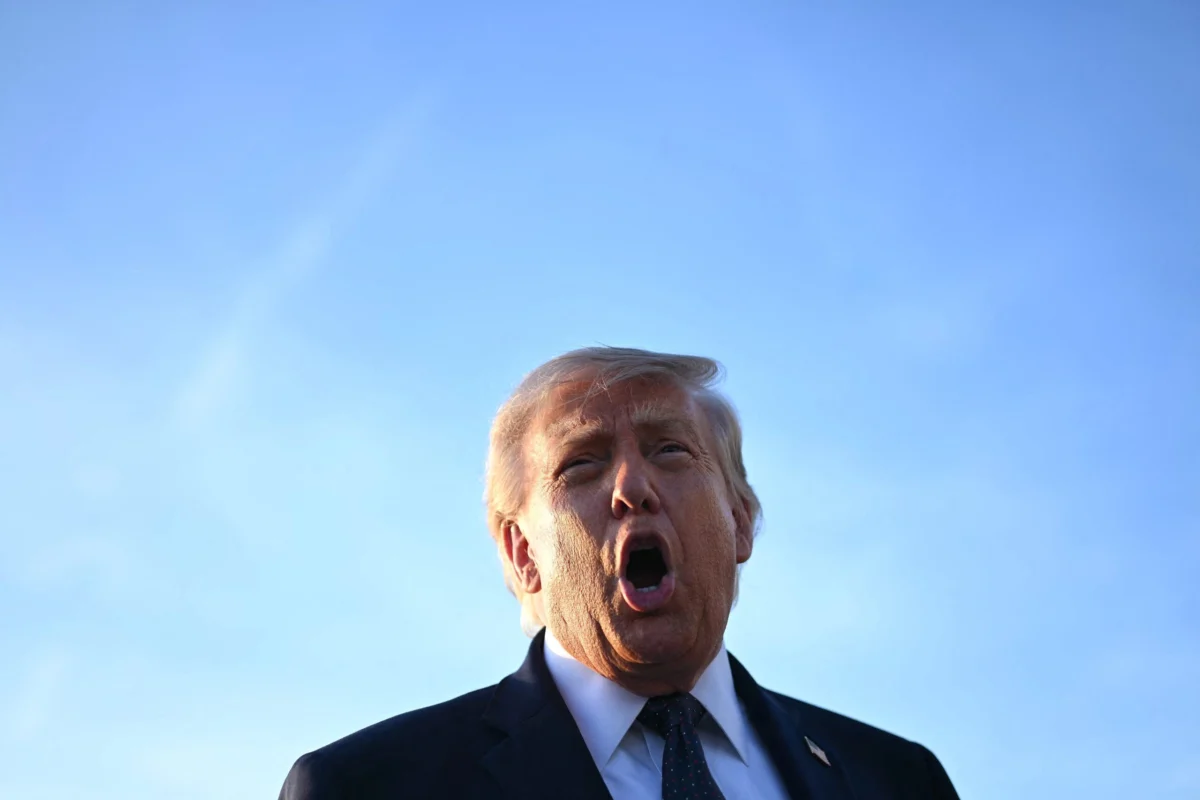
President Donald Trump has escalated his rhetoric regarding the rapidly evolving artificial intelligence sector, characterizing recent public and political discourse surrounding AI safety as a manufactured crisis orchestrated by his political opposition. In a series of statements released via his Truth Social platform this weekend, the president framed the growing global debate over existential risks and regulatory oversight as the latest in a long string of political hoaxes intended to undermine the national interest.
This latest development follows a period of mounting tension between the federal government, local municipalities, and the burgeoning AI industry. As the administration navigates the complex intersection of national security, technological dominance, and public safety, the president’s latest proclamations signal a shift toward a more aggressive, pro-industry posture that aims to prioritize rapid innovation over restrictive safety frameworks.
The Evolution of the AI Safety Debate
The current climate surrounding AI development is defined by a deep ideological divide. On one side are safety researchers and whistleblowers who argue that the pace of development for Large Language Models (LLMs) and autonomous systems exceeds the current capacity for human oversight. This sentiment reached a fever pitch in mid-September 2026, when a prominent researcher at Anthropic resigned, publicly stating that the company’s internal leadership believed current development trajectories could lead to catastrophic outcomes by the end of the decade.
Conversely, industry leaders—supported by key figures in the venture capital and hardware manufacturing spaces—argue that such warnings are hyperbolic and serve to stifle American competitiveness. Nvidia CEO Jensen Huang, speaking at the All-In Summit, reaffirmed this position, asserting that the industry would not permit a "slowdown" of AI progress. President Trump’s recent comments align closely with this perspective, suggesting that the "alarmism" surrounding AI is a strategic move by the "Radical Left" to halt the technological momentum that has become a cornerstone of the current administration’s economic platform.
Chronology of Recent Regulatory Friction
The tension between the White House and proponents of stricter AI regulation is not a recent phenomenon. The trajectory of this conflict can be tracked through several key milestones in 2026:
- March 2026: David Sacks, who previously served as a lead figure in the administration’s AI and crypto policy initiatives, concluded his tenure as AI "czar," transitioning to a role on the President’s Council of Advisors on Science and Technology.
- May 2026: Public discourse reached a turning point during the spring commencement season, where AI safety became a recurring theme in academic and policy circles, prompting the first wave of public pushback from the administration.
- July 2026: New York State established a precedent by halting the construction of all new large-scale data centers, citing concerns over energy consumption and environmental impact. This move served as a flashpoint for the president, who viewed the action as an attack on the infrastructure required for American AI supremacy.
- September 2026: The debate moved from technical safety to political rhetoric. Following former President Barack Obama’s public call for a clearer Democratic plan for AI safeguards, President Trump utilized a golf tournament appearance to signal that while he is open to "guardrails," he believes the current conversation is being driven by "negative forces."
Semantic Battles and the Rebranding of Intelligence
In a move that caught political observers by surprise, the president initiated a social media poll to reconsider the terminology surrounding the industry. Trump argued that the phrase "Artificial Intelligence" is "inaccurate" and "ineloquent." He proposed three alternatives for public voting: Superior Intelligence, Extreme Intelligence, or Supreme Intelligence.
While the poll is largely seen as a symbolic gesture, it underscores the president’s desire to reframe the narrative around AI. By shifting the nomenclature toward terms that imply strength and dominance, the administration is attempting to change the public perception of the technology from one of potential risk to one of national power and prestige.
The Proposed AI Force and Regulatory Oversight
Perhaps the most significant policy announcement to emerge from the weekend’s communications is the president’s intention to establish an "AI Force." This initiative is explicitly modeled after the Space Force, a hallmark of his first term. The intent appears to be the centralization of federal AI oversight, moving power away from decentralized regulatory bodies and into a dedicated executive office.
The president has committed to appointing an "AI Czar" to lead this force, specifying that the position requires individuals with high IQs. However, the scope of this office remains undefined. Legal experts and policy analysts are now questioning whether such a force will act as a regulatory watchdog or an industry booster. Given the president’s explicit vow to "cherish, help, and watch over" the industry, the latter seems more likely. This structural shift would represent a significant departure from the multi-agency oversight model currently favored by existing government departments.
Economic and Infrastructure Context
The broader debate over AI is inseparable from the infrastructure required to support it. Data centers—the physical foundations of the AI revolution—have become targets of intense local scrutiny. In many regions, the demand for electricity and water to cool these massive server farms has outstripped existing capacity, leading to public outcry and subsequent legislative bans on new construction.
The president’s claim that these attacks are failing suggests that his administration intends to override local opposition to data center development. By framing the resistance to these facilities as part of a larger, coordinated "hoax," the administration is positioning the federal government to intervene in local zoning and energy policies to ensure that the "wealth and prestige" of these centers remain protected.
Implications for Global Competition
The central concern driving the administration’s stance is the fear of losing the global race for AI superiority. If the United States were to adopt a precautionary approach similar to the "pacing the frontier" strategy proposed by Anthropic’s CEO, officials fear that foreign competitors—particularly those in geopolitical rivals—would capitalize on the gap to secure a technological lead.
For investors and industry stakeholders, the message is clear: the administration intends to clear the path for rapid, large-scale deployment. By branding opposition as a "hoax," the White House is effectively raising the political cost of dissent. However, this approach carries significant risks. Critics argue that by dismissing safety concerns entirely, the administration may be ignoring legitimate risks related to cybersecurity, automated misinformation, and the potential for large-scale systemic failures.
Analysis of the "Hoax" Narrative
The use of the term "hoax" to describe policy debates is a rhetorical strategy that has served the president throughout his political career. By categorizing concerns about climate change, electoral integrity, and now AI safety under the same umbrella, he creates a binary narrative: one is either supporting the nation’s technological progress or participating in a coordinated effort to destroy it.
This strategy effectively shifts the burden of proof away from the industry and onto the critics. Rather than having to provide evidence that AI is safe, the industry is now positioned as a victim of political persecution. This makes it increasingly difficult for independent researchers and safety advocates to enter the public conversation without being labeled as political actors rather than technical experts.
Future Outlook
As the administration prepares to name a new AI czar and draft the charter for the AI Force, the industry awaits further clarity on how these entities will interact with the private sector. If the goal is to streamline permitting and reduce regulatory friction, the tech sector is likely to welcome the move. If, however, the AI Force seeks to impose its own set of federal mandates, the industry may find itself navigating a new and unpredictable regulatory landscape.
For now, the debate remains locked in a cycle of high-stakes rhetoric. With the president’s firm commitment to protecting the growth of the industry at all costs, the next phase of the AI evolution in the United States will likely be characterized by rapid expansion, federal intervention, and a continued dismissal of the existential risks that have dominated the headlines for much of 2026. Whether this strategy will lead to sustained technological dominance or unintended societal consequences remains the defining question of the current political cycle.