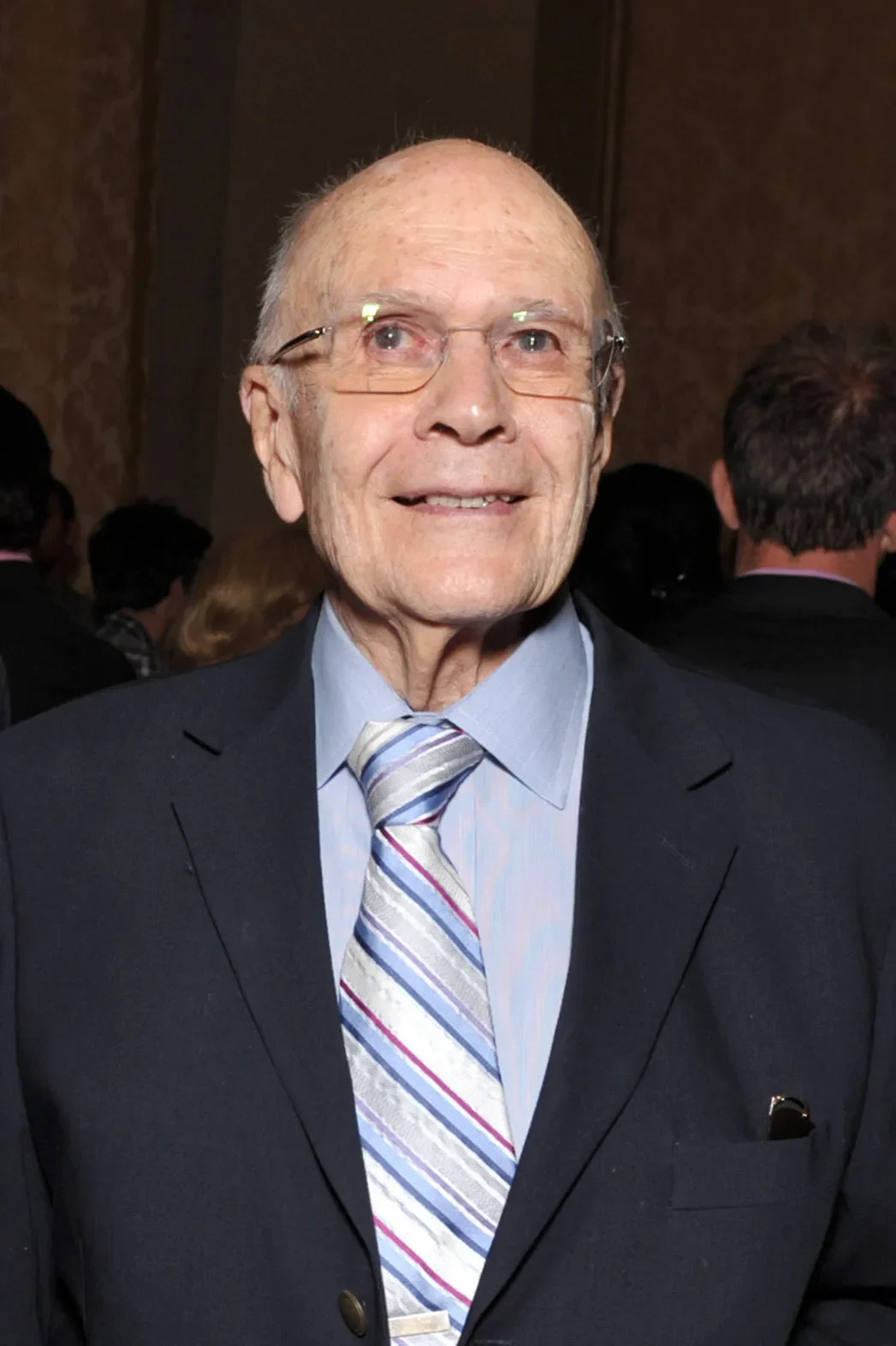
The entertainment industry is mourning the loss of Dixon Q. Dern, a titan of Hollywood legal circles whose career spanned more than seven decades and fundamentally reshaped the business of television and talent representation. Dern, who passed away on July 19 at the age of 97, was not merely a witness to the evolution of the modern entertainment landscape; he was one of its primary architects. From the early days of live television to the complex global syndication models that define the industry today, Dern’s influence was woven into the fabric of some of the most significant deals in Hollywood history.
Born in Colorado Springs, Colorado, Dern’s journey to the heights of the legal profession began with a rigorous academic foundation. He earned both his undergraduate and law degrees from Stanford University, a background that provided him with the analytical precision required to navigate the burgeoning complexities of the entertainment sector. When he arrived in Los Angeles in the 1950s, the city was undergoing a seismic shift. The film industry, long dominated by the "Big Five" studios, was being challenged by a new medium: television. Dern recognized the potential of this emerging field early on, positioning himself at the intersection of creative talent and corporate strategy.
The Desilu Era and the Evolution of Television Economics
Dixon Dern’s early career coincided with the rise of Desilu Productions, the independent production company founded by Lucille Ball and Desi Arnaz. At the time, television was a nascent industry, and the rules of the game were being written in real-time. As the head of the legal department for Desilu, Dern was instrumental in structuring the business affairs of a company that would eventually become the largest independent production house in the world.
During this period, Dern played a pivotal role in the development of television syndication. Before the innovations at Desilu, television shows were often broadcast live or recorded via kinescope, with little thought given to their long-term value. Arnaz and Ball, with the help of legal minds like Dern, insisted on filming their programs—most notably "I Love Lucy"—on 35mm film. This decision allowed for high-quality rebroadcasts, effectively birthing the "rerun" and the lucrative syndication market.
Dern’s work at Desilu involved navigating the complex contractual rights associated with these filmed assets. He helped establish the economic models for residuals and backend participation, ensuring that creators and production companies could profit from their work long after the initial broadcast. This shift in economic structure transformed television from a fleeting medium into a massive library of intellectual property, a model that remains the bedrock of the industry today.
Founding a Powerhouse and the Birth of CAA
In addition to his corporate work, Dern was a visionary entrepreneur within the legal field. He was a founding partner of the firm Dern, Mason, Swerdlow & Floum, which became a cornerstone of entertainment law in Los Angeles. Under his leadership, the firm built a reputation for handling high-stakes negotiations and innovative deal-making.
One of the most significant chapters in Dern’s career was his role in the founding of the Creative Artists Agency (CAA). In 1975, a group of five agents from the William Morris Agency—Mike Ovitz, Ron Meyer, Bill Haber, Michael Rosenfeld, and Rowland Perkins—decided to strike out on their own. The move was a radical departure from the established order of Hollywood talent representation. Dixon Dern was the legal mind who helped provide the structure for this new venture.
The creation of CAA changed the power dynamics of Hollywood, shifting influence from the studios to the agents who "packaged" talent, directors, and scripts. Dern’s ability to navigate the legal complexities of such a transition helped set the stage for CAA to become the most powerful agency in the world. His work during this era demonstrated a deep understanding of how to protect talent while fostering a business environment that encouraged growth and competition.
A Roster of Legends and Diverse Legal Representation
Throughout his career, Dern’s client list read like a "Who’s Who" of the 20th-century entertainment world. He represented iconic figures such as Bob Hope, Jackie Gleason, and the Jackson Five. Each of these clients presented unique legal challenges, from the management of global variety show empires to the intricate contractual needs of a family pop phenomenon.
Dern’s versatility was further evidenced by his representation of UPA Productions (United Productions of America), the studio behind the "Mr. Magoo" series and "Gerald McBoing-Boing." At a time when animation was dominated by the Disney aesthetic, UPA was known for its modern, stylized approach. Dern handled the legal complexities of their production and distribution, ensuring the studio’s creative risks were backed by solid business structures.
His work with the Jackson Five came during a period of intense growth for the group, as they transitioned from Motown stars to global icons. Navigating the legalities of child performers, recording contracts, and massive touring schedules required a steady hand and a sophisticated understanding of both labor law and intellectual property.
Leadership in the Legal Community and Professional Service
Dixon Dern’s impact extended far beyond his individual clients. He was a devoted servant to the legal profession, holding numerous leadership positions that helped shape the standards of practice for entertainment attorneys. His resume of service is exhaustive: he served as Vice President and a member of the Board of Governors of the State Bar of California, President of the Beverly Hills Bar Association, Trustee of the Los Angeles County Bar Association, and President of the Los Angeles Copyright Society.
In these roles, Dern was an advocate for the professionalization of entertainment law. He helped establish ethical guidelines and fostered a community of practice that prioritized both the interests of clients and the integrity of the legal system. Starting in 1967, he also became a highly sought-after arbitrator and mediator, specializing in entertainment and labor disputes. In an industry often defined by ego and conflict, Dern’s reputation for fairness and objectivity made him a trusted figure for resolving complex disagreements outside of the courtroom.
Recognition and Industry Impact
The industry’s respect for Dern was perhaps most clearly demonstrated in 2009, when the Television Academy honored him with the Syd Cassyd Founders Award. This prestigious accolade is reserved for Academy members who have made a significant and lasting impact on the organization. It was a fitting tribute to a man who had spent decades behind the scenes, ensuring that the legal and business frameworks of the television industry were robust enough to support its creative ambitions.
Dern’s career serves as a timeline for the evolution of Hollywood. He was there when television was a fledgling experiment, he was there when the "Golden Age" of the 1950s and 60s took hold, he was there for the agency revolution of the 1970s, and he continued to practice as the industry entered the digital age. His ability to adapt to changing technologies and market forces is a testament to his intellect and foresight.
Broader Implications and Historical Analysis
The death of Dixon Dern marks the end of an era for Hollywood law. His career highlights the transition from a studio-controlled environment to a more fragmented, talent-centric market. The business structures he helped pioneer—specifically regarding syndication and independent production—provided the financial incentive for the "Prestige TV" era that followed decades later. Without the ability to own and monetize intellectual property through syndication and international sales, the massive investments required for modern television production might never have materialized.
Furthermore, his role in the formation of CAA and the growth of independent law firms represents the decentralization of power in Los Angeles. By providing the legal scaffolding for agents and independent producers, Dern helped create a more competitive and dynamic marketplace. This environment allowed for a greater diversity of voices and stories to reach the screen, as the barriers to entry for independent creators were lowered by more accessible legal and business frameworks.
Final Tributes and Legacy
Dixon Q. Dern is survived by a large and loving family, including his children Chelsea Dern, Warren Dern, Peter Dern, Rosalin Bellante, and Greg Dern. He also leaves behind five grandchildren and several great-grandchildren. His family, friends, and colleagues remember him not only for his sharp legal mind but also for his dedication to his craft and his role as a mentor to generations of attorneys who followed in his footsteps.
As Hollywood continues to grapple with new challenges—from the rise of streaming services to the integration of artificial intelligence—the foundational principles established by pioneers like Dern remain more relevant than ever. He understood that at the heart of the entertainment business is a contract—a promise between creators, distributors, and performers. By ensuring those promises were fair, sustainable, and legally sound, Dixon Dern helped build the modern world of entertainment. His legacy will continue to be felt in every deal struck, every show syndicated, and every talent represented in the industry he helped create.